American Cranberry Bush
Viburnum opulus L. var. americanum Aiton
(Vi-BUR-num OP-yoo-lus)
Names: The specific epithet, opulus appears to refer to the Italian Maple, Acer opalus (opalus for opal), due to its maple-like leaves, rather than any opulent characteristic. Viburnum opulus is sometimes called Highbush Cranberry in our region, but that name is more often used for Viburnum edule. The American Cranberry Bush (also known as V. trilobum) is a variety of the European Cranberry Bush. The species and some of it’s cultivated varieties are known in in other parts of the world as Guelder Rose, Water Elder, European Cranberrybush, Cramp Bark, or Snowball Tree.
Relationships: There are about 150-175 species of Viburnum in temperate regions of the Northern Hemisphere with a few species found in mountainous regions of South America, Southeast Asia & Africa (in the Atlas Mountains). There are about 20 native to North America. Many species are popular garden and landscape plants. Several hybrids and cultivated varieties. have been developed. They are grown for their flower display and/or showy fruit, Some have fragrant flowers; some with attractive or unusual evergreen leaves or fall color.
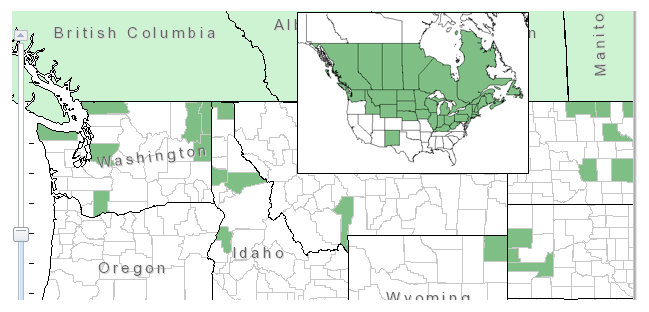
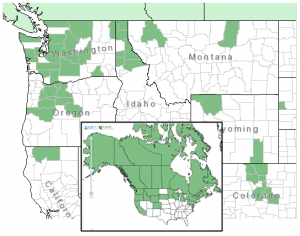
Distribution of American Cranberrybush from USDA Plants Database
Distribution: Viburnum opulus is also native to Europe, North Africa and Central Asia. It is found from southern British Columbia and in scattered locations in Washington State (on the fringes of Lake Washington, the Columbia River Gorge and near the Idaho border.); eastward, it is found sporadically across the northern United States and Canada, more common in the Great Lakes region to the eastern seaboard. American Cranberry Bush is listed as endangered in Indiana; threatened in Ohio; and rare in Pennsylvania. It is distinguished, with difficulty from the European form which occasionally escapes cultivation (more often in the eastern U.S.), by its skinnier somewhat longer stipules, and shorter, squatter petiolar glands.
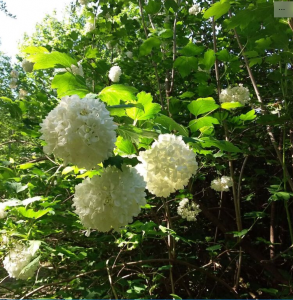
The popular cultivated Snowball Viburnum, Viburnum opulus ‘Sterile’
There are several cultivated varieties, including the well-known Snowball Shrub (or Tree), ‘Roseum’ (or ‘Sterile’), which gets its name from the snowball-shaped clusters of sterile flowers; it appears to have originated in the Dutch province of Gelderland, the derivation of its other common name, “Guelder Rose.”
Growth: This species can be a large shrub growing to 12-15 feet (1-4m) tall and as wide or wider.
Habitat: American Cranberrybush is found in moist, open woods. Wetland designation: FACW-, it usually occurs in wetlands, but is occasionally found in non-wetlands.
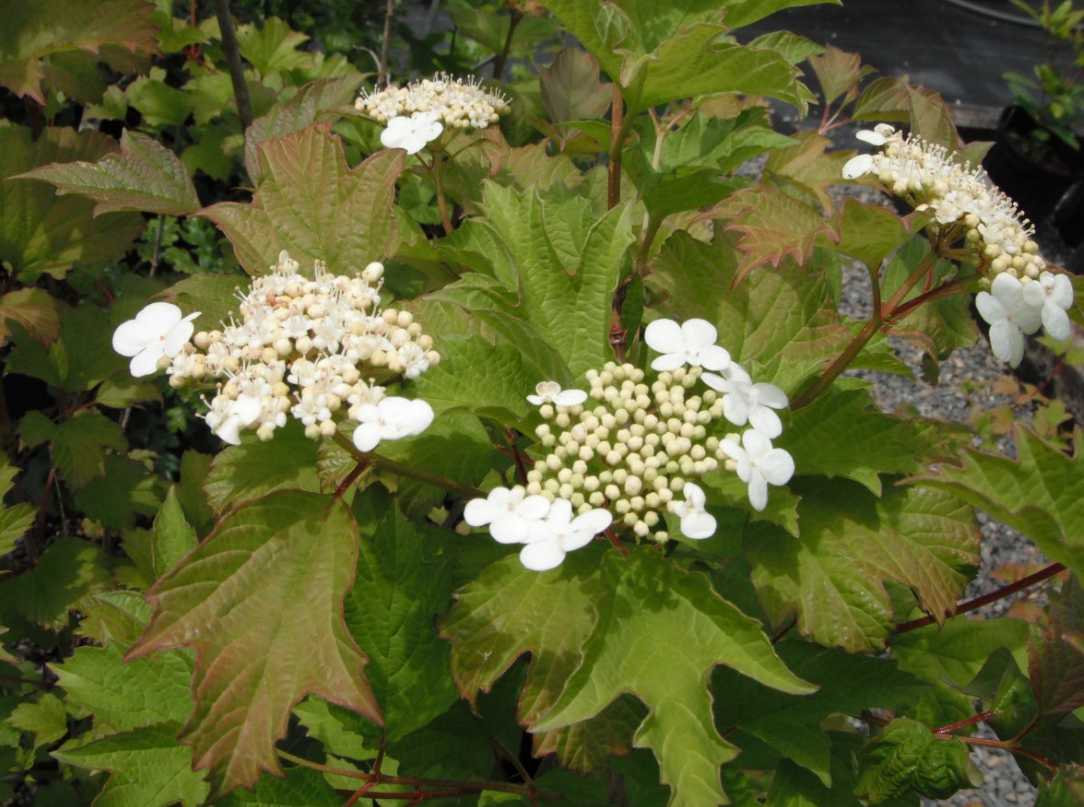
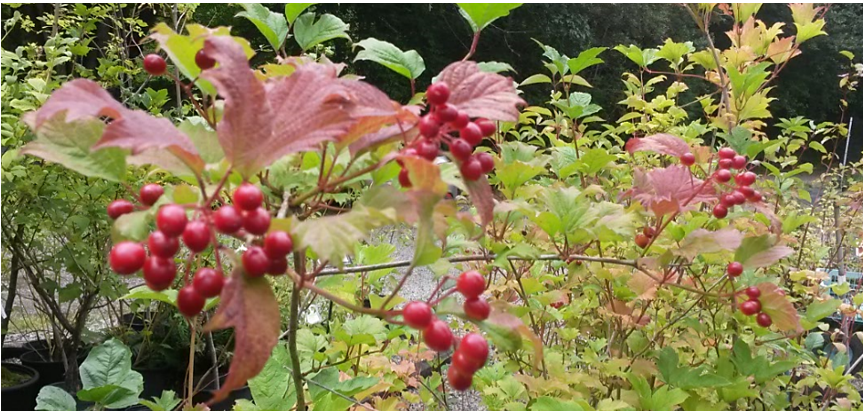
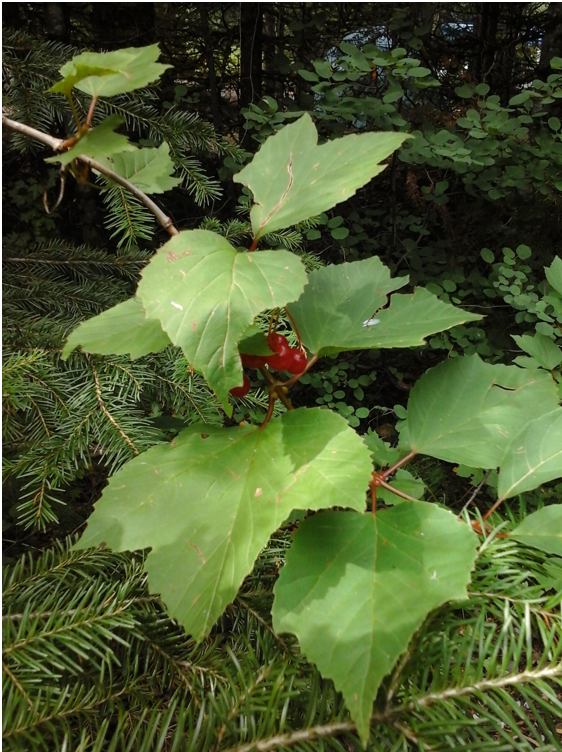
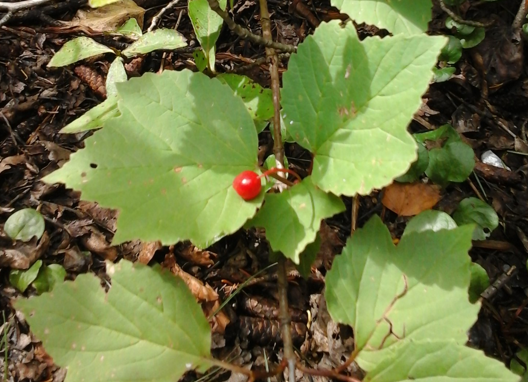
Diagnostic Characters: Opposite leaves are palmately 3- veined and 3-lobed and coarsely toothed. Flowers are a typical, white “lace-cap”—a flat-topped cluster of tiny flowers ringed with larger, showier, sterile flowers. Red, shiny fruits are berry-like drupes, each with a flattened stone.
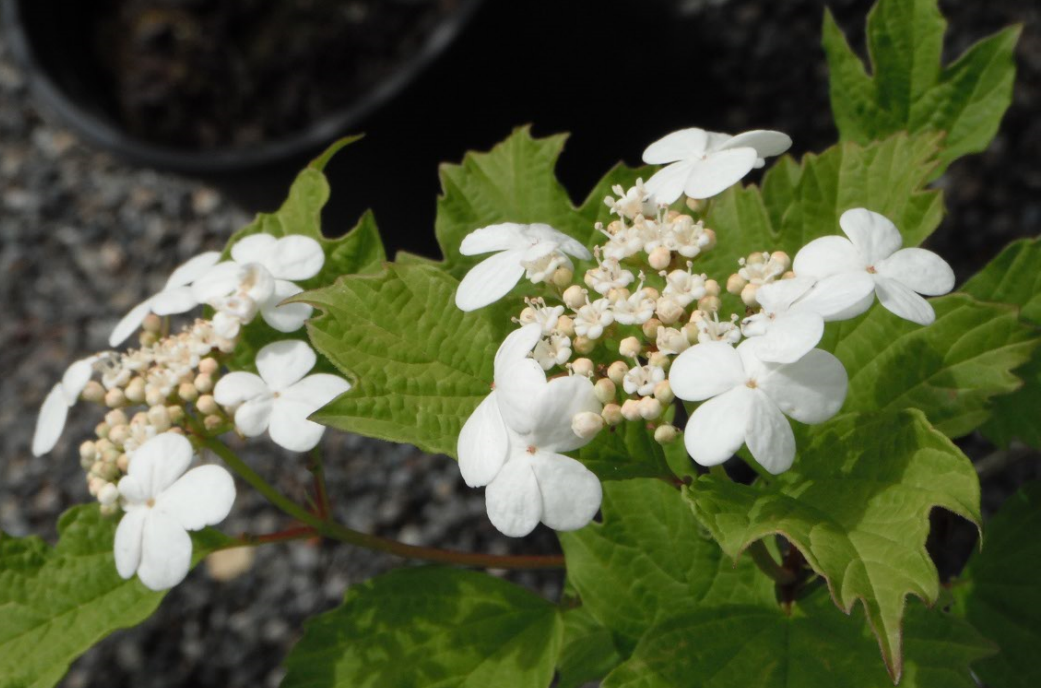
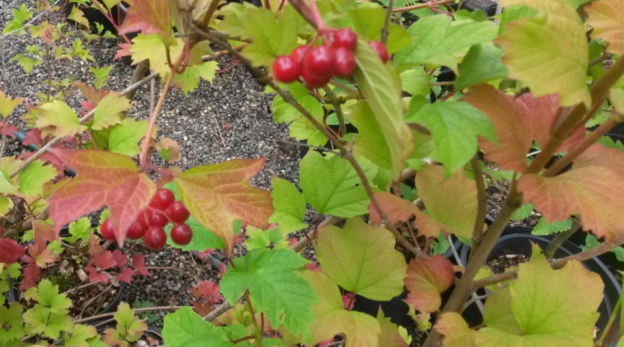
In the Landscape: Having long been a garden favorite, Viburnum opulus, is an outstanding landscape shrub. The species has attractive lacy, white flowers in the summer, followed by bright red berries. It has spectacular fall color. This large, spreading shrub can be used as a specimen plant, for screens, or may be placed at the back of a shrub border. Children enjoy using the flower heads of the sterile form for spring time snowball fights!
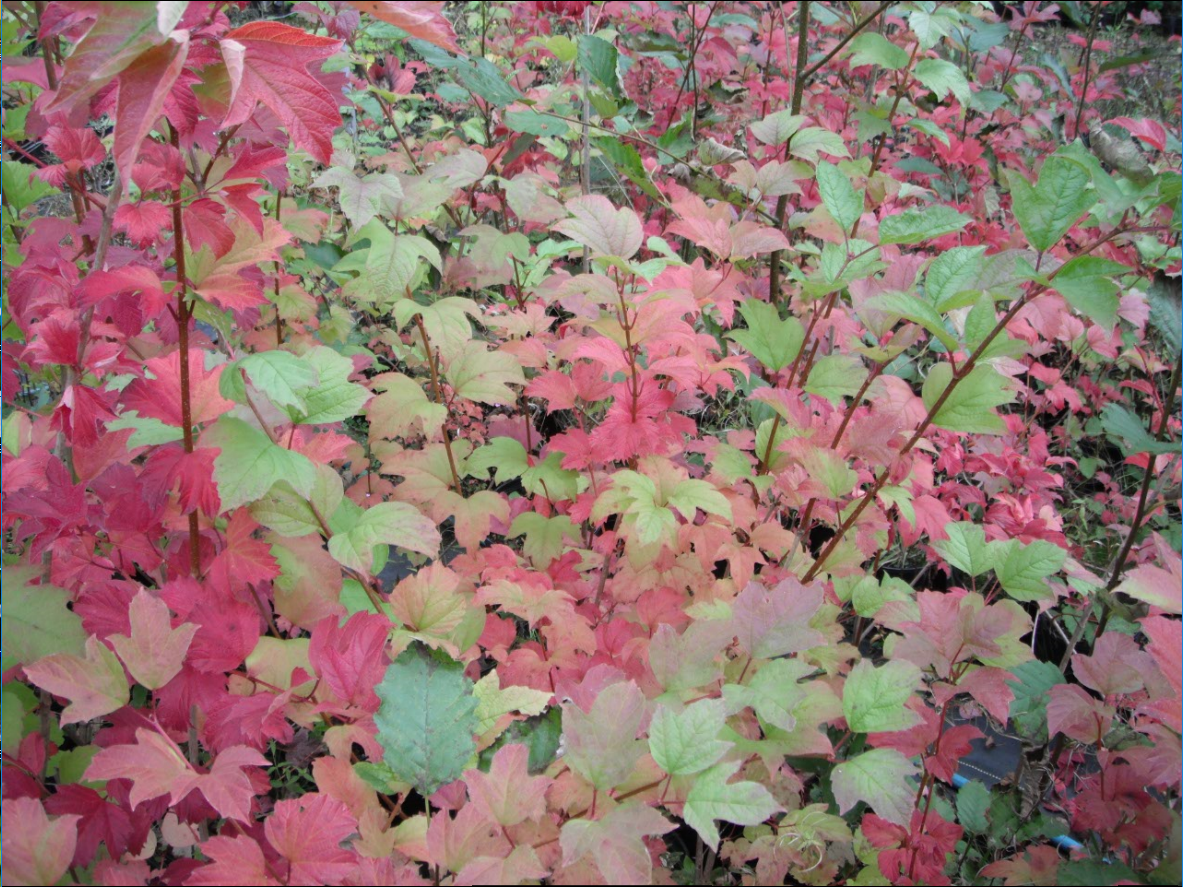
American Cranberrybush has spectacular fall color
Phenology: Bloom time: May-July; Fruit ripens: September-October. Persisting through winter.
Propagation: Seed propagation is difficult. Seed is best sown in a cold frame as soon as it is ripe; it may take more than 18 months to germinate. Stored seed requires 2 months warm and 3 months cold stratification and may still take 18 months or more to germinate. Cuttings root easily. Softwood cuttings may be taken in early summer; half-ripe wood in July or August; or mature wood in winter. Layering is also possible.
Use by people: Kalnya (Viburnum opulus) is a national symbol of Ukraine. Ancient Slavs associated it with the birth of the universe. Its berries symbolize blood and family roots. Kalyna is often depicted in Ukrainian embroidery. The fruit of European varieties tends to be bitter and is not used for food. The berries of American Cranberry Bush can be used as a cranberry substitute for making jellies and preserves, but the fruit may cause mild stomach upset when eaten unripe, and large quantities may cause vomiting and diarrhea. Some natives mashed the berries and dried them into cakes for future use. The dried bark has been used in preparations to alleviate painful menstrual or stomach cramps, hence the common name “Cramp Bark.” A red dye or ink may be made from the fruit. Stems without pith were used to make popguns in the absence of elderberry.
Use by Wildlife: Thrushes, robins, and Cedar Waxwings are considered the principal seed dispersers. The fruit is perhaps not a favorite of wildlife; it is not normally eaten by birds until after it has frozen and thawed several times. It is, however, known to be eaten by deer, moose, foxes, raccoons, chipmunks, squirrels, skunks, mice, rabbits, grouse, pheasants, and other songbirds. This large shrub provides cover and nesting sites for many small animals. It is a larval host for the Spring Azure Butterfly and sometimes attracts aphids. The flowers are pollinated by insects.
Links:
Consortium of Pacific Northwest Herbaria
WTU Herbarium Image Collection, Plants of Washington, Burke Museum
E-Flora BC, Electronic Atlas of the Flora of British Columbia
Jepson Eflora, University of California
Ladybird Johnson Wildflower Center
Native Plants Network, Propagation Protocol Database
Native American Ethnobotany, University of Michigan, Dearborn
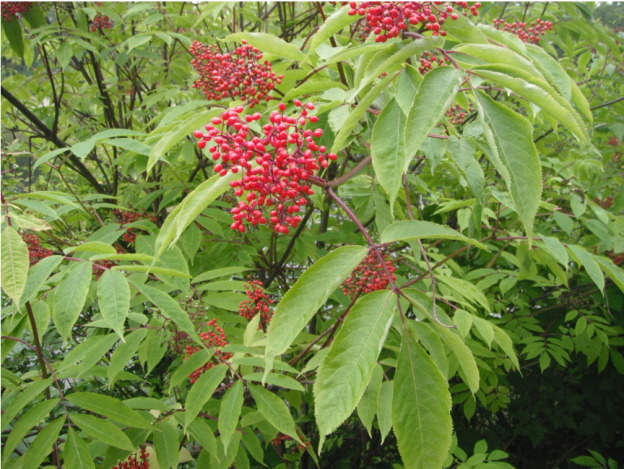
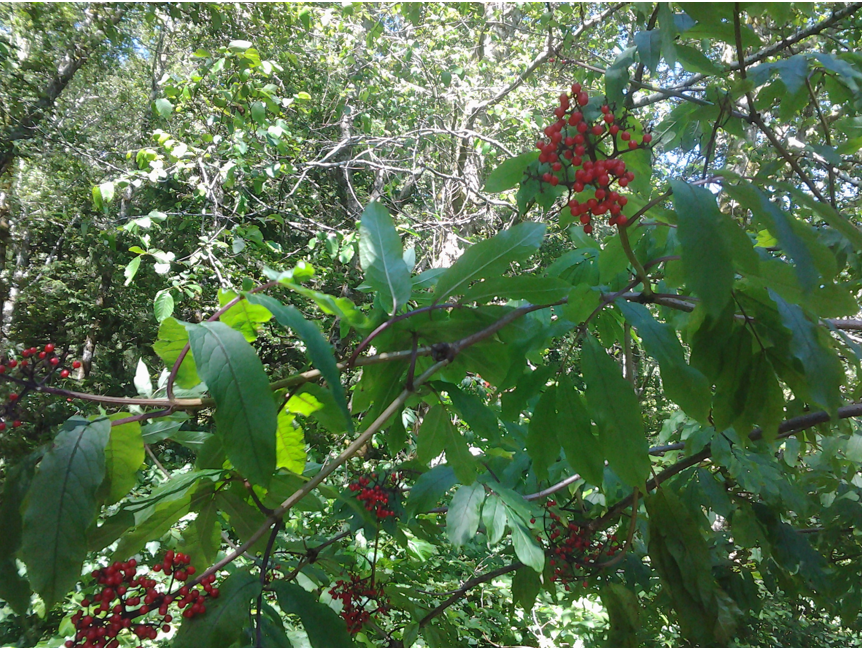
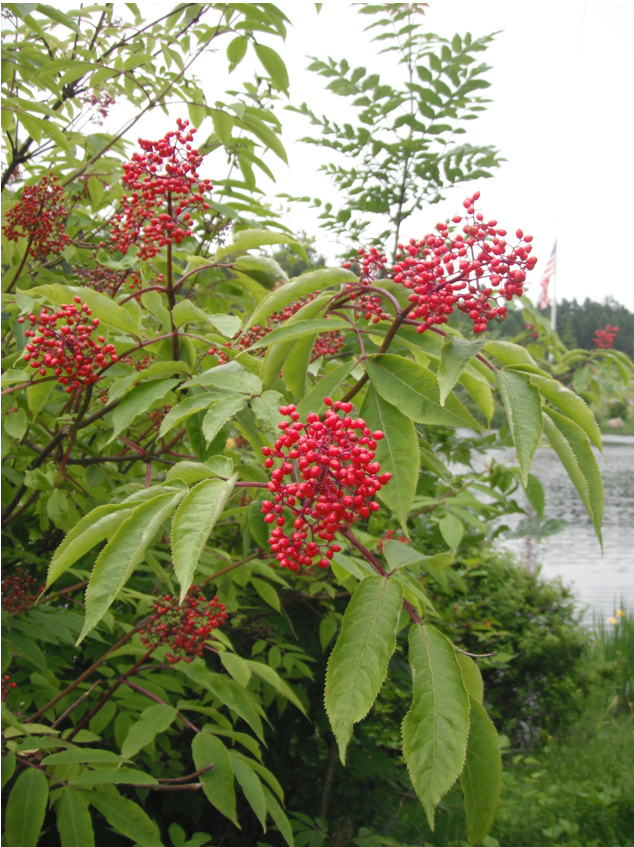 Names: The name Sambucus is derived from the Greek sambuca, which was a stringed instrument supposed to have been made from elder wood. Racemosa refers to the elongated inflorescences, called racemes. It is thought the name elder comes the Anglo-saxon ‘auld,’ ‘aeld’ or ‘eller’, meaning fire, because the hollow stems were used as bellows to blow air into the center of a fire. Our Red Elderberry has also been known as S. callicarpa (callicarpa=beautiful fruit). Some identify our local plants as S. racemosa ssp. pubens var. arborescens; (pubens because of the downy pubescence beneath the leaves, and arborescens because of its tree-like form.) It also may be called Mountain Red Elderberry, Scarlet Elder or Elderberry, Racemed Elder, or Bunchberry Elder. A purplish-black-berried form, Rocky Mountain Elderberry, S. racemosa var. melanocarpa is also found through much of the west.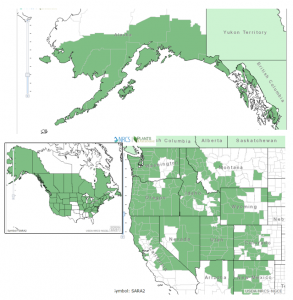
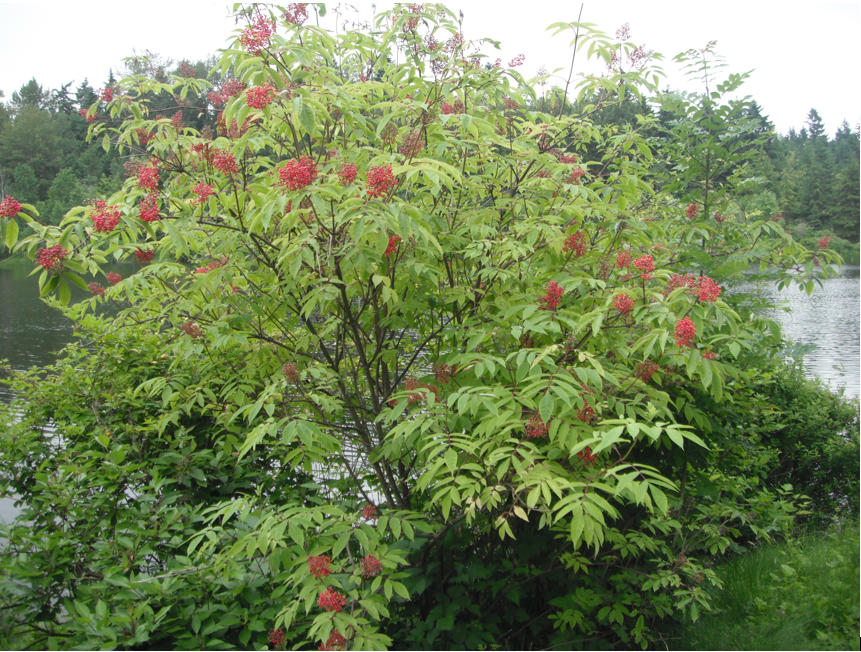
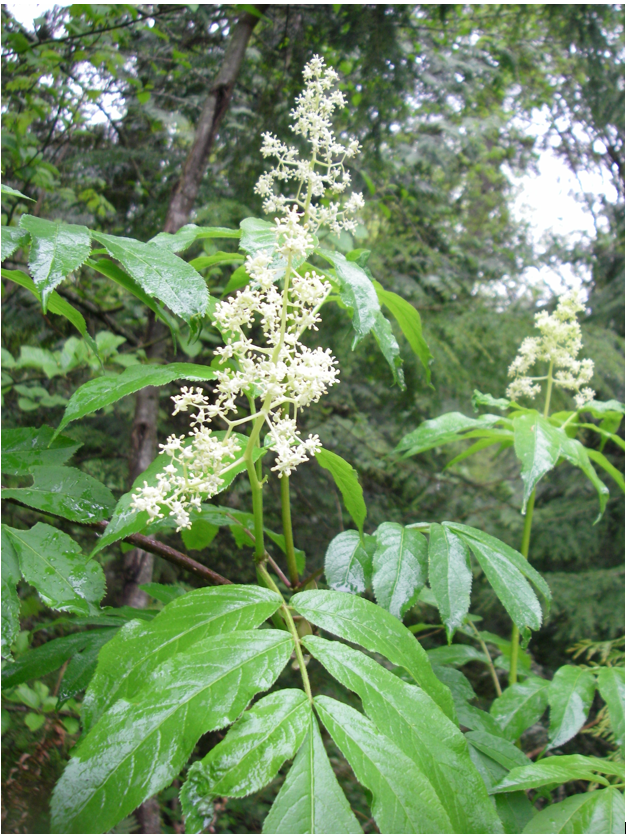 In the Landscape: Red Elderberry is especially attractive in woodland gardens. Its vase-like, arborescent form creates an umbrella-like canopy over smaller woodland shrubs. Overgrown plants can be severely pruned. Red Elderberry is used for revegetation, erosion control, and wildlife plantings. It may be relatively tolerant of heavy metal contamination, so may be useful in restoring habitats around mining and smelting sites.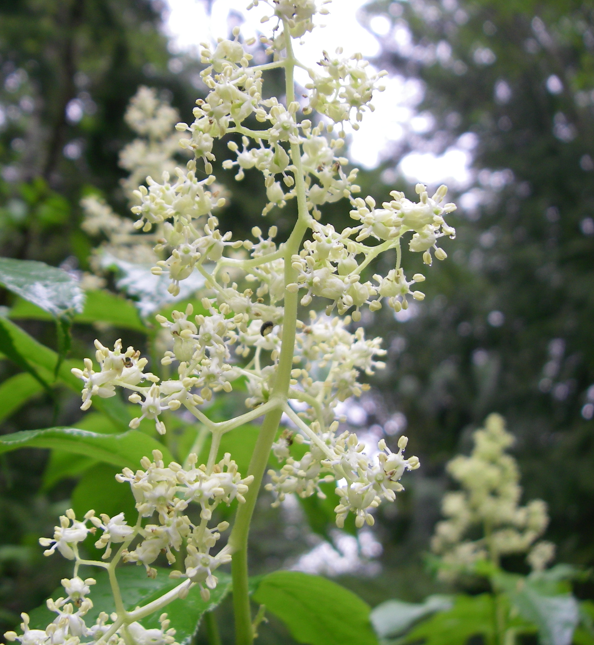
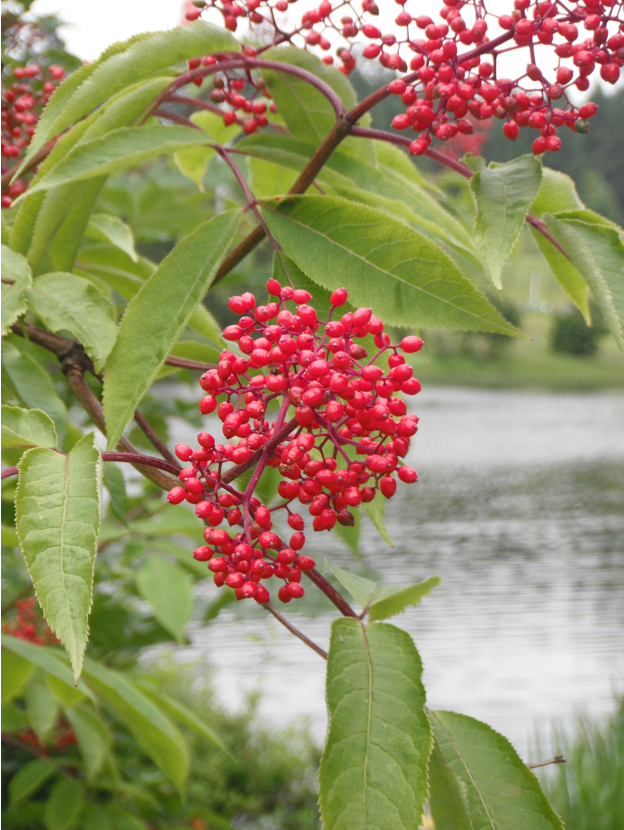 Use by people: Natives steamed the berries on rocks and put them in a container stored underground or in water, eating them later in winter. Leaves, bark or roots were applied externally to abscesses, aching muscles, or sore joints. Roots or bark were chewed or made into a tea to induce vomiting or as a laxative. Flowers were boiled down to treat coughs and colds. Hollow stems were used for whistles, pipes and toy blowguns. Although they have sometimes been eaten fresh, it is advisable to always cook the berries before eating, raw berries may cause nausea. The seeds are considered poisonous. Cooked berries can be made into wines, sauces or jellies.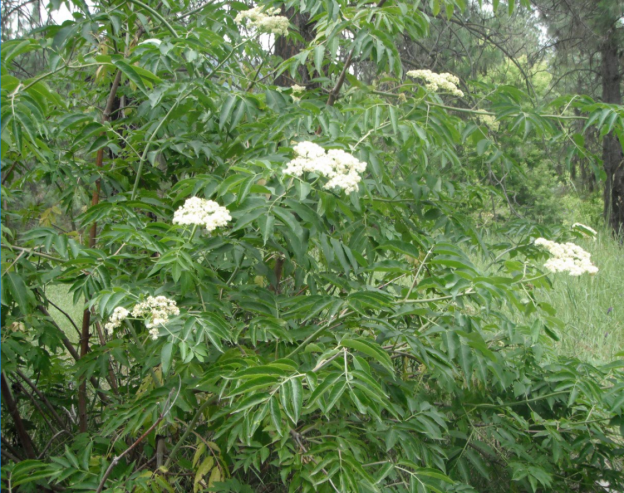
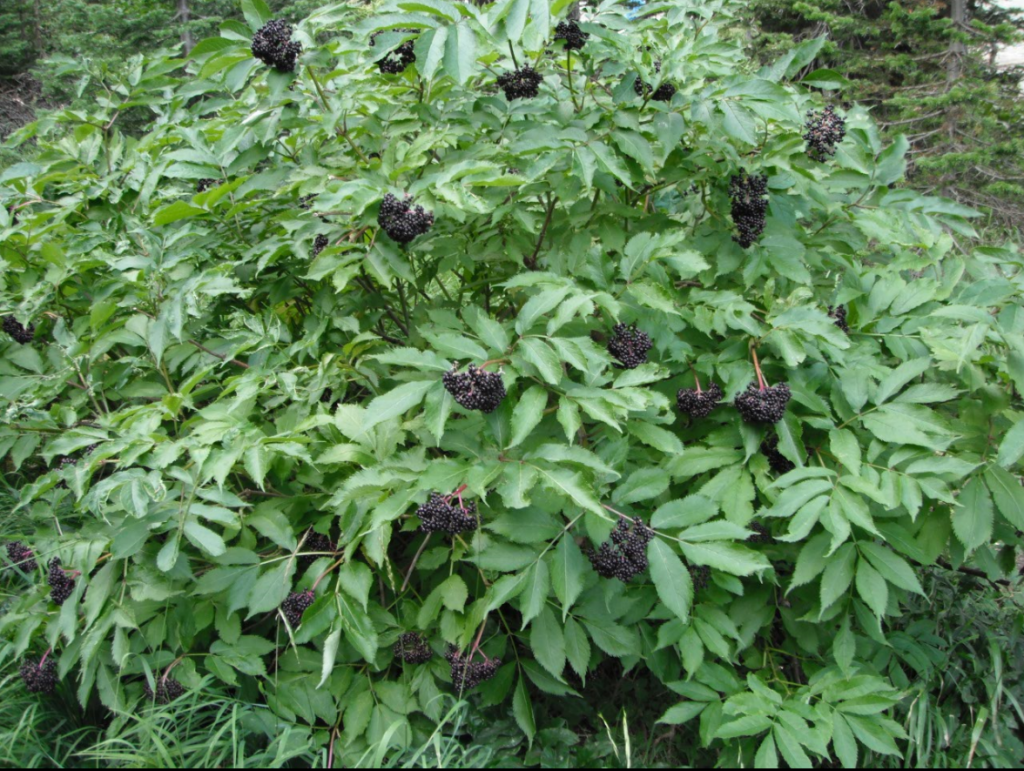 Names: The name Sambucus is derived from the Greek sambuca, which was a stringed instrument supposed to have been made from elder wood. Nigra means black; caerulea means sky-blue. It is thought the name elder comes the Anglo-saxon ‘auld,’ ‘aeld’ or ‘eller’, meaning fire, because the hollow stems were used as bellows to blow air into the center of a fire. Blue Elderberry was sometimes known as S. glauca; it is more commonly known as Sambucus cerulea (or caerulea), but many botanists feel that it and the American Elderberry, Sambucus canadensis, are just a subspecies of the well-known European species, the Black Elder, Sambucus nigra.
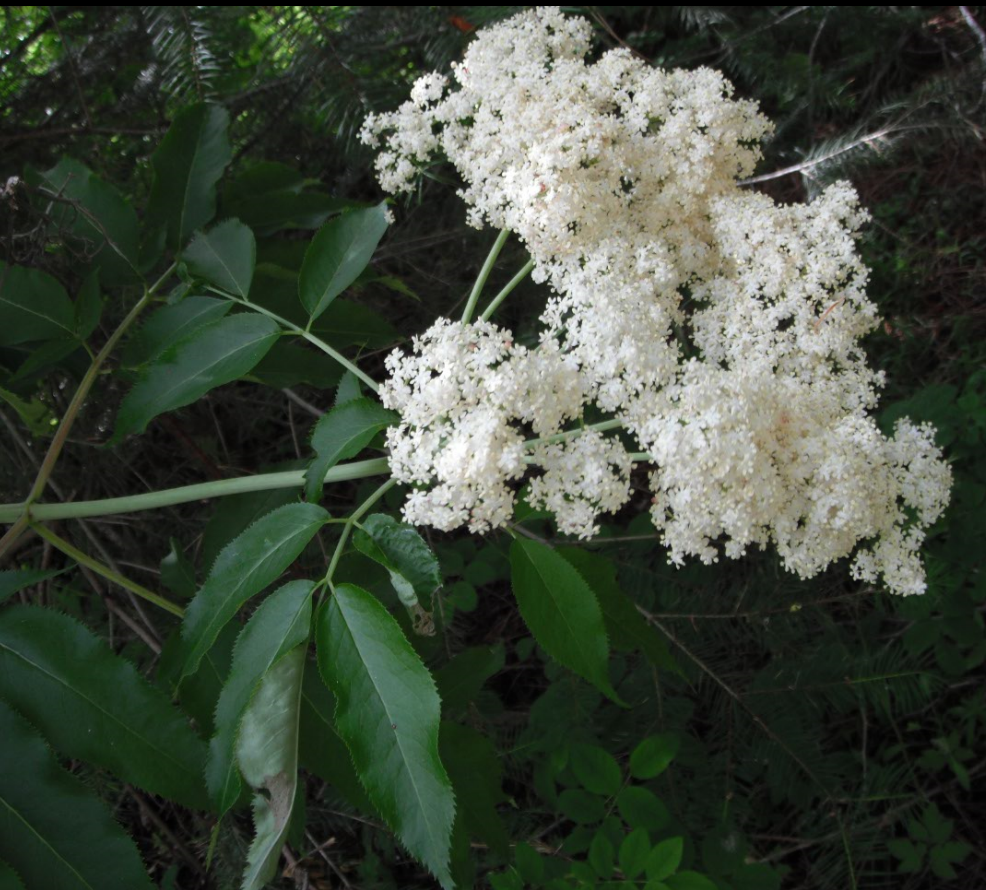
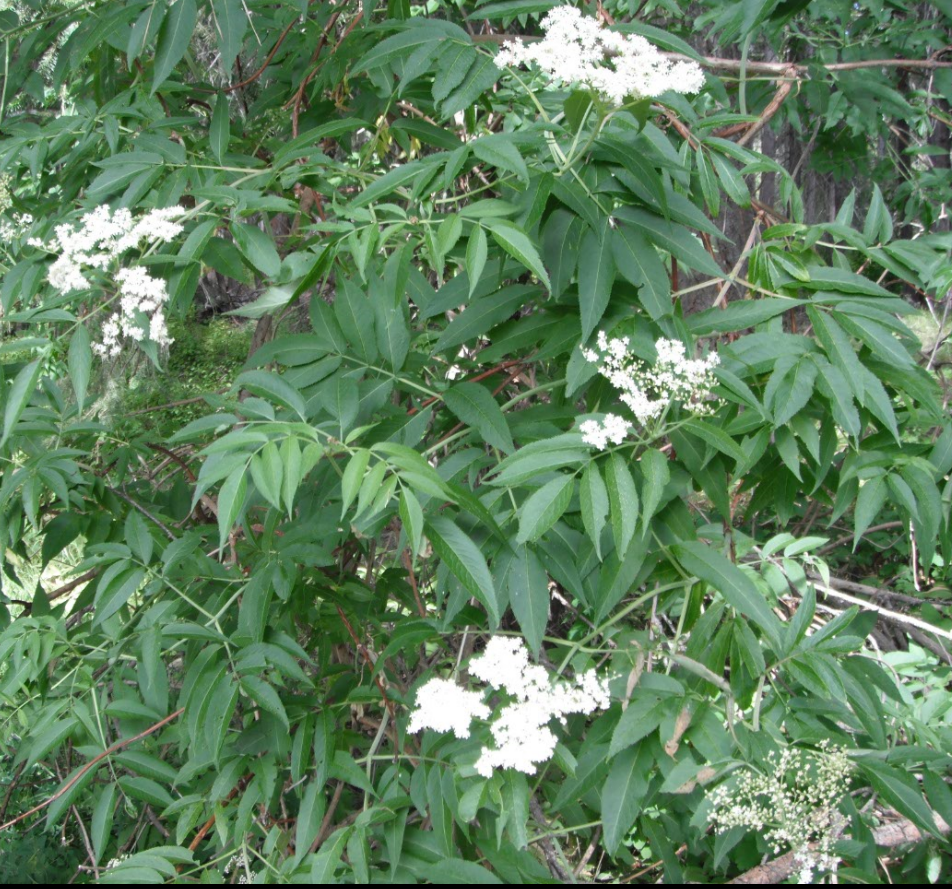
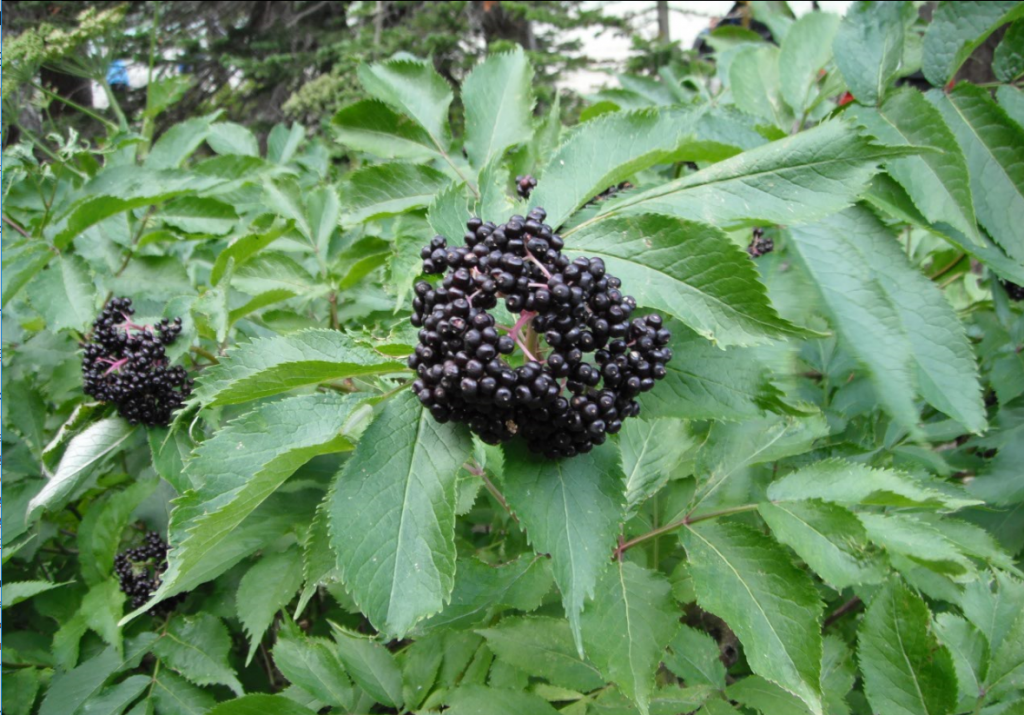
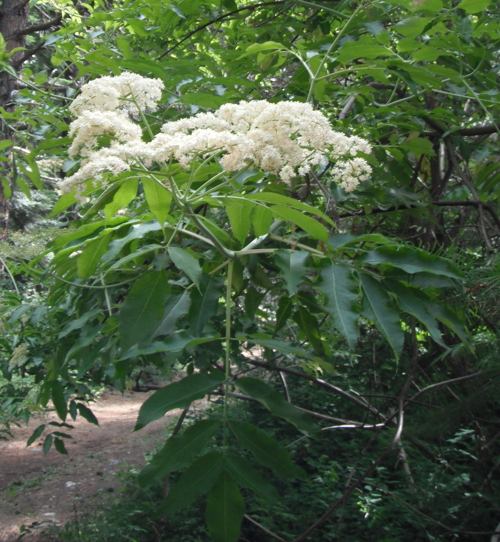 Use by People: Elder trees were important in Celtic folklore and mythology; they were considered sacred to fairies and were used for making wands. The “Elder Wand” was one of the “Deathly Hallows” in the Harry Potter book series. In Europe, elderflowers are widely used to make syrups, cordials and liqueurs. The pith was by watchmakers for cleaning tools before intricate work. The fruit, on both continents, is often used for wine, jellies, candy, pies, and sauces. Northwest natives ate the berries fresh, dried, steamed, or boiled. Raw berries, especially if they are not fully ripe, may cause some people to experience an upset stomach. The bark and leaves were used to induce vomiting and as a laxative; externally applied, they were used for pain, bruises, swelling, and as an antiseptic. The flowers were made into a tea to treat cold and flu symptoms. The berries were used to make a black or purple dye; the stems to make an orange or yellow dye. Hollow twigs were used for flutes, whistles, pipes, blowguns and squirtguns; whistles were use to call elk. The soft wood was used as a twirling stick to make fire.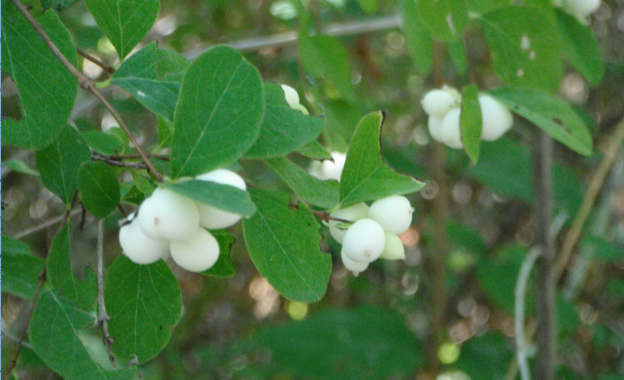
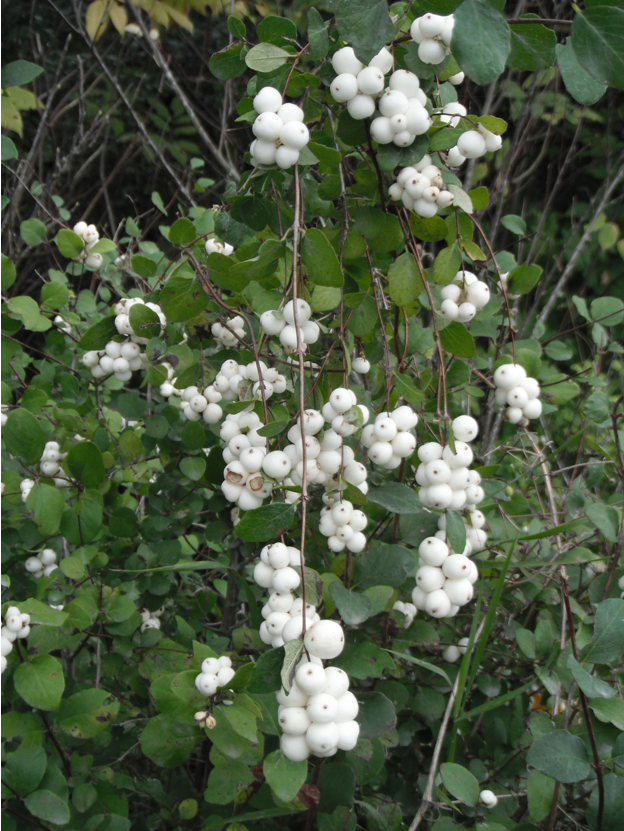 Names: Symphori- means “bear together;” –carpos means fruits– referring to the clustered fruits. Albus meaning white, and the common name, Snowberry also refers to the white fruits. This species is sometimes known as Waxberry, White Coralberry, or White, Thin-leaved, or Few-flowered Snowberry.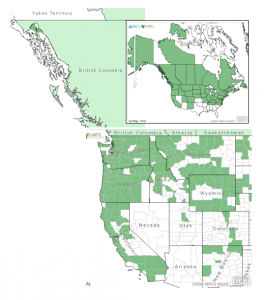
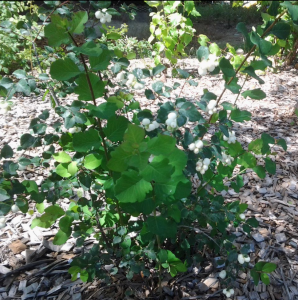 Growth: This species usually grows 3-9 feet (1-2m) tall.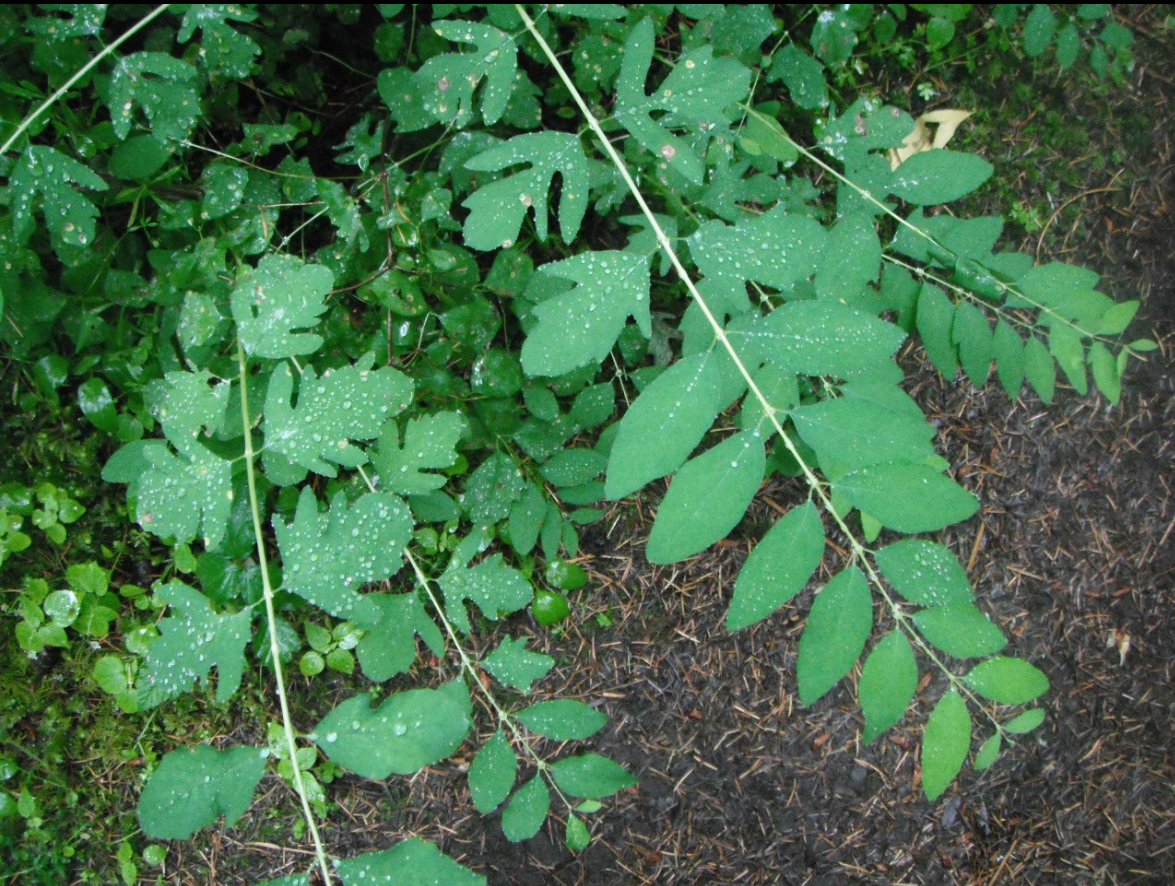
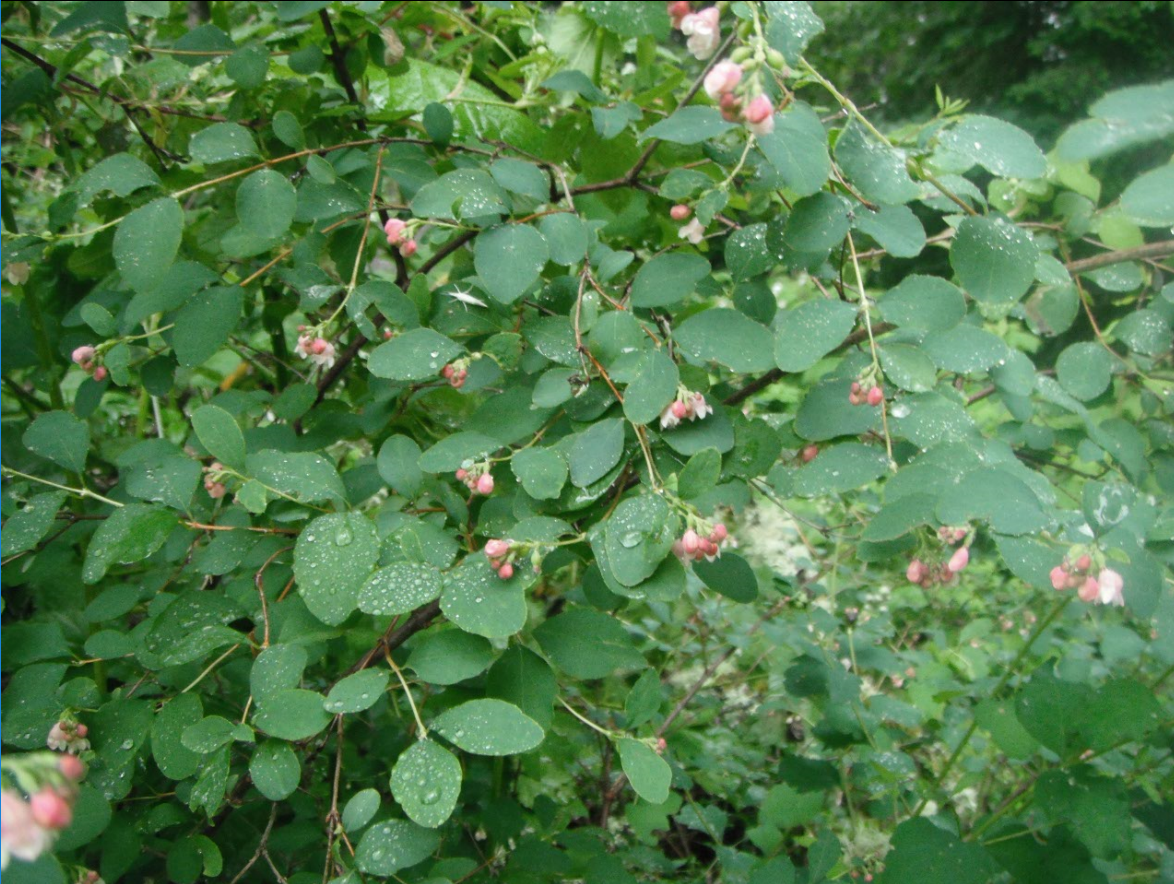
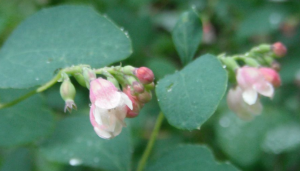 Phenology: Bloom time: May-August; Fruit ripens: September-October, persisting through winter.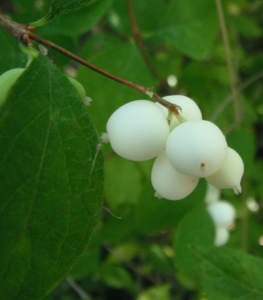
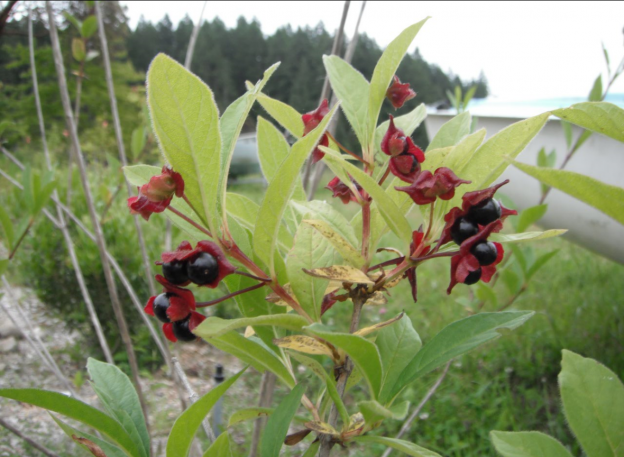
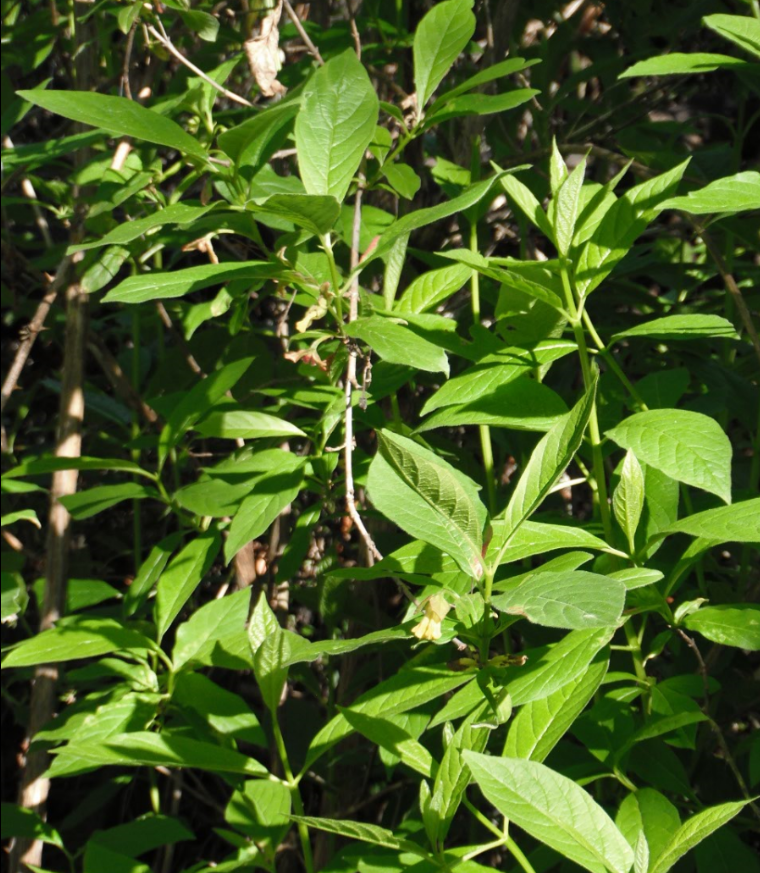 Names: Black Twinberry is also known as Involucred, Bracted, Bearberry, Fly or Fourline Honeysuckle; or Coast Twinberry. Involucrata refers to the involucres, or bracts that surround the flowers and fruit. Twinberry refers to the 2 berries surrounded by the bracts.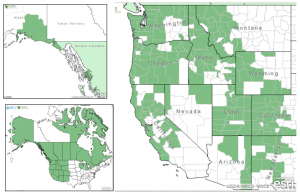
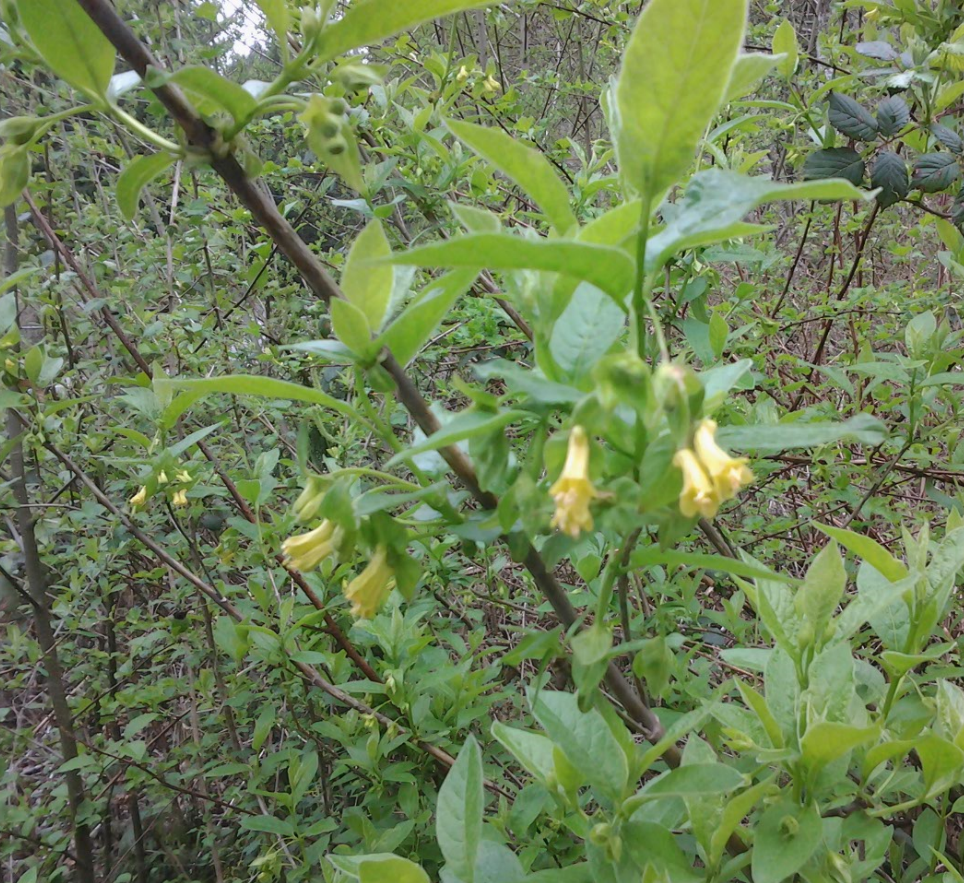
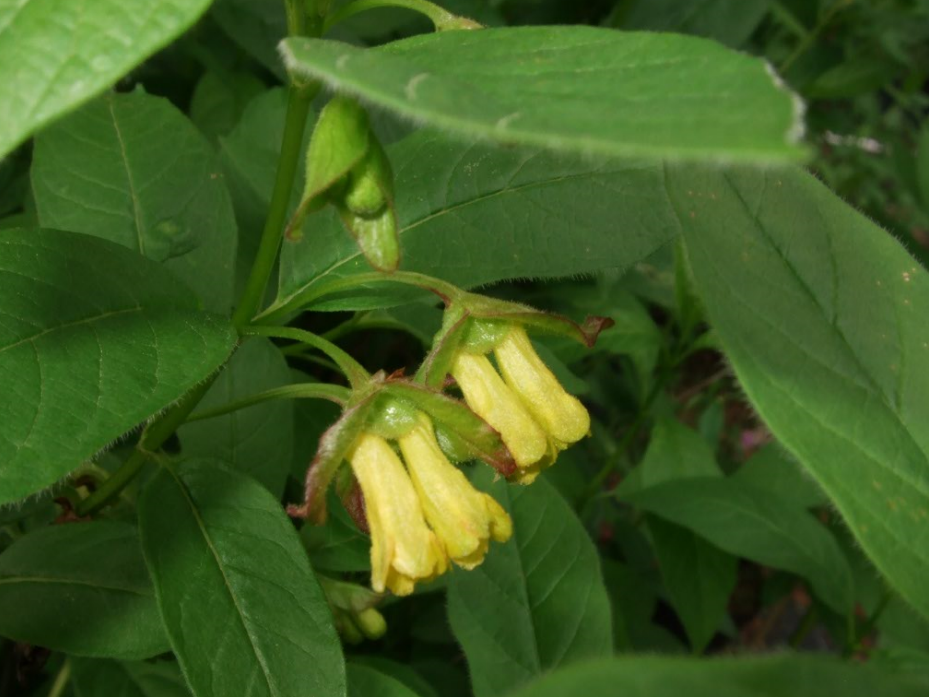 Diagnostic Characters: Black Twinberry has opposite leaves that are broadly lance-shaped. It has paired, tubular, yellow flowers arising from the leaf axils. The flowers are 5-lobed, surrounded by large, green or purple bracts. Fruits are shiny, black “twin” berries surrounded by purplish-red bracts. Young, green twigs are 4-angled in cross-section.
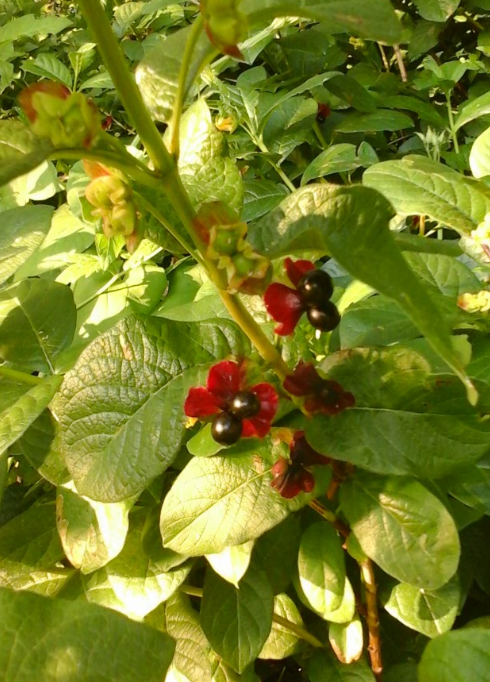 In the Landscape: It is an attractive shrub and should be used more in the garden. It is a great “edge” species when planted between a forest and more open area. It can be used in a hedgerow or in a Rain Garden. Its fresh, green leaves are similar to Indian Plum; and its dainty, yellow flowers and colorful bracts add interest throughout spring, summer, and fall. Black Twinberry is great for reclamation plantings on riparian sites, in wet meadows and in forests.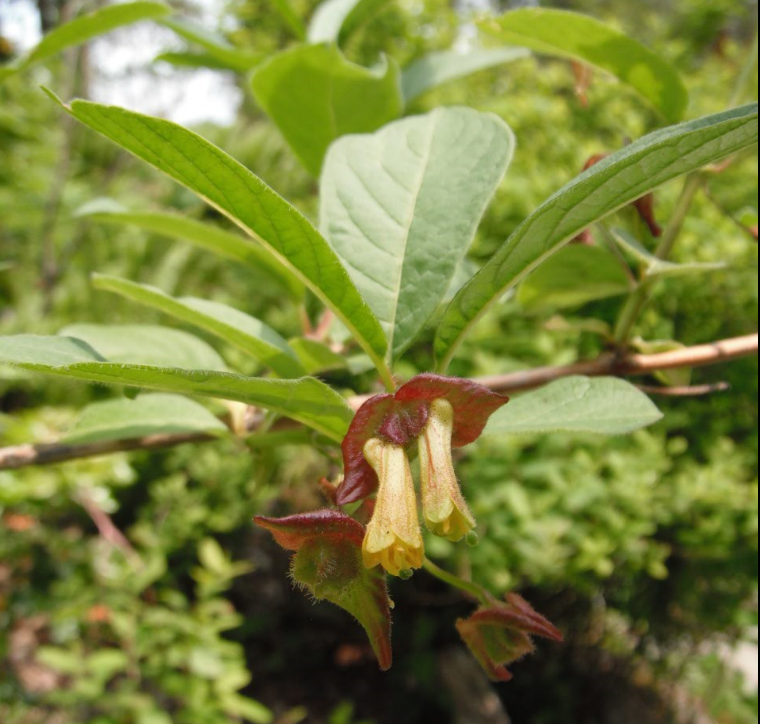
 Red Twinberry
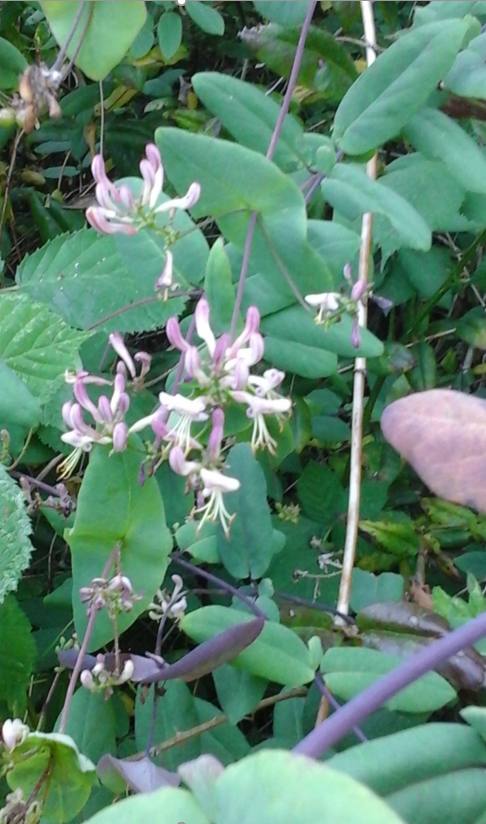 Names: Hairy Honeysuckle is also called Pink Honeysuckle or California (Pink or Hairy) Honeysuckle. Hispidula means covered with bristly hairs. The common name, honeysuckle, comes from the fact that children enjoy sucking nectar from the base of the flowers for a sweet treat. The name Lonicera is derived from Adamus Lonicerus (Adam Lonitzer), a German botanist, author of the herbal, Kräuterbuch (1557).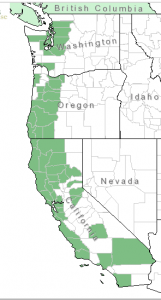
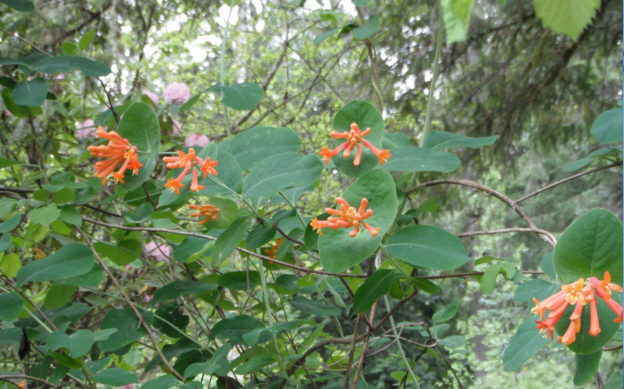
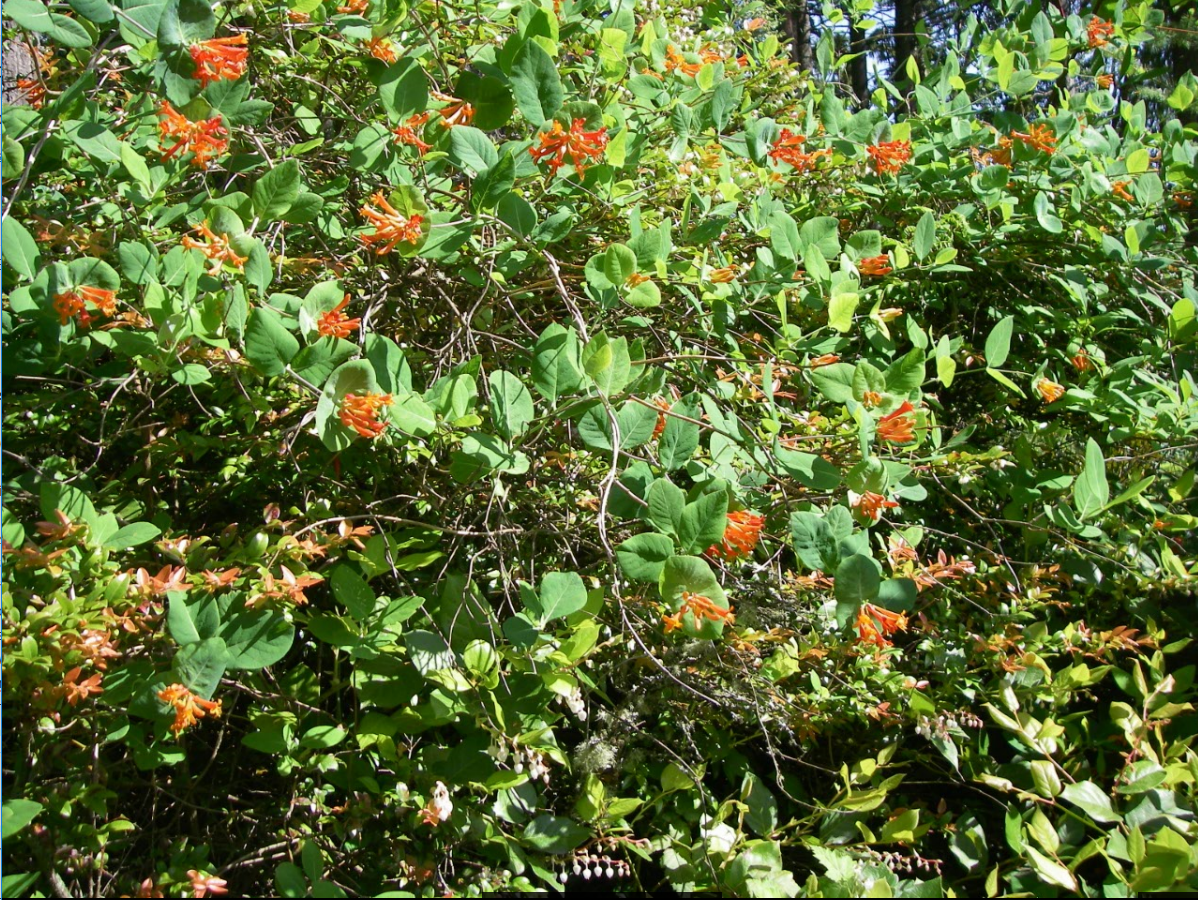
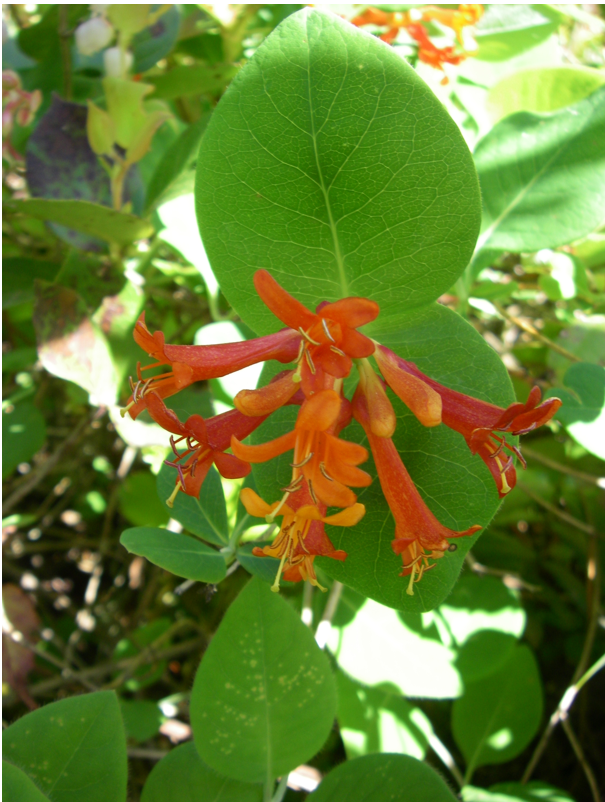
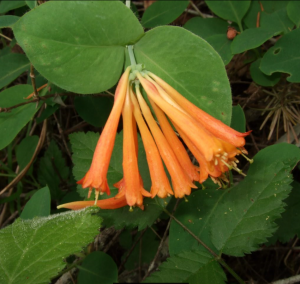
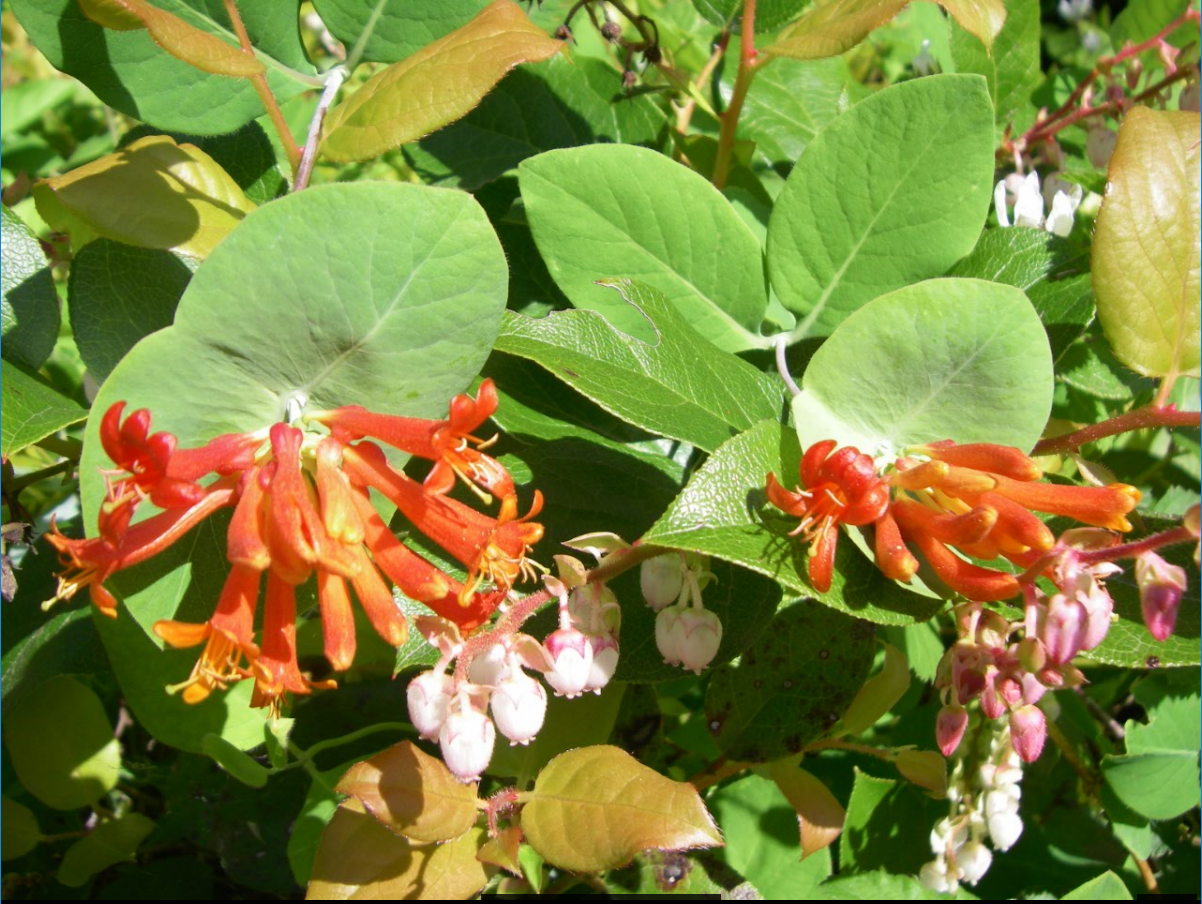
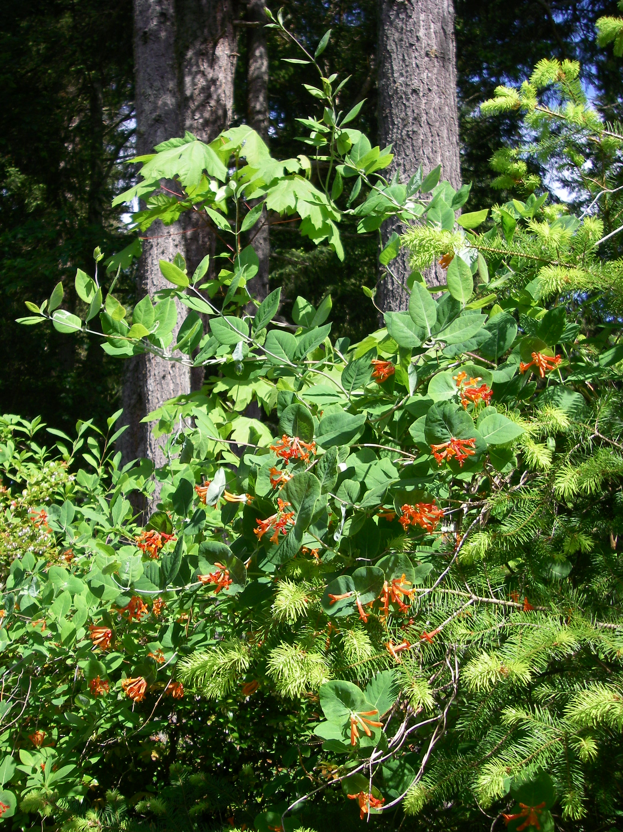 Names: Honeysuckles have long been a garden favorite, grown mostly for their sweetly-scented, nectar-producing flowers. The common name, honeysuckle, comes from the fact that children enjoy sucking nectar from the base of the flowers for a sweet treat. This species is also known as Orange Honeysuckle, Northwest Honeysuckle, or Western Trumpet. The name Lonicera is derived from Adamus Lonicerus (Adam Lonitzer), a German botanist, author of the herbal, Kräuterbuch (1557). Ciliosa, which means having small, fringe-like hairs like eyelashes, refers to the hairy edges of the leaves.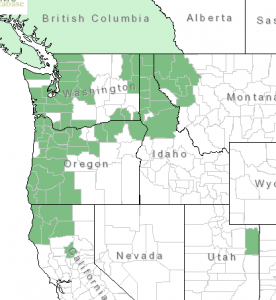
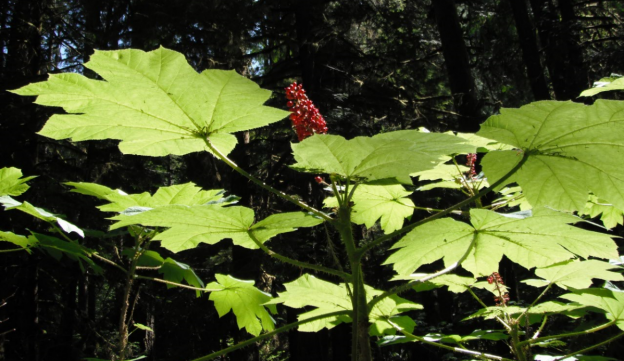
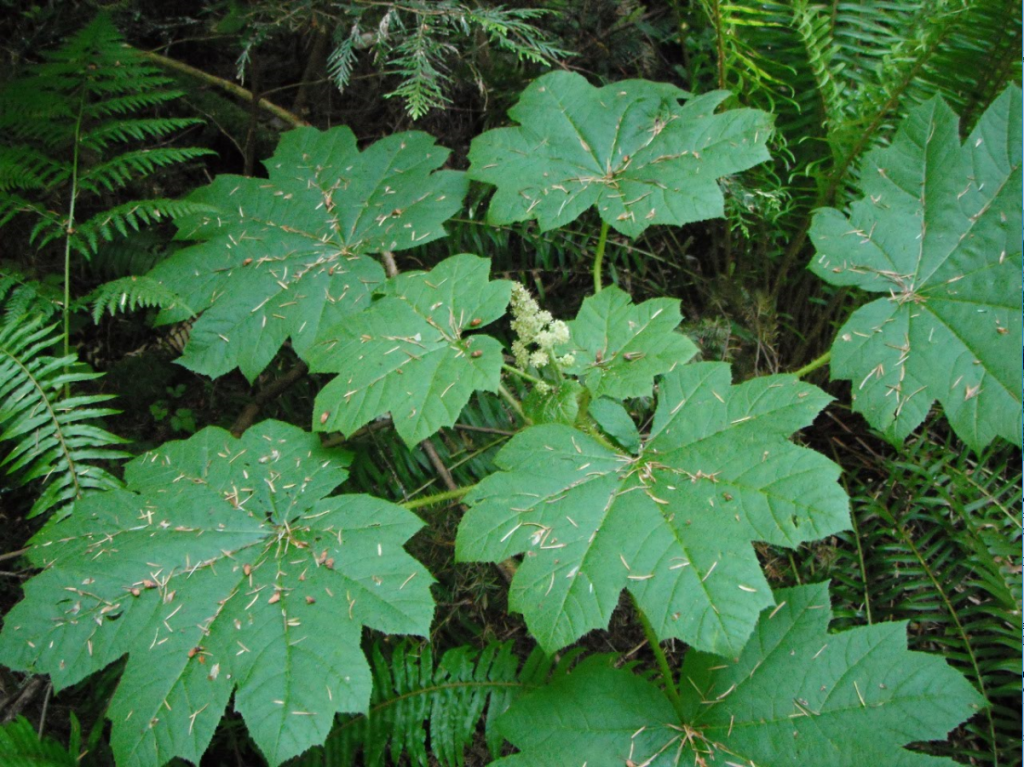
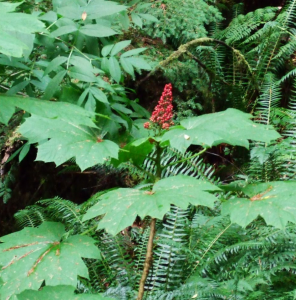 Names: The genus name, Oplopanax, is derived from hoplon, meaning weapon and panakos meaning panacea or “all-heal”—referring to the medicinal qualities of these shrubs and their relationship to the well-known Asian herb, Ginseng, Panax ginseng. Oplopanax is sometimes misspelled, Ophlopanax. Both the common name and specific epithet, horridus, refer to its spiny, wicked-looking appearance. Scientific synonyms include: Echinopanax horridum or horridus, Fatsia horridum, Panax horridum, and Ricinophyllum horridum.
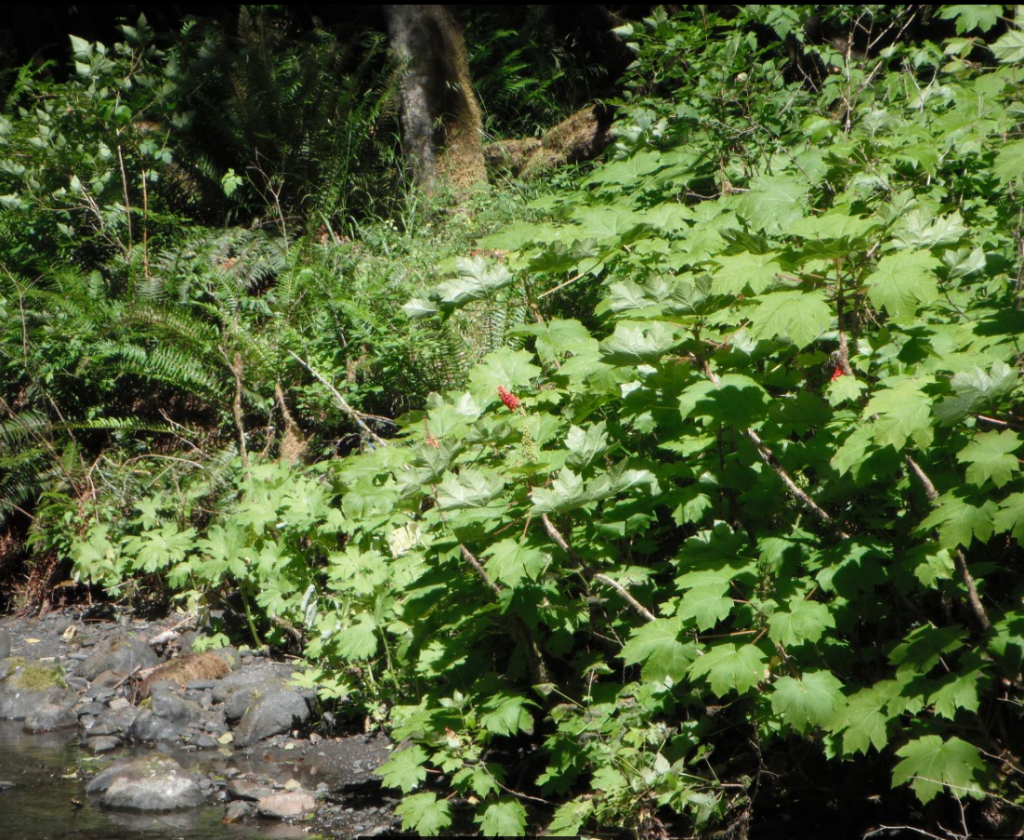
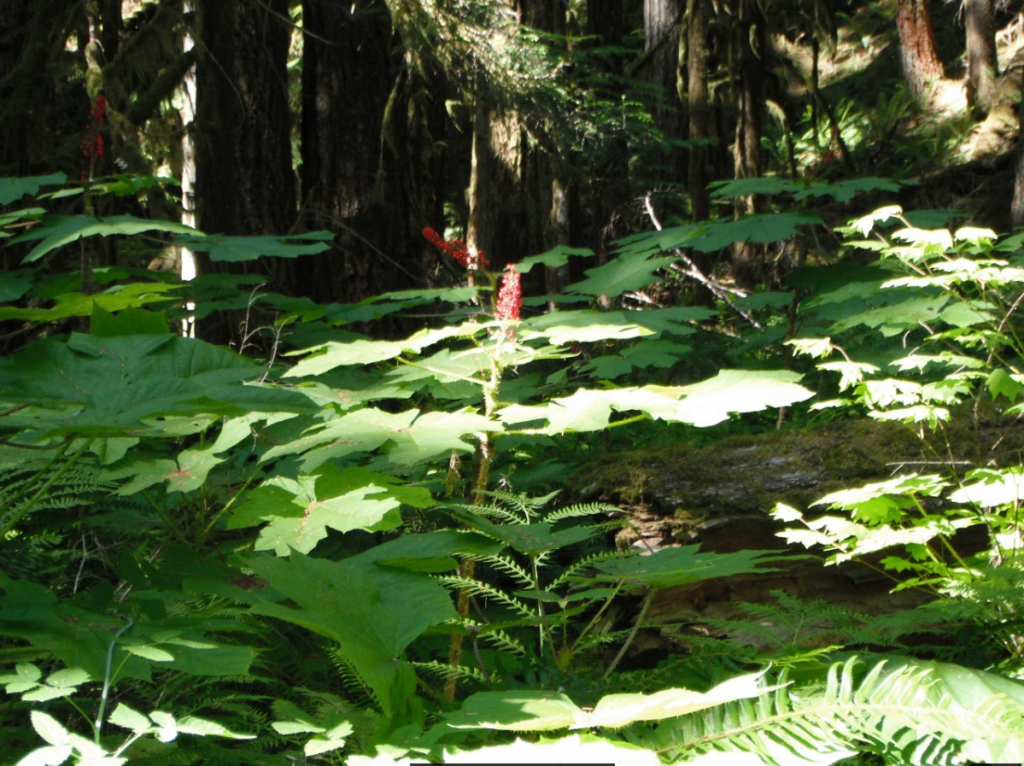
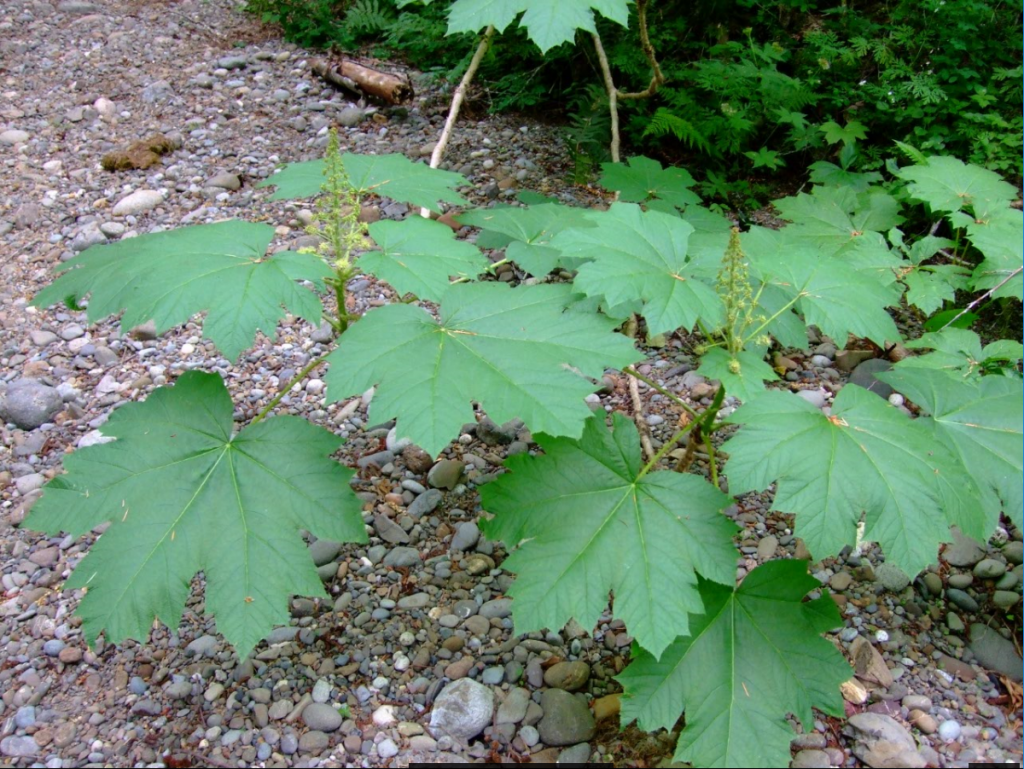
 Phenology: Bloom time: May-July; Fruit ripens: June-August, persisting over winter.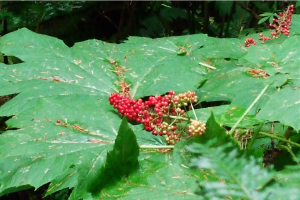
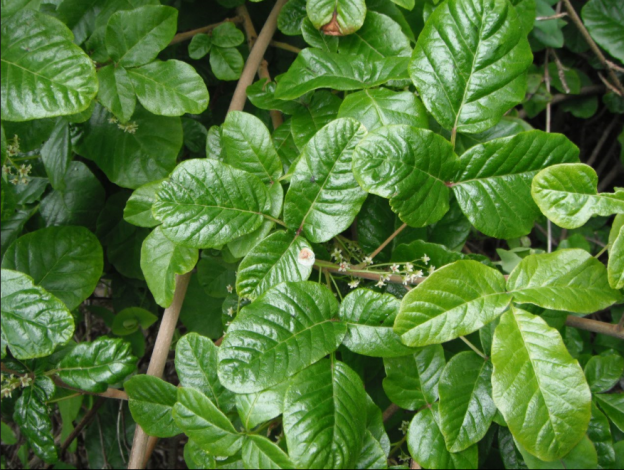
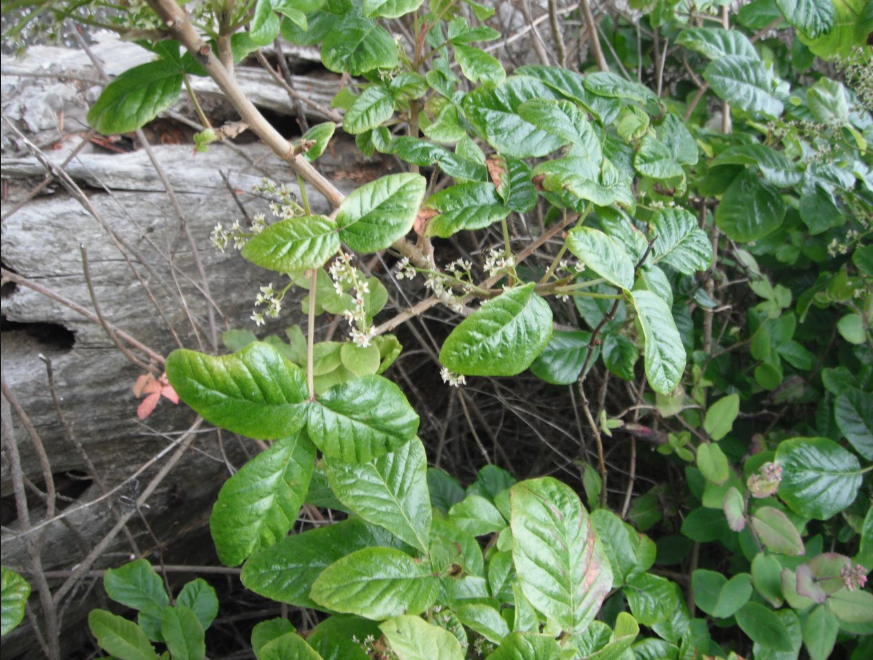 Names: Pacific Poison-Oak belongs to a genus of plants well known to cause severe skin irritation after contact. Toxicodendron means “poison tree.” Diversilobum means “different lobes,” due to its irregularly lobed leaflets that resemble oak leaves. This species may also be called Western or California Poison-Oak or Yeara.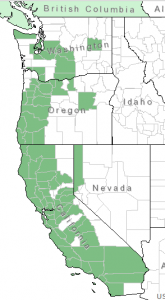
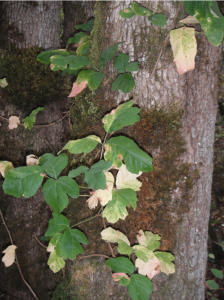 Growth: Pacific Poison-Oak is usually a shrub growing 3-6 feet (1-2m) tall, but sometimes is a vine growing up to 45 feet (15m). As a vine, a Poison-oak climbs trees or other supports by adventitious roots or by wedging stems within crevices.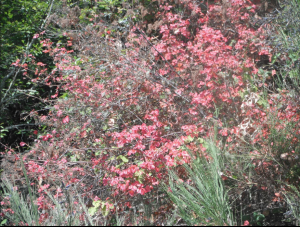
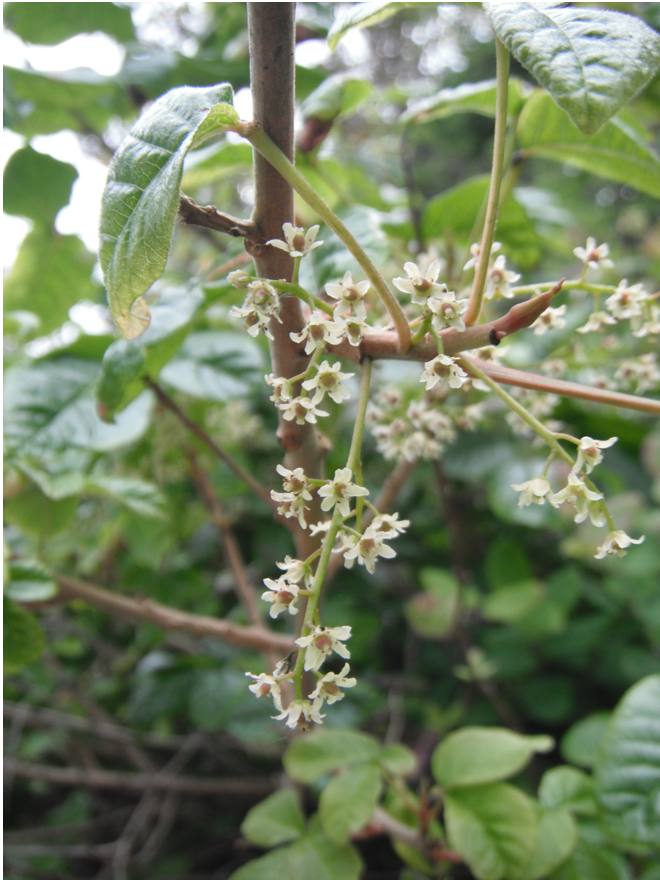
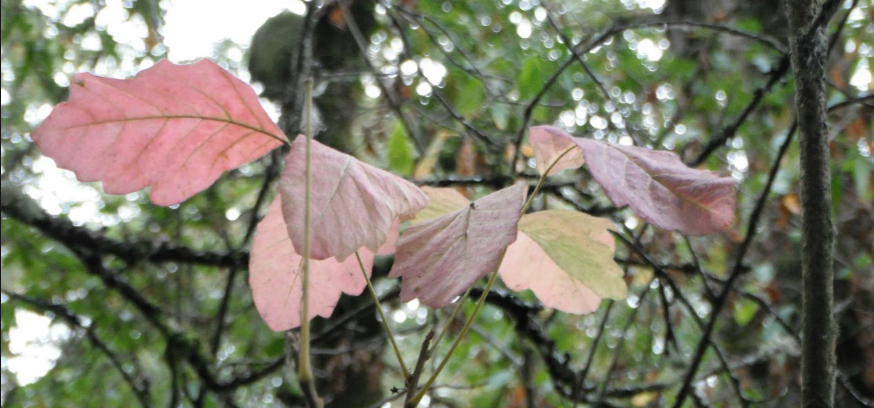
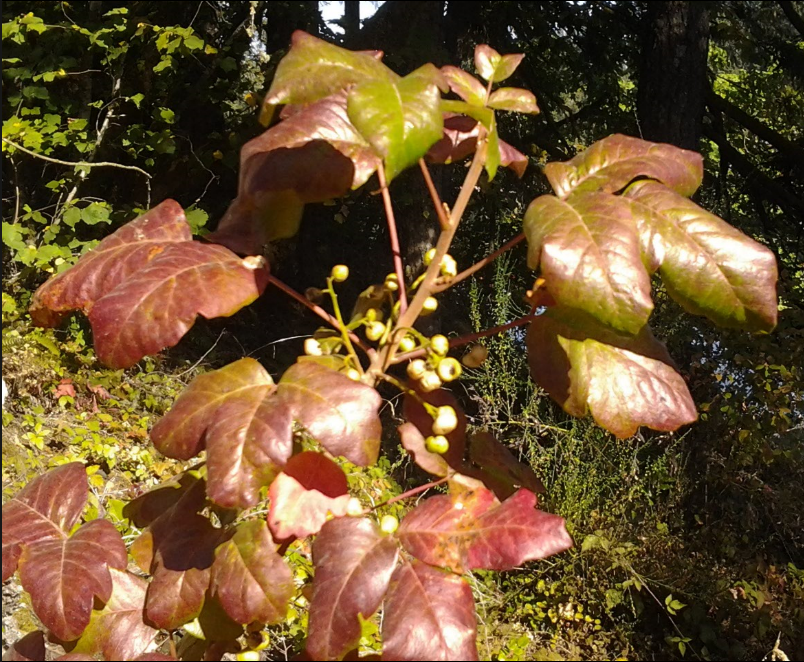 Phenology: Bloom time: April-June; Fruit ripens: August