Stink Currant The Currant Family–Grossulariaceae
Ribes bracteosum Douglas ex Hook.
(rye-BEEZ brak-tee-OH-sum)
 Names: Stink Currant is also sometimes called Blue Currant, Stinking Black Currant or Californian Black Currant. All parts of this plant are sprinkled with yellow glands that emit a sweet-skunky odor—giving it its common name. Bracteosum refers to the 1-3 tiny bracteoles (small bracts) immediately under the flower. Currants and gooseberries belong to the genus Ribes (from the Arabic or Persian word ribas meaning acid-tasting).
Relationships: Some taxonomists separate gooseberries into the genus or subgenus, grossularia. In general, gooseberry plants have prickles; currants do not. Ribes is the only genus in grossulariaceae; which is closely allied with escalloniaceae, and iteaceae; all formerly included in saxifragaceae. There are about 150 species of Ribes in the temperate regions of the northern hemisphere, northwest Africa, Central America and in the Andes of South America; with about 50 native to North America. 30 are listed in the Vascular Plants of the Pacific Northwest. About 7-8 are native to the west side of the Cascades with about a dozen more found chiefly on the east side of the Cascades and ~17 limited to California or Oregon.

Distribution of Stink Currant from USDA Plants Database
Distribution: This species is native from southern Alaska to the northern California coast, mostly on the west side of the Cascades.
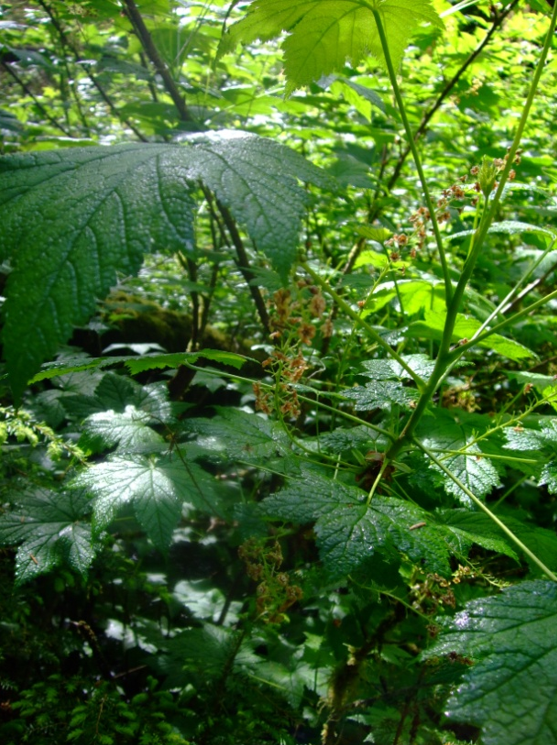
Growth: Stink Currants grow from 4-9 feet (1.5-3m) tall.
Habitat: They usually in moist to wet woods, along streambanks. Wetland designation: FAC, Facultative, it is equally likely to occur in wetlands or non-wetlands.
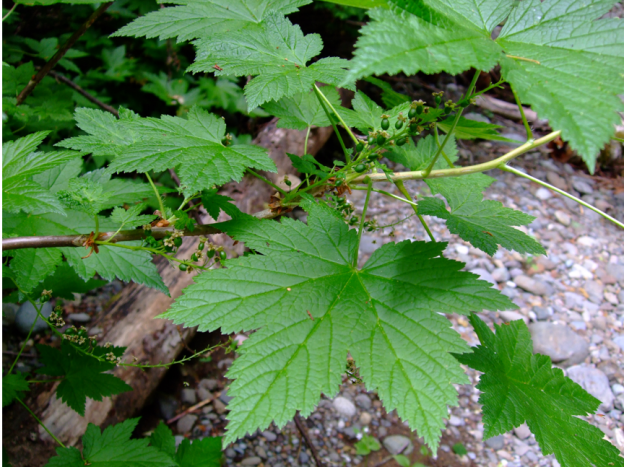
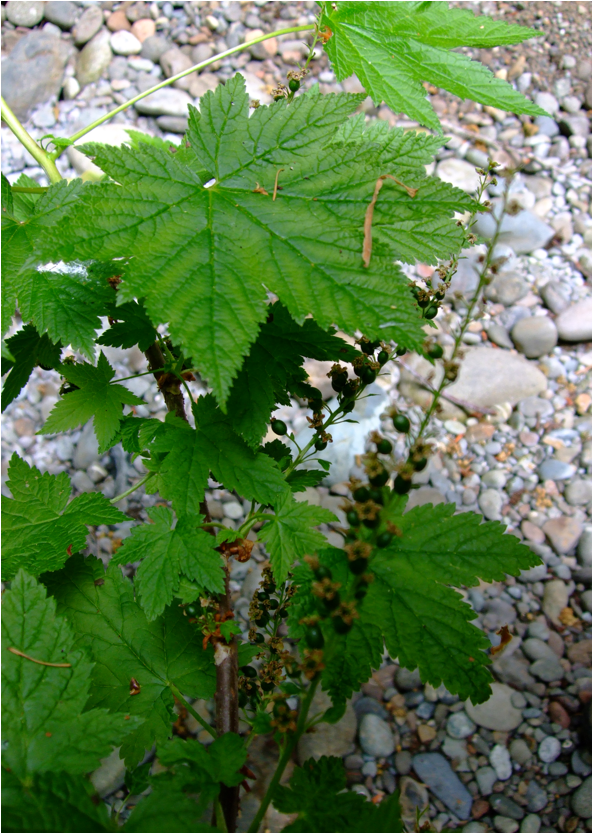
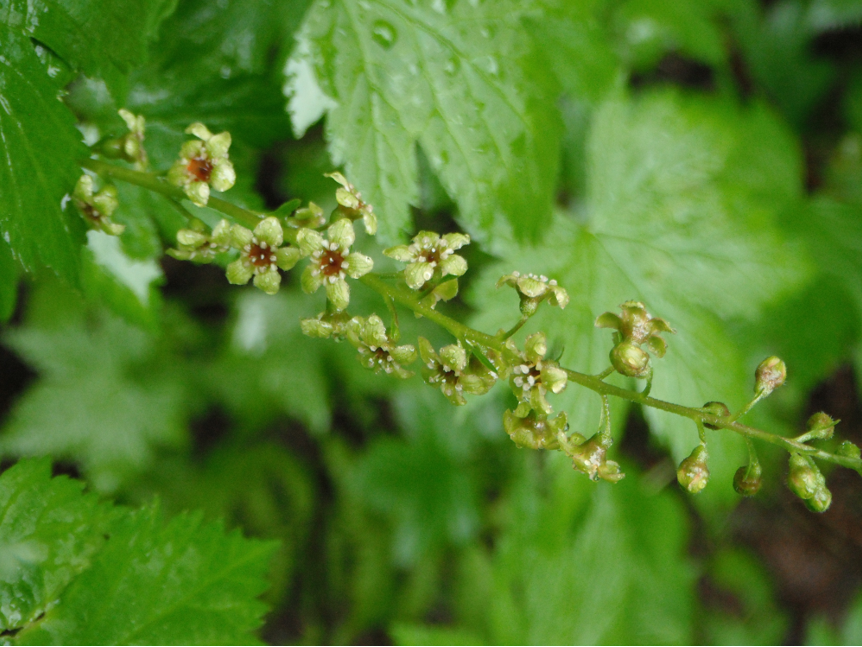
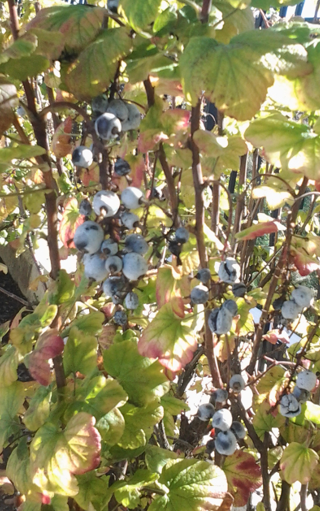
Diagnostic Characters: Leaves are large, like maple leaves, sparsely hairy to smooth, with 5 to 7 lobes, stinky when crushed. Flowers are numerous on mostly erect clusters; with white petals and brownish-purple to greenish-white calyces. Berries are blue-black with a whitish bloom.
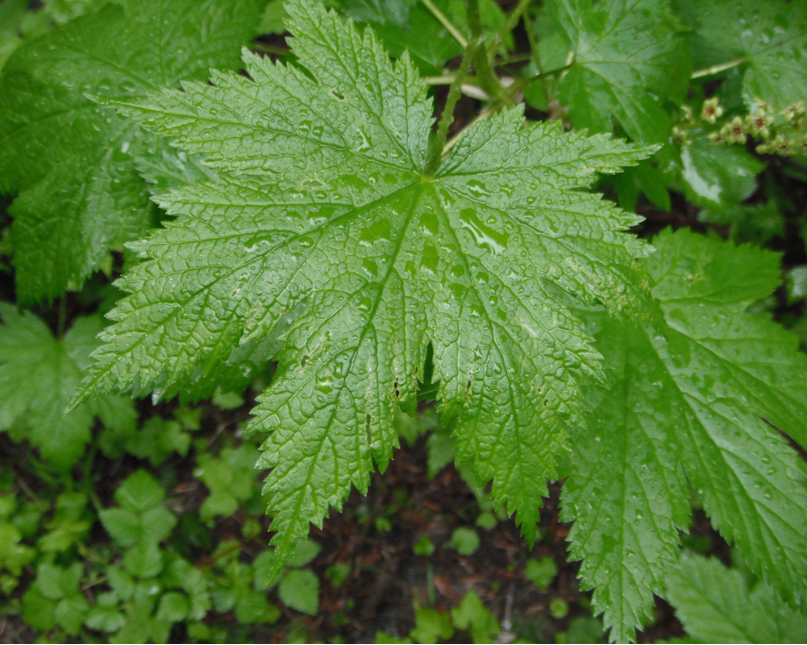
In the Landscape: Stink Currant has not been used much in ornamental landscapes but its large maple-like leaves are attractive and its flowers are interesting. The leaves turn yellow in the fall, It could be just the right plant for a shady woodland garden next to a babbling brook.
Phenology: Bloom time: May-June. Fruit ripens: August-September.
Propagation: Seed is best sown as soon as it is ripe in the autumn in a cold frame. Stored seed requires 3 months cold stratification at 35º F (2º C) Cuttings of semi-hardwood taken in July/August or of mature wood November-February are possible.
Use by People: Berries were eaten fresh, often with grease or oil, by several native tribes. The Quileute removed the pith from the stem and used them to inflate seal stomachs that were used to carry oil. The leaves were used to cover hemlock bark containers in which elderberries were stored. The berries have been variously described as unpleasant, disagreeable and not very palatable to bland, slightly bitter, not very juicy, mealy textured, to not unpleasant, having a mild black currant flavor, and delicious. The fruit can be used in pies, preserves, or jams.
Use by Wildlife: Currants and gooseberries are an important food for songbirds, chipmunks, and ground squirrels. Flowers are pollinated by insects and hummingbirds. The foliage is eaten by Butterflies.
Links:
Consortium of Pacific Northwest Herbaria
WTU Herbarium Image Collection, Plants of Washington, Burke Museum
E-Flora BC, Electronic Atlas of the Flora of British Columbia
Jepson Eflora, University of California
Ladybird Johnson Wildflower Center
Native American Ethnobotany, University of Michigan, Dearborn
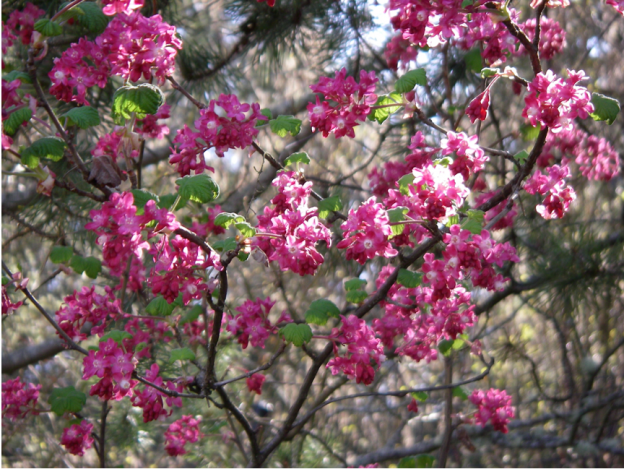
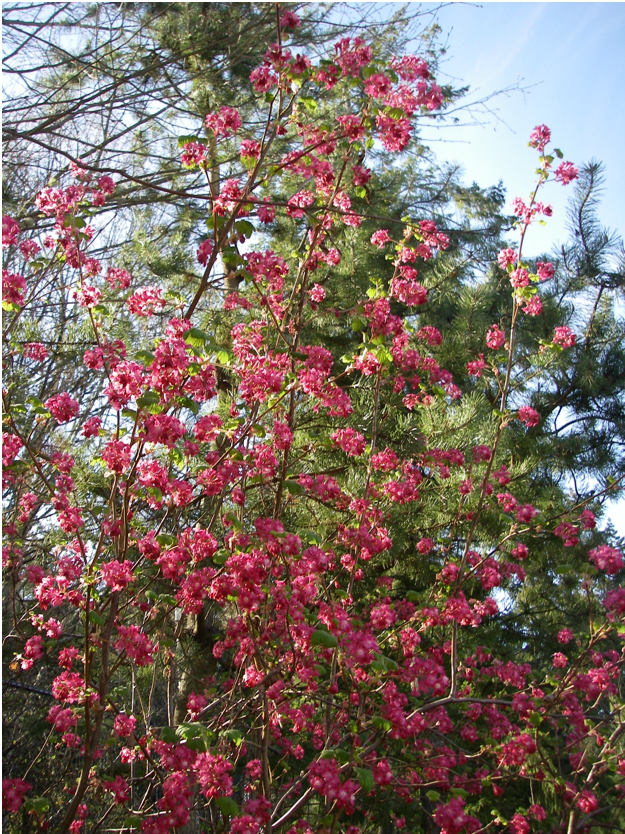
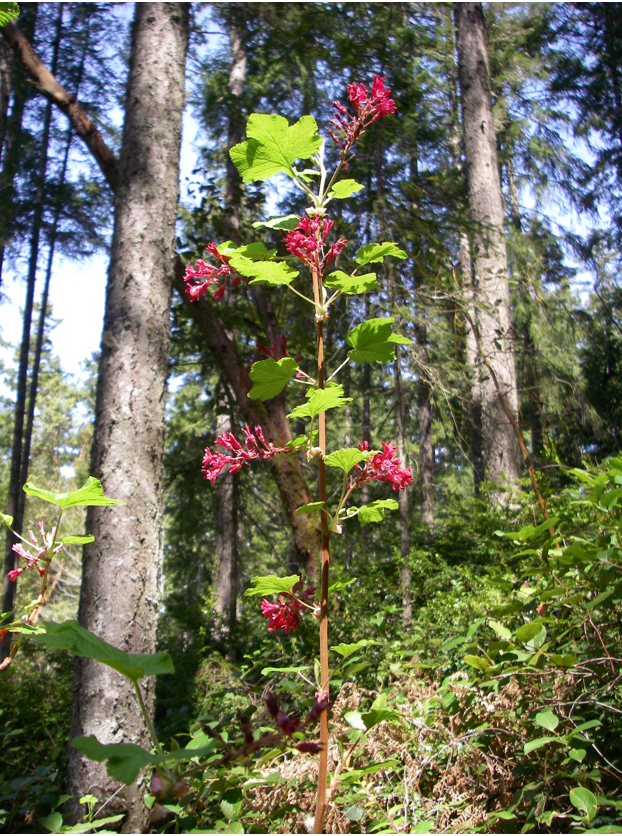
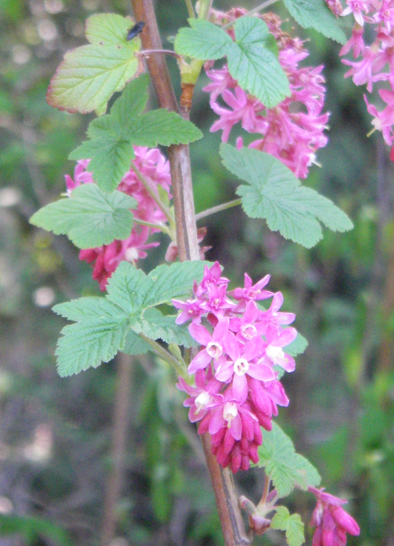
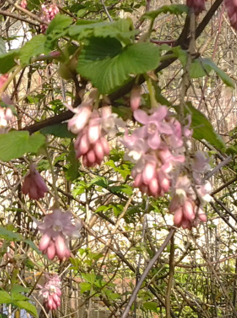
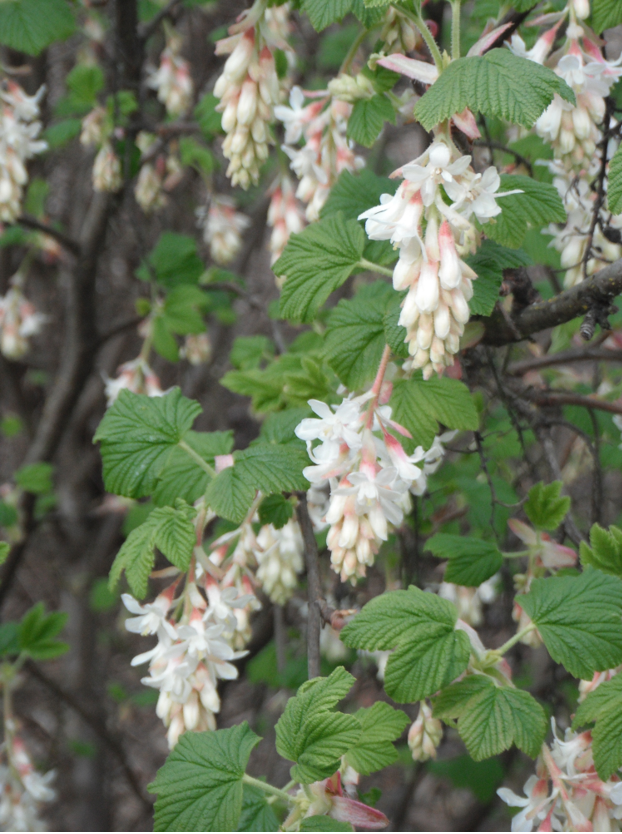
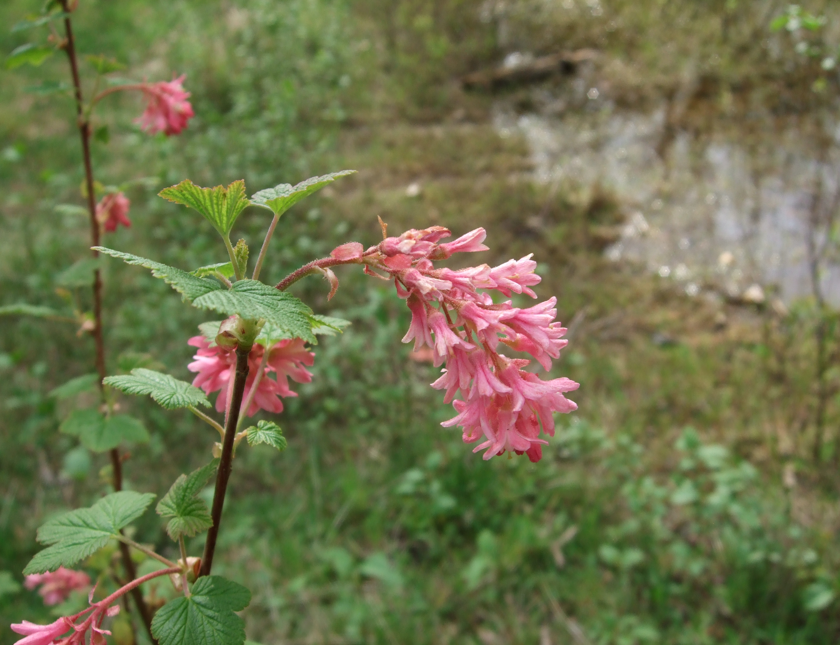
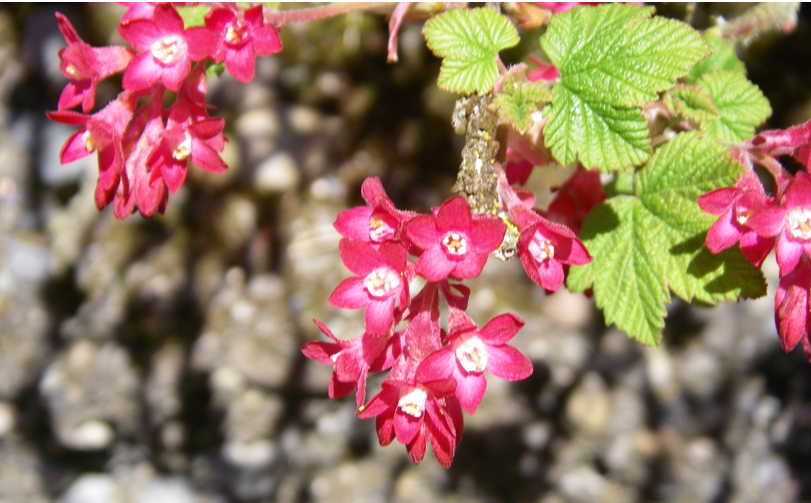
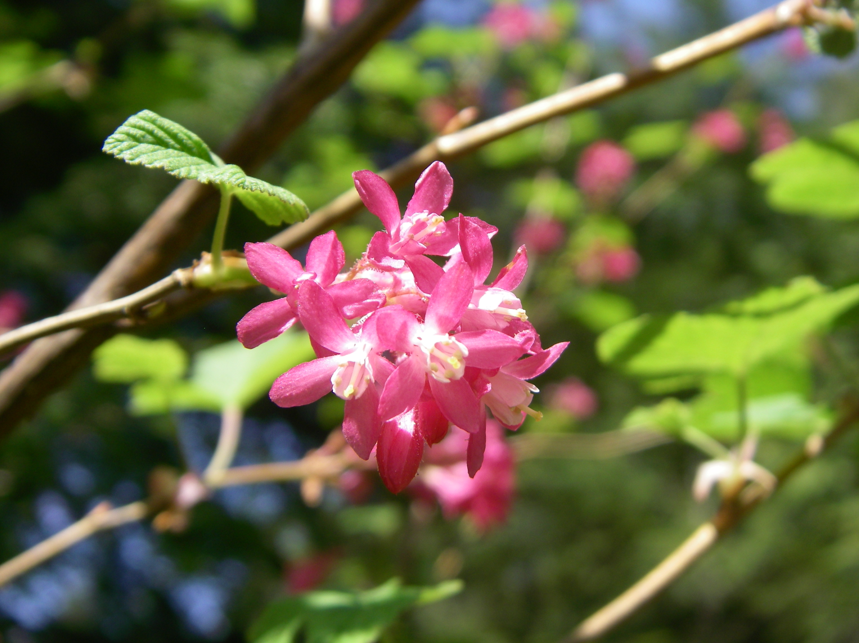
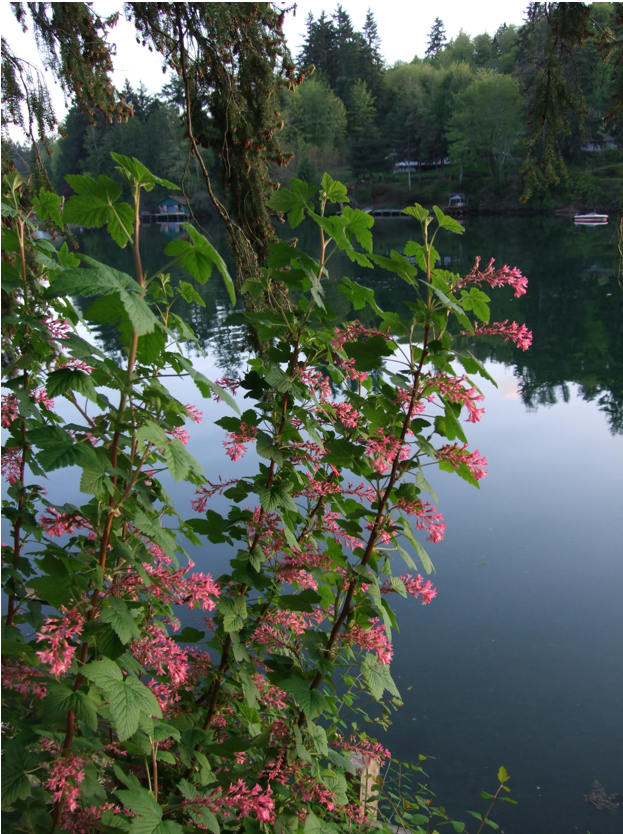 Names: Other common names include Pink Winter Currant and Blood Currant. Sanguineum means “blood-red;” referring to the color of the flowers; although the flowers are usually a rosy or pale pink. You may find plants with flowers ranging from white to a deep red. There are several named cultivated varieties with red, pink, two-tone or white flowers. Var. glutinosum, found along the coast of California and Oregon, has less hairy leaves. Currants and gooseberries belong to the genus Ribes (from the Arabic or Persian word ribas meaning acid-tasting).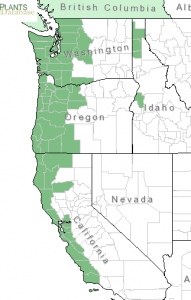
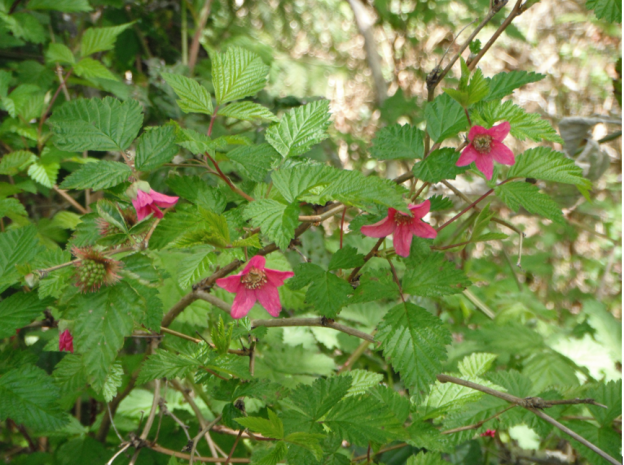
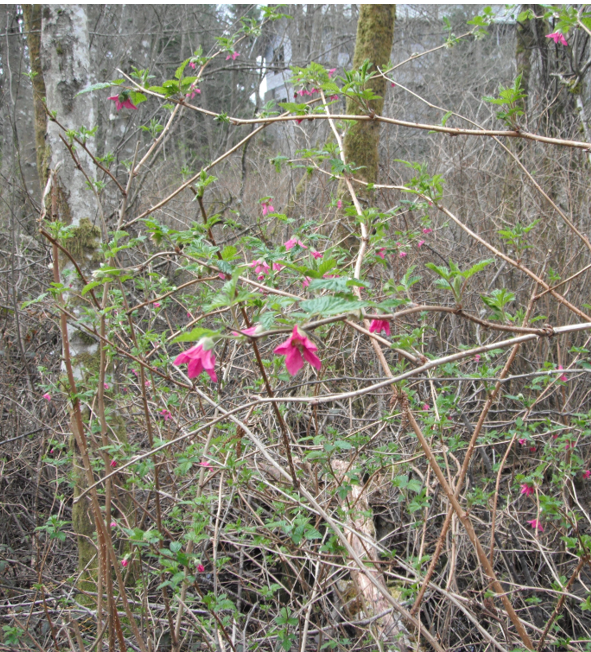
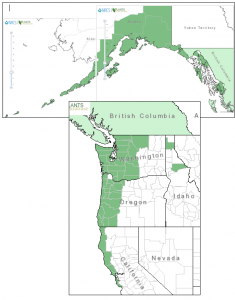
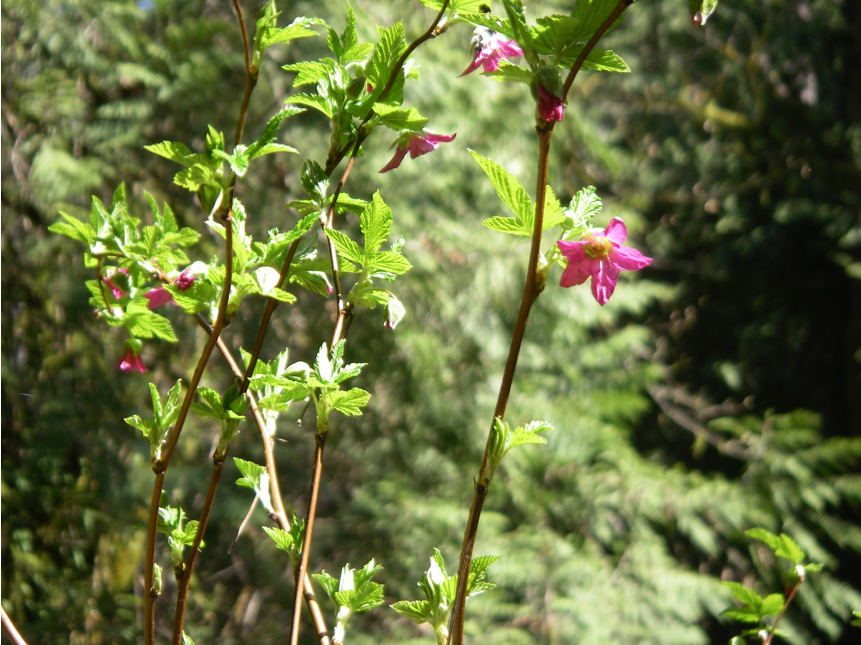
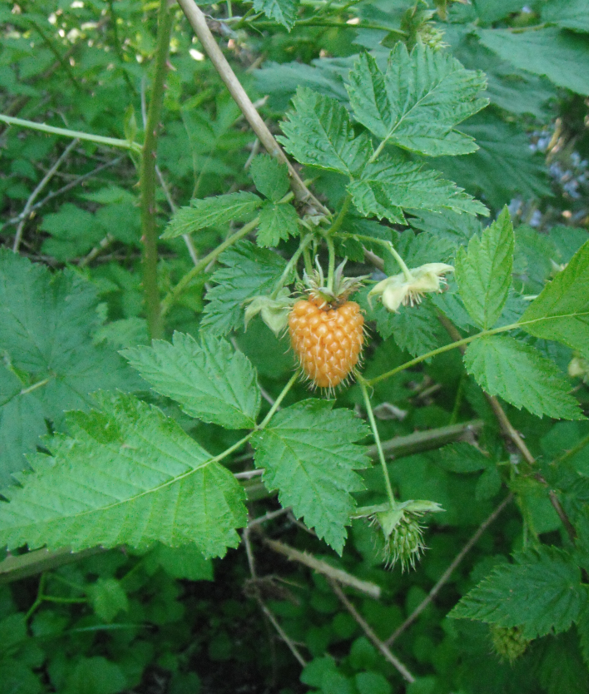 Diagnostic Characters: The arching stems of Salmonberry have golden-brown, shedding bark, similar to Pacific Ninebark. Salmonberry stems, although largely unarmed, can range from having scattered prickles to being very bristly. Smaller twigs zigzag slightly from node to node. Leaves have 3 sharply toothed leaflets, the lateral ones smaller and sometimes unequally lobed or divided. Five-petalled flowers are a striking pink to reddish-purple. The fruits are raspberry-like with a hollow core, ranging from yellow to orange-red.
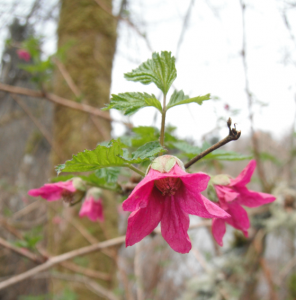 Phenology: Bloom time: April-May. Fruit ripens: May-July.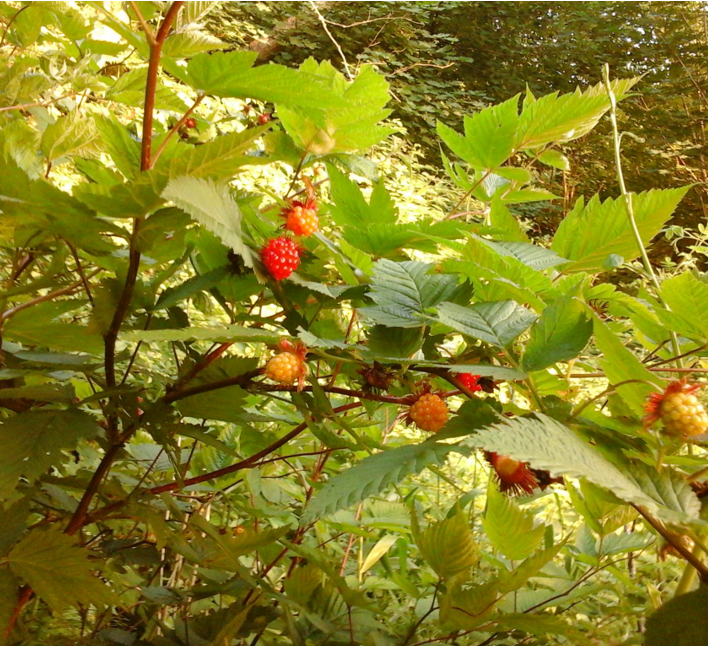
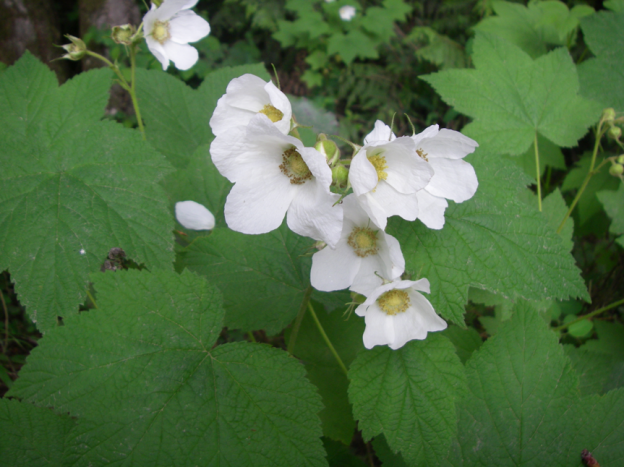
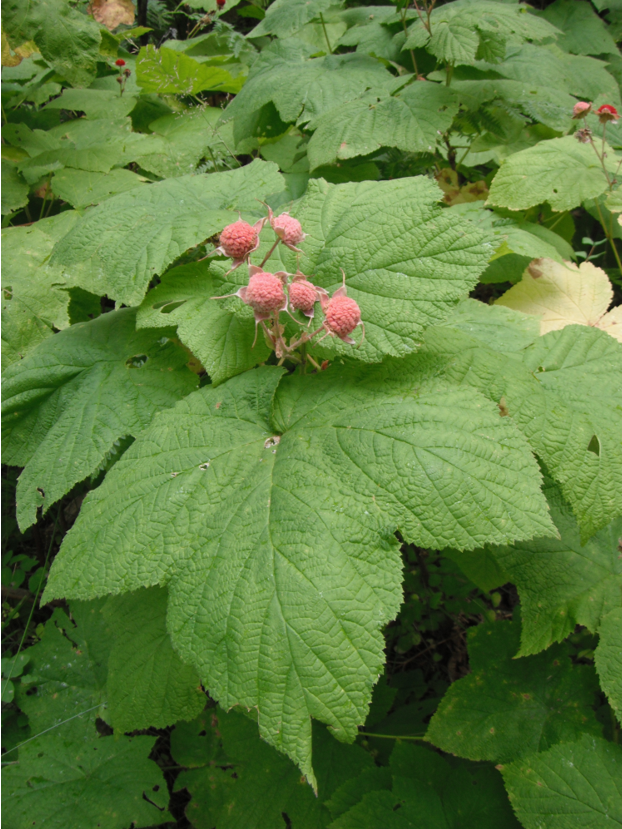 Names: Thimbleberries have a hollow core, like raspberries, making the berries easy to fit on the tip of a finger like a thimble. Rubus is derived from ruber, a latin word for red. Although parviflorus means small-flowered, the flowers of this species are among the largest of any Rubus species; it may get its name from a comparison to white wild roses. This species may also be called Western Thimbleberry, Western Thimble Raspberry, or White-flowering Raspberry.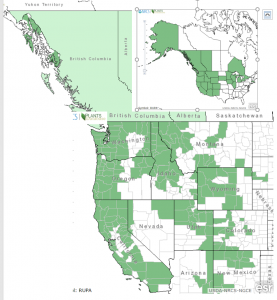
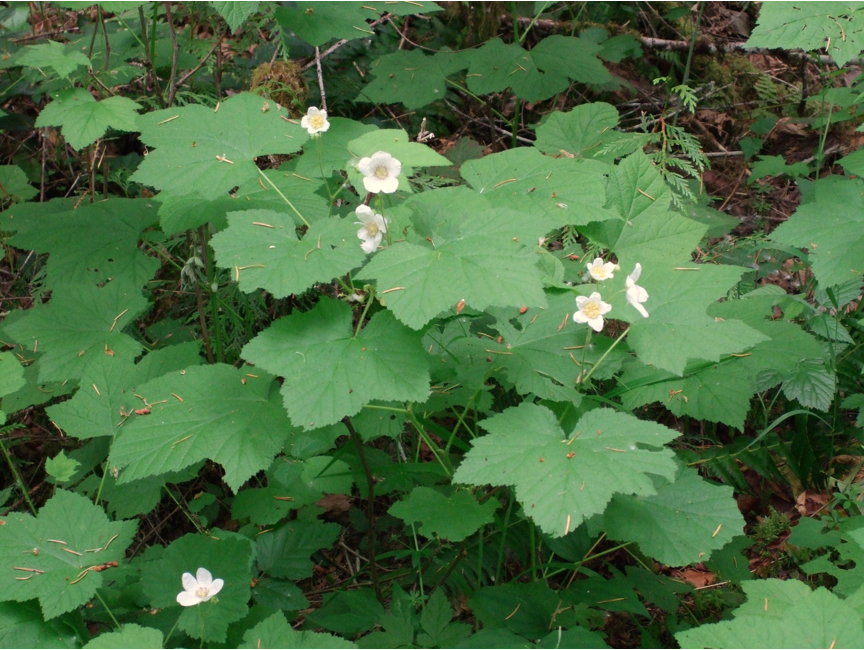
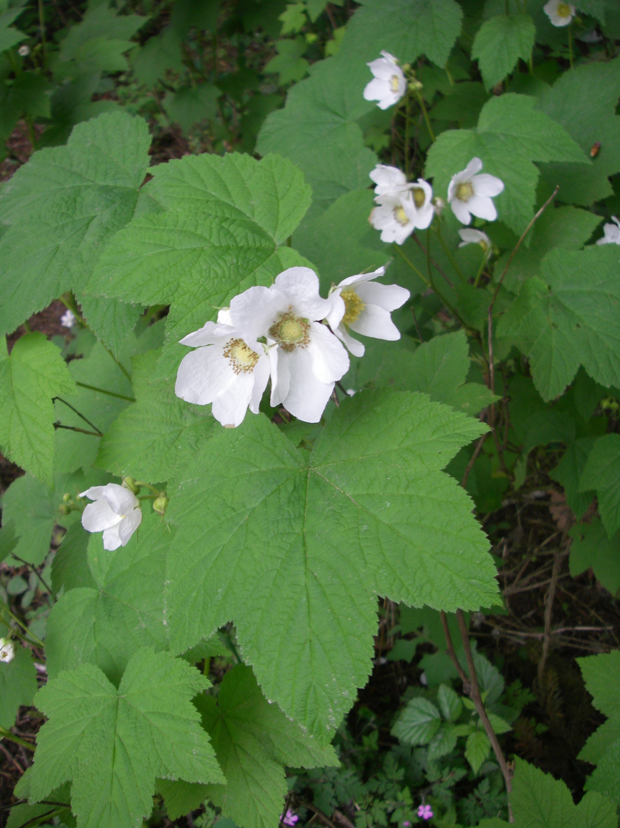 Diagnostic Characters: Thimbleberry stems have no prickles, and gray, shedding bark. Leaves are large, lobed, like maple leaves and fuzzy on both sides. Flowers are white and large (about 4 cm); borne 3-7 in a terminal cluster. The fruit is an aggregate of small, red, hairy drupelets in the shape of a domed cap.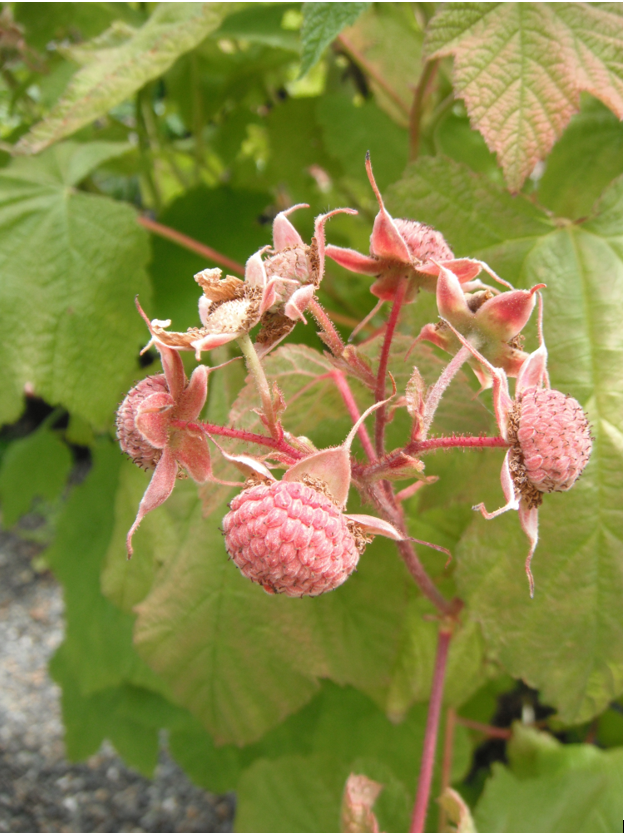
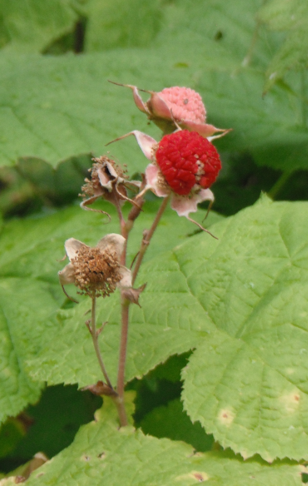
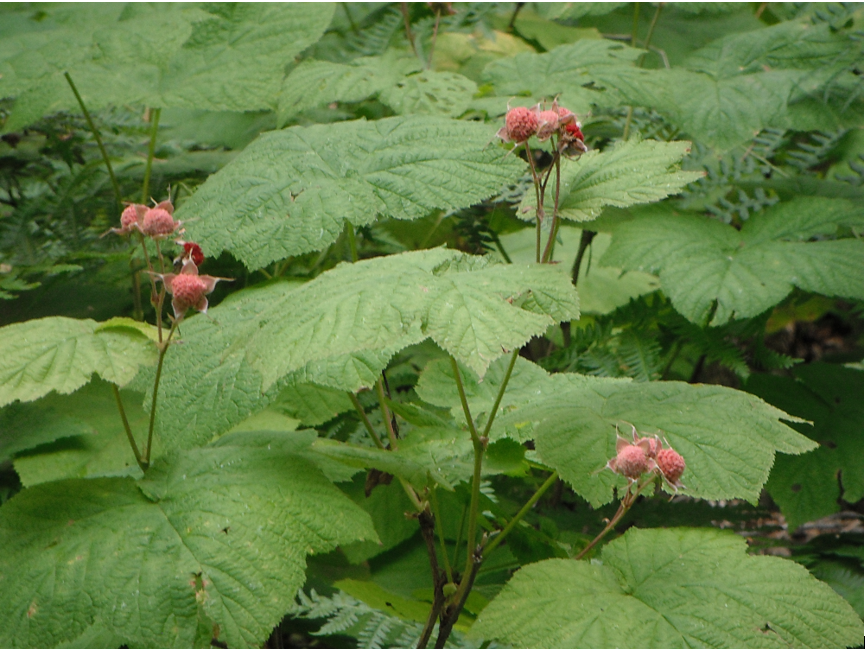
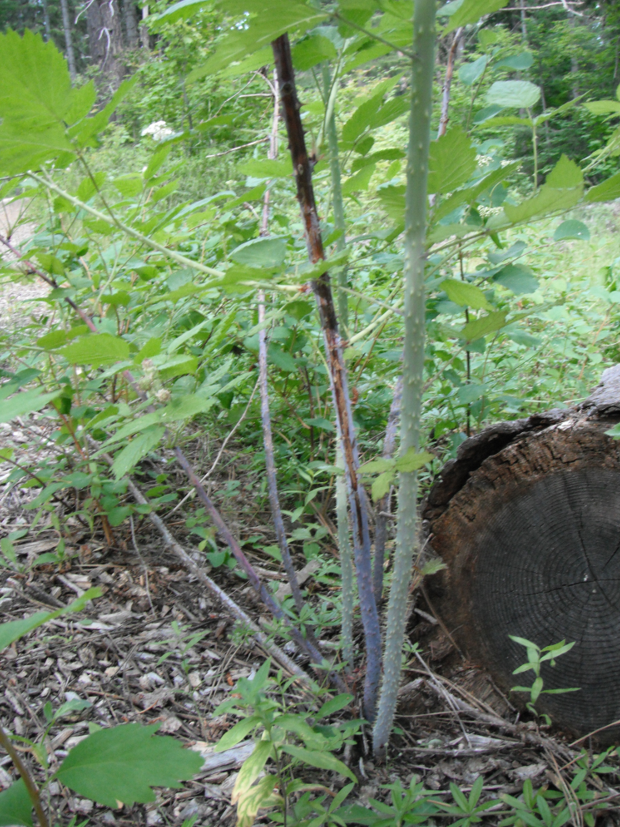 Names: Blackcap Raspberry is also known as Whitebark Raspberry or simply Black Raspberry. Rubus, derived from ruber, a latin word for red, is the genus of plants generally called brambles. It includes blackberries, raspberries, dewberries, and cloudberries. Rasp- may have come from a 15th century word, raspis, which means “a fruit from which a drink could be made.” “Leucodermis means white skin, or “whitebark”—referring to the very glaucous (whitish bloom) on its stems.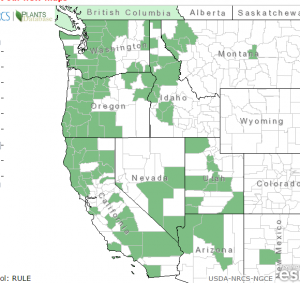
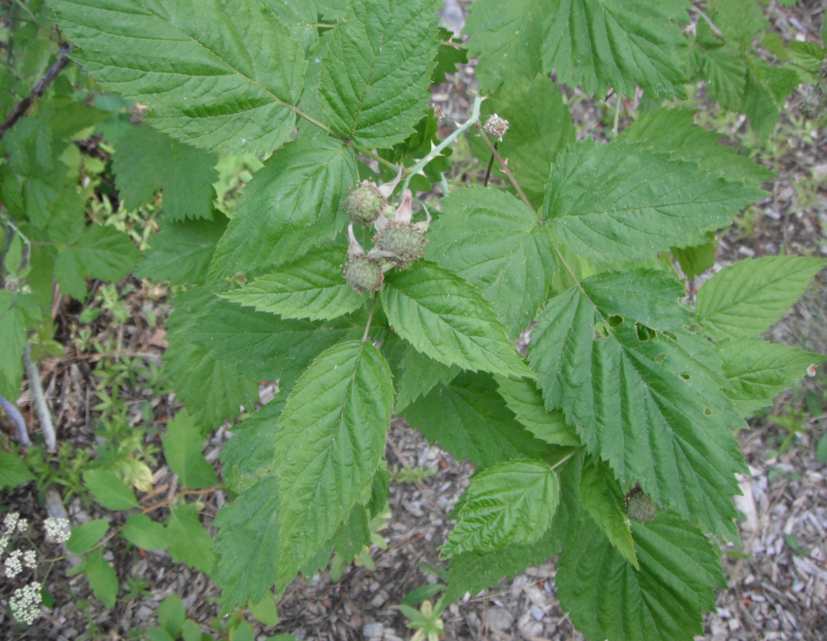
 Phenology: Bloom time: May-June; Fruit ripens: Jul-Aug.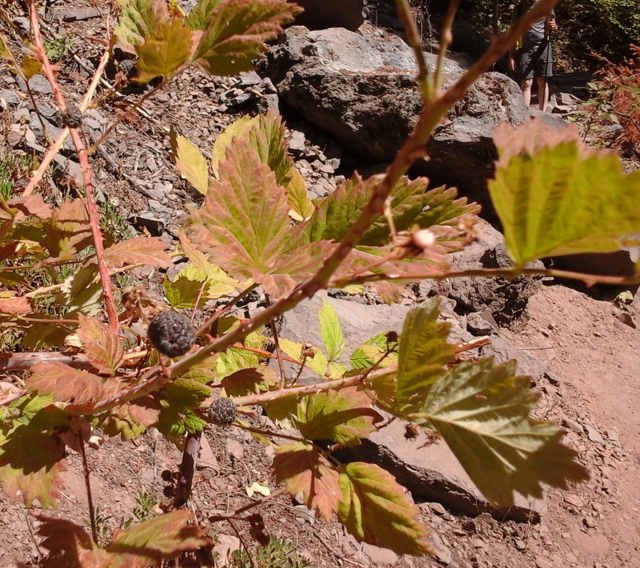
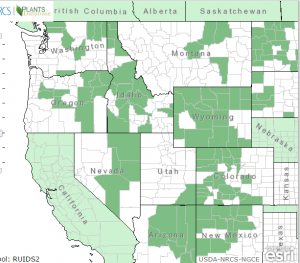
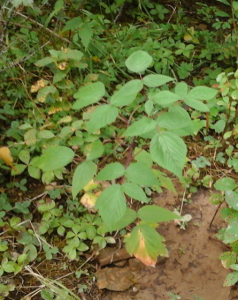
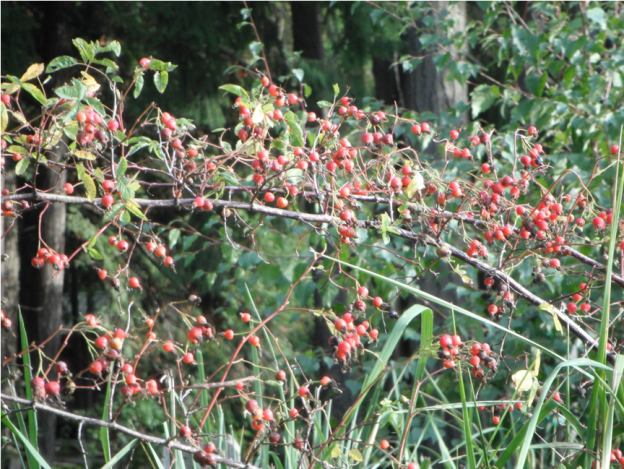
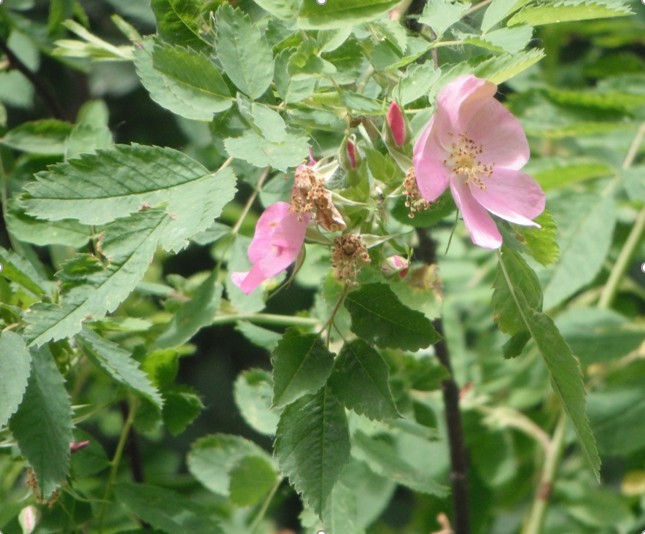
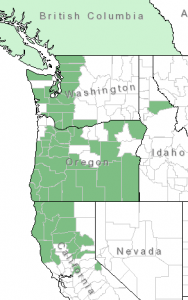
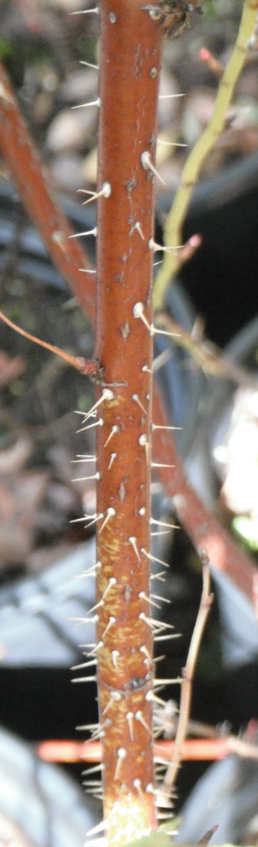
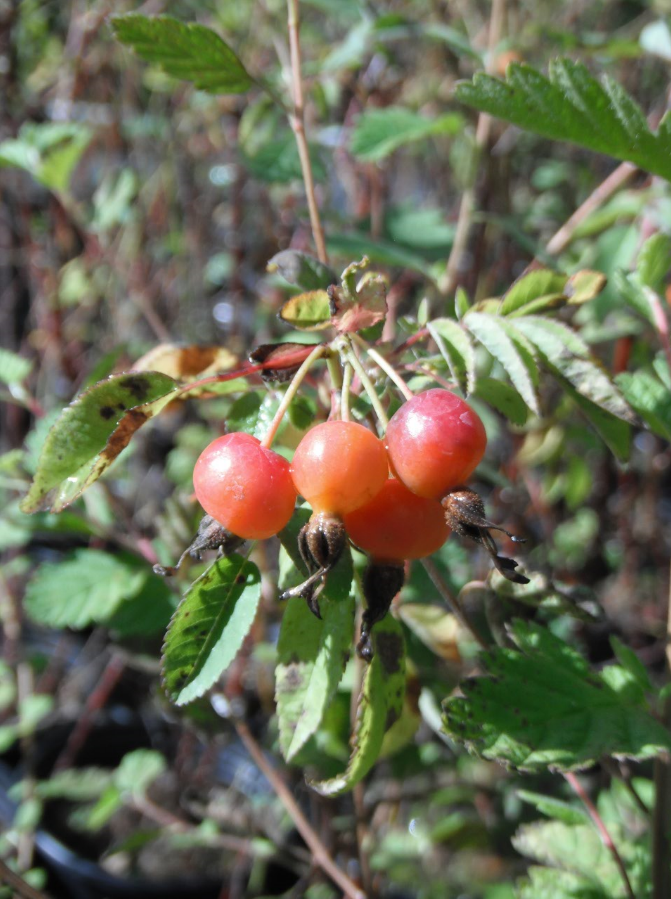
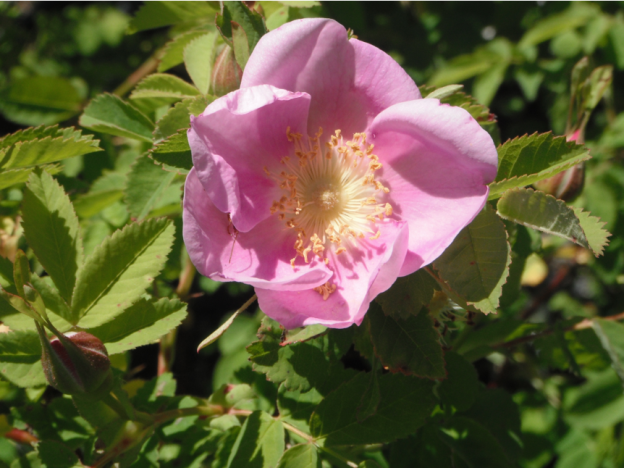
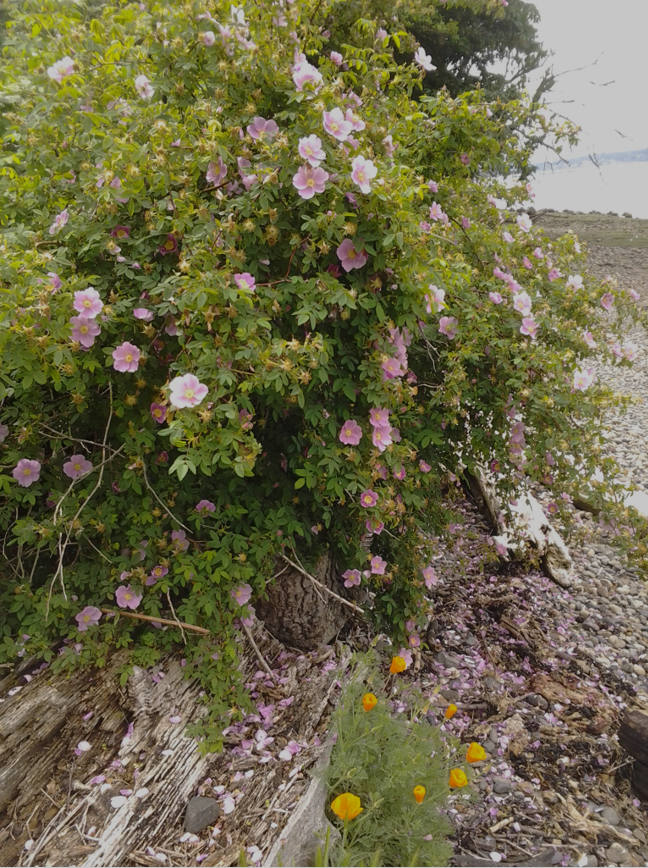 Names: Nutkana is derived from Nootka; Nootka Sound is a waterway on the west coast of Vancouver Island in British Columbia that was named after the Nuu-Chah-Nulth tribe that live in the area. Nootka Rose is sometimes called Common, Wild, or Bristly Rose. There are four recognized varieties whose names suggest differences in bristling.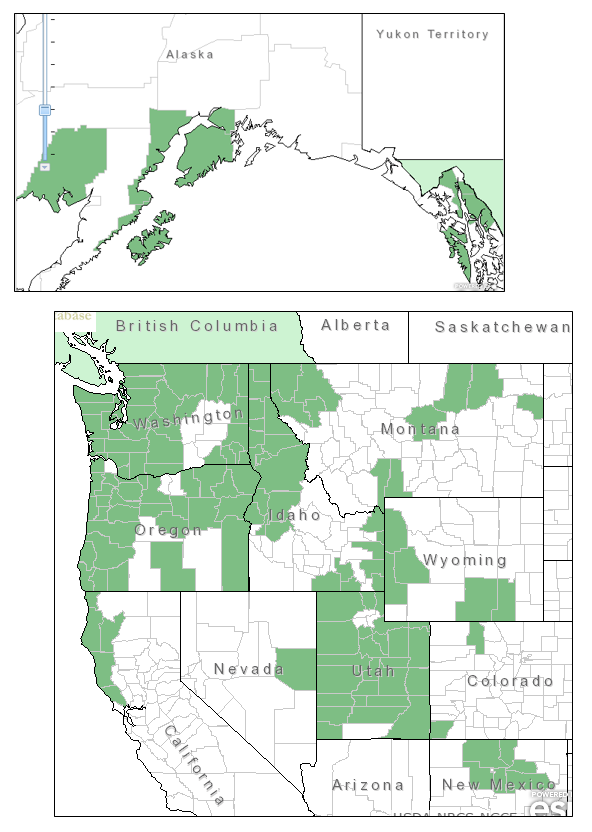
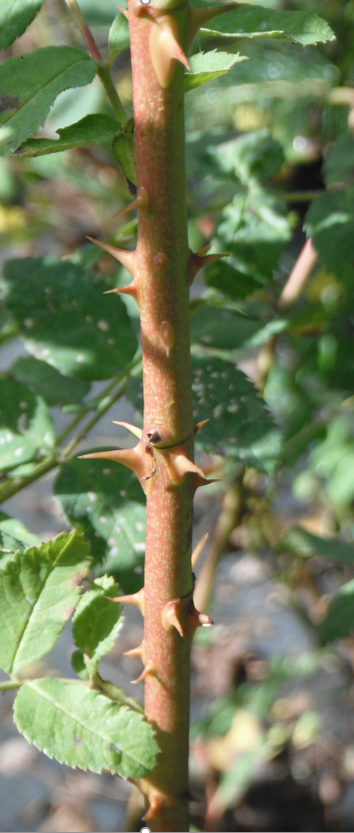
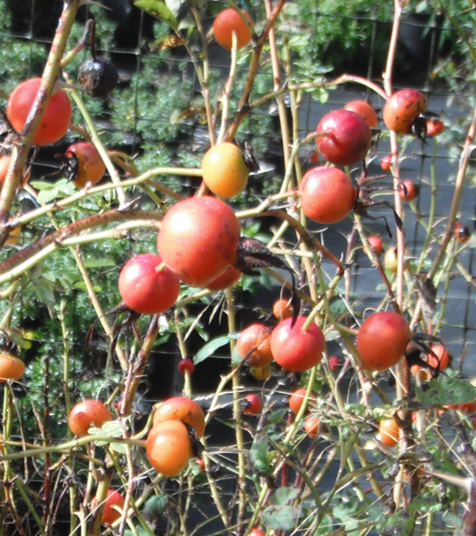
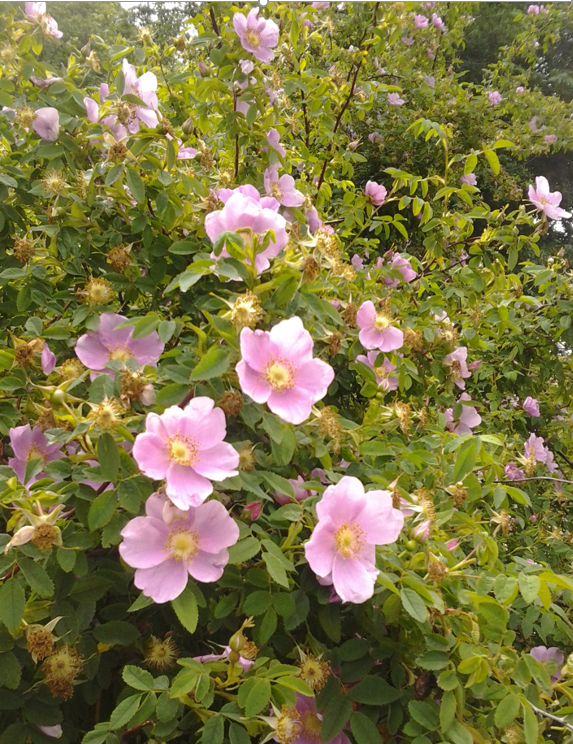 In the landscape, Nootka Rose is beautiful but can be aggressive. It is great as a barrier plant, growing into an impenetrable thicket. Its fragrance fills the air in a seaside habitat. It is valuable for stabilizing banks, especially along streams.
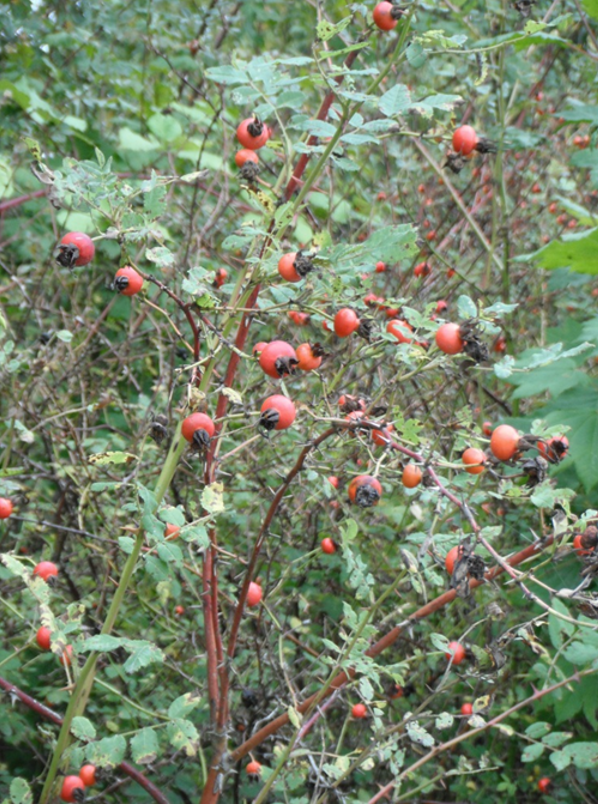 Use by People: Some natives ate the hips, raw or dried, or they boiled them to make a tea. The fruit tastes better after a frost. Care should be taken, however, there is a layer of hairs around the seeds (actually achenes); these hairs can cause irritation to the mouth and digestive tract. A decoction of the roots was used to treat sore throats or as an eyewash. The bark was used to make a tea to ease labor pains. Rose hips are sometimes used to make jams or jellies; they are rich in vitamins, such as A, C, & E.
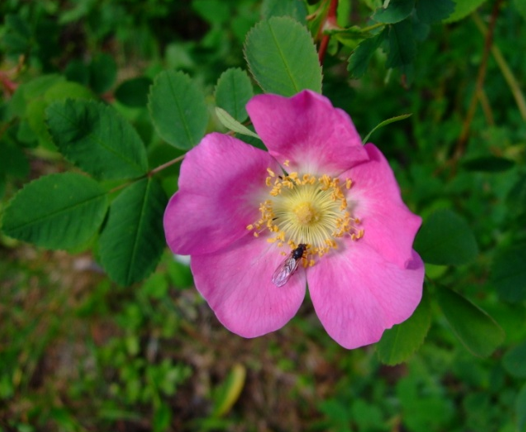 Use by Wildlife: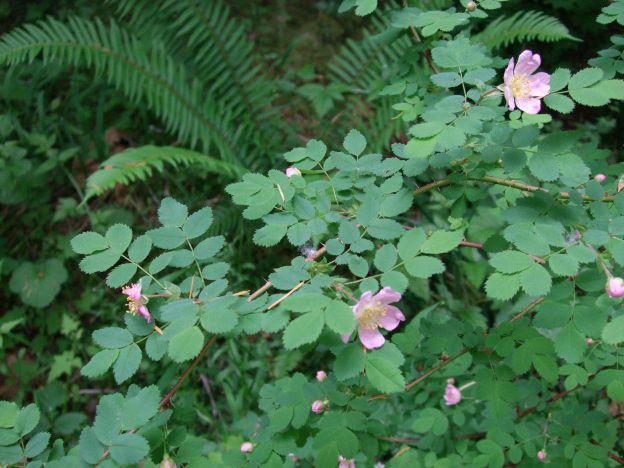
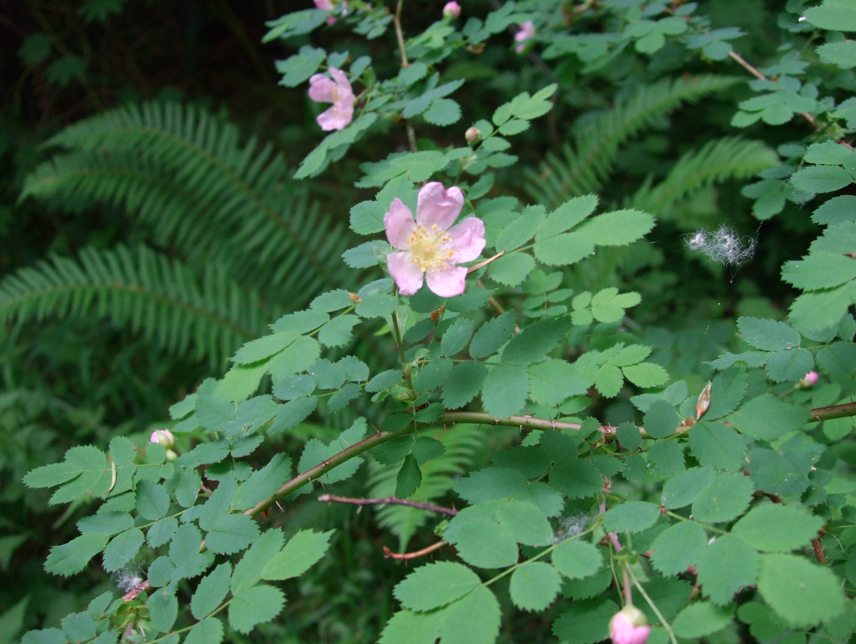 Names: Baldhip Rose is also sometimes called Wood Rose, Dwarf or Little Wild Rose. Baldhip and Gymnocarpa (meaning naked fruit), refer to the fact that the flower sepals do not remain attached to the fruit.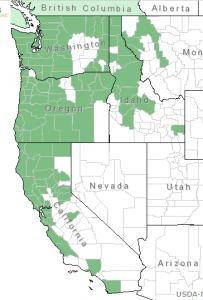
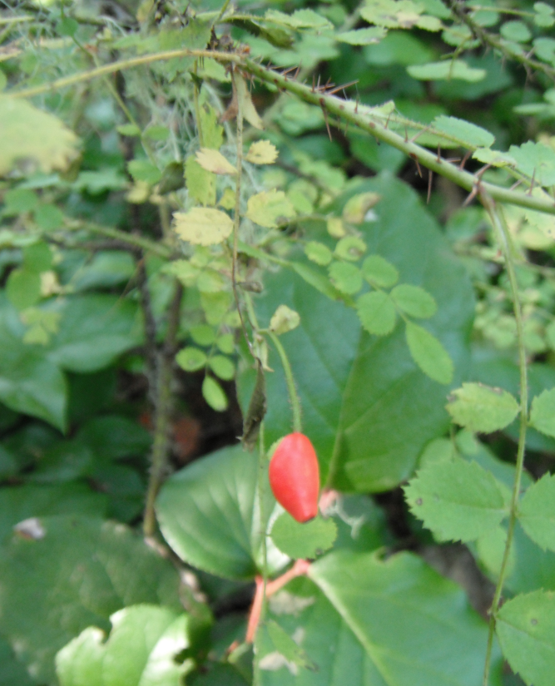 Diagnostic characters: Bald-hip Rose is the easiest to distinguish from the other roses. Its stems have many soft, bristly, straight prickles. Leaves have 5-9 toothed leaflets. Flowers are small, pale pink to rose, fragrant, and are usually borne singly at the ends of branches. Fruits are small, red, pear-shaped, berry-like hips, with no sepals remaining attached.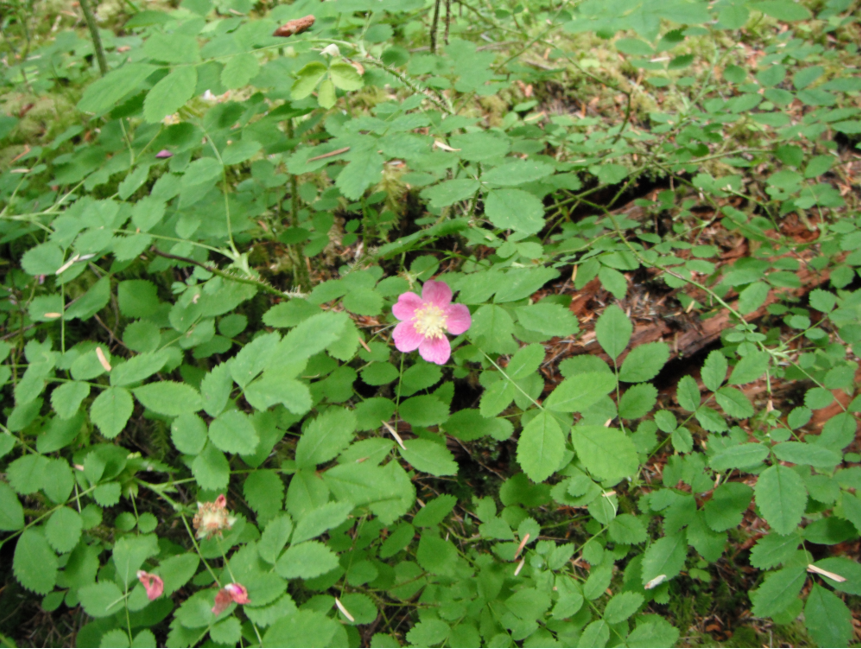
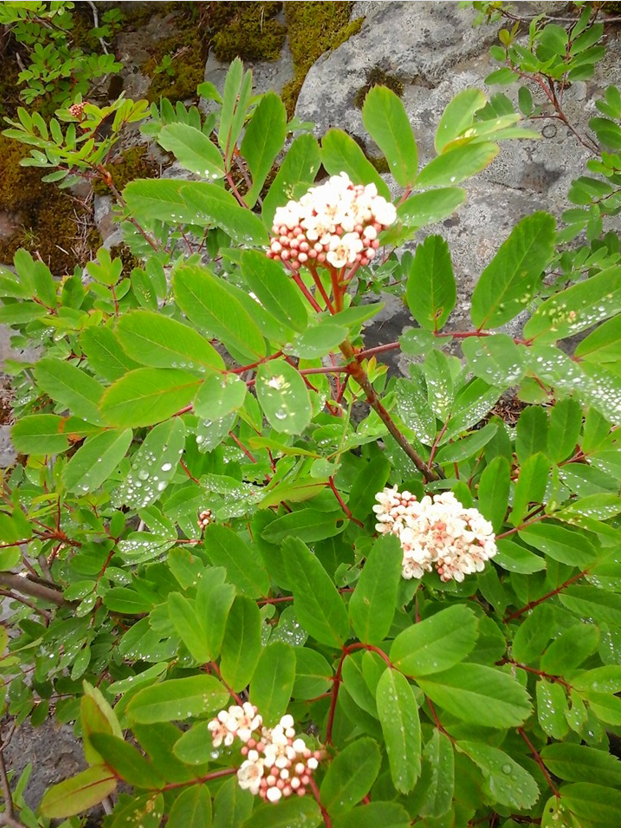
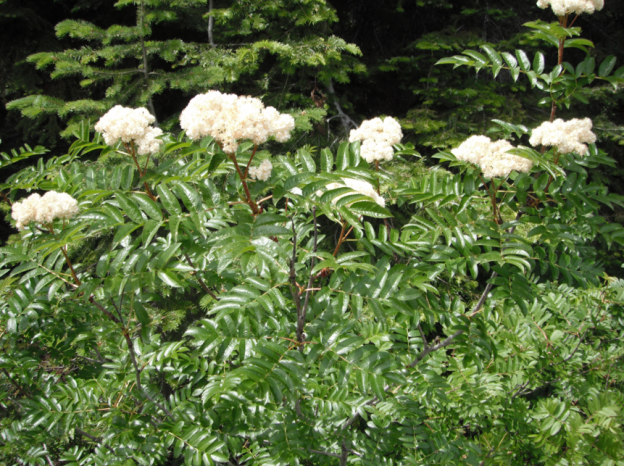
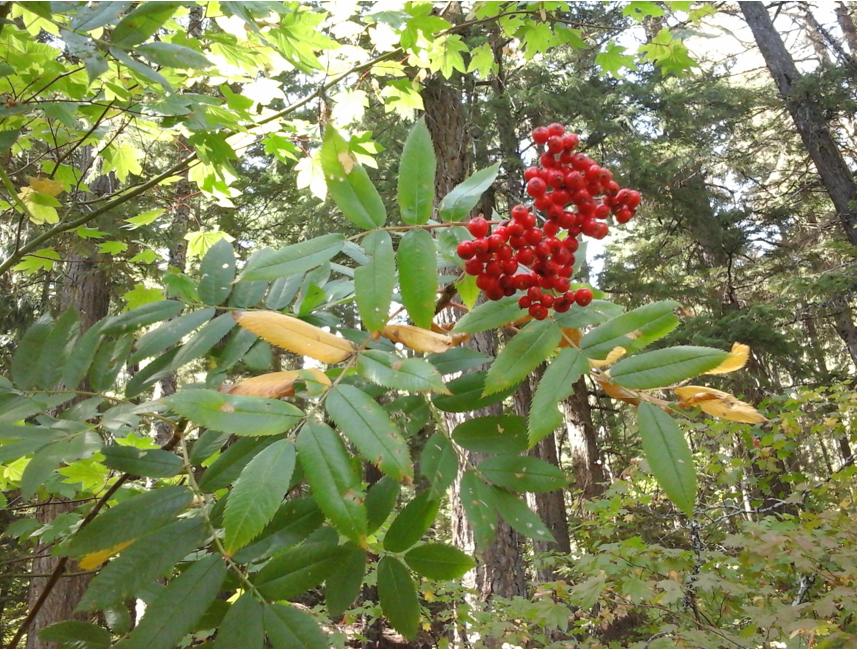
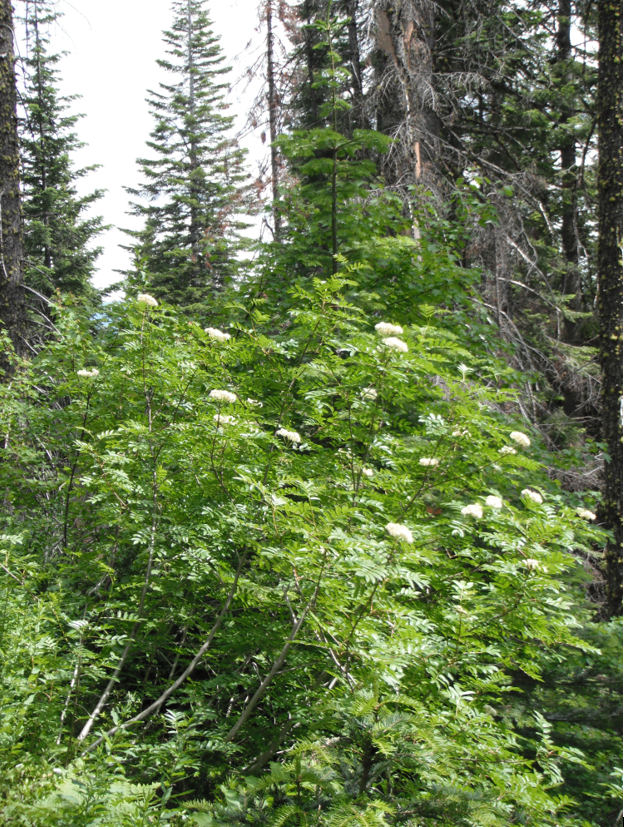 Names: Mountain Ashes also known as Rowans, Whitebeams, and Service Trees. True Ashes belong to the unrelated genus, Fraxinus. The word Rowan is thought to be from a Norse word for tree, or a Germanic word meaning “getting red,” referring to its fall foliage color and berries. Rowans were important trees in celtic mythology; the wood was used for Druid’s staffs, magic wands and dowsing rods. Scopulina means “of rocky places.” This species is also known as Rocky Mountain, Cascade, or Greene’s Mountain Ash, named after botanist, Edward Lee Greene.
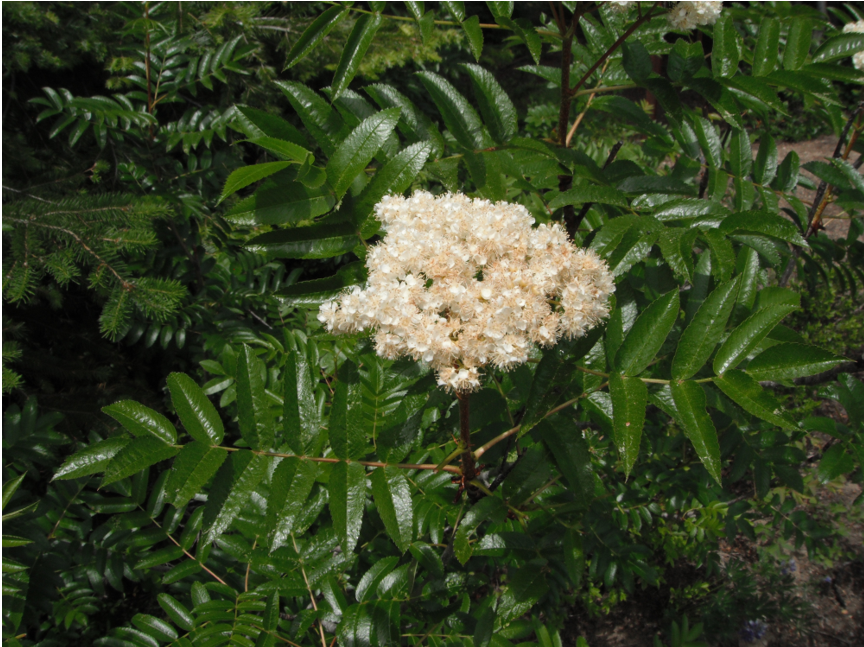 Relationships: There are about 100-200 species of Sorbus in the Northern Hemisphere and about half a dozen Sorbus species native to North America. Eurasian species have been introduced, become naturalized and interbred with native species; most notably, the European Mountain Ash, Sorbus aucuparia. Variety cascadensis, Cascade Mountain Ash, differs from the species by usually having 11 leaflets or fewer, and persistent stipules, whereas var. scopulina usually has some leaves with 13 leaflets. Var. cascadensis occurs mostly on the west slope of the Cascades, the Olympic Mountains, and the Sierras. There are intermediate forms on the east side of the Cascades and in the Wallowa Mountains. Amelasorbus jackii, a cross between Amelanchier alnifolia and S. scopulina has been observed in Oregon and Idaho.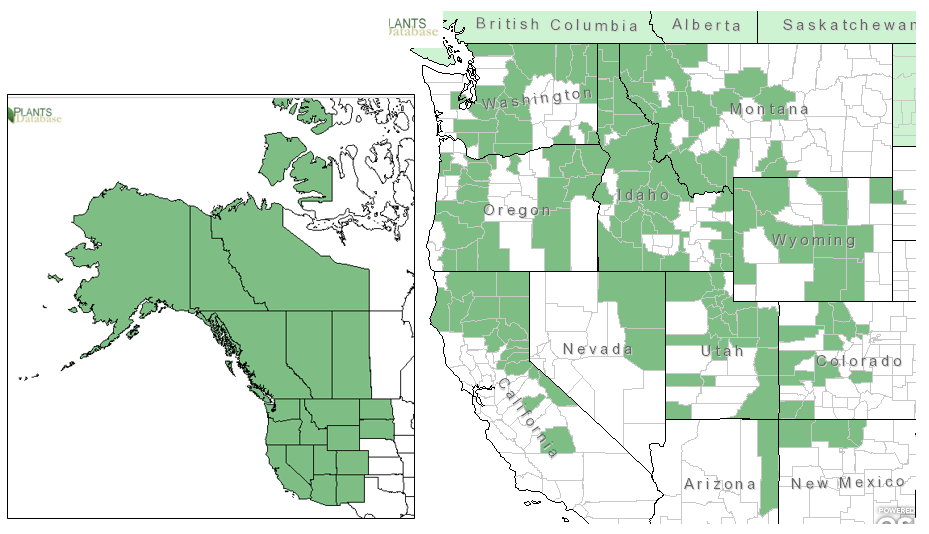
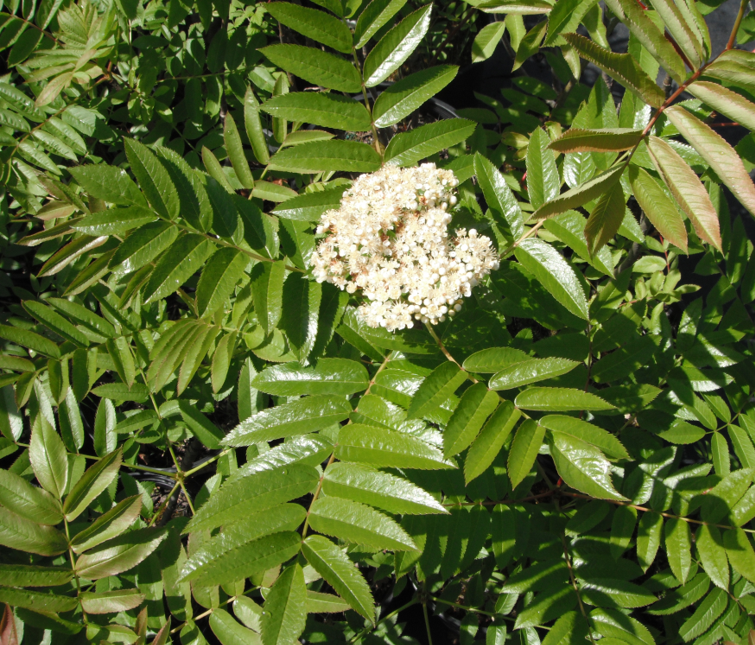
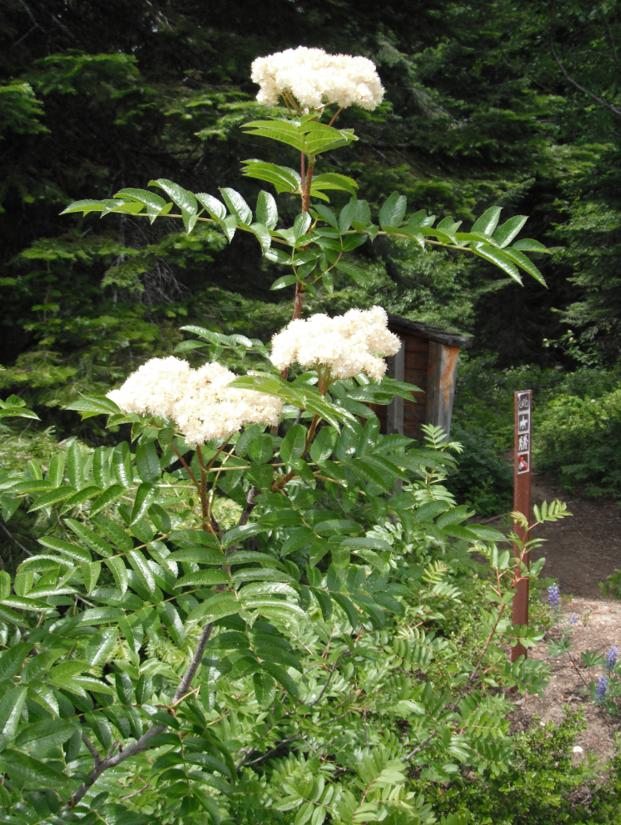 In the landscape: Our shrubby Mountain Ashes are most spectacular growing in clumps on hillsides. It is attractive when in bloom, but fall is its best season, with its yellow to peachy fall foliage and scarlet berries.