Redstem Ceanothus Rhamnaceae– The Buckthorn Family
Ceanothus sanguineus Pursh
(See-uh-NO-thus sang-GWIN-ee-us)
Names: Redstem Ceanothus is also known as Redstem Wild Lilac, Redstem Buckbrush, Oregon Tea Tree, Northern Buckbrush, or “Soapbloom.” Sanguineus means blood red, referring to the stems or flower stalks.
Relationships: The genus Ceanothus consists of about 60 shrubs or small trees found only in North America with about 40 occurring only in California. Many have blue or purple flowers, earning the genus the common name, “Wild Lilacs,” but our creamy white-flowered northwestern species are generally called “Buckbrushes.” Snowbrush, Ceanothus velutinus, is discussed in the evergreen shrub section. Red Stem Ceanothus is very similar to Snowbrush, it mainly differs in that it its leaves and stipules are deciduous and its stems are red.
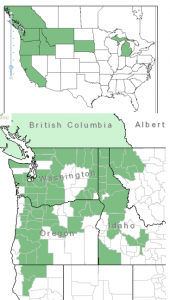
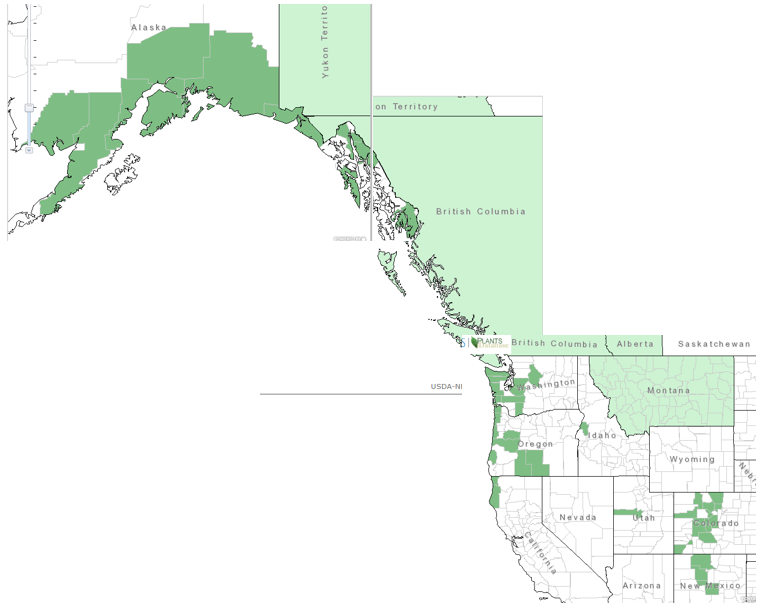
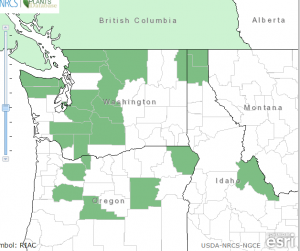
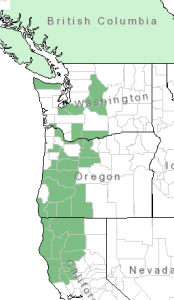
Distribution of Red Stem Ceanothus from USDA Plants Database
Distribution: This species is native on both sides of the Cascades from British Columbia to northern California; eastward to western Montana, with reported occurrences in South Dakota and on the shores of Lake Superior in Michigan (Listed as threatened in Michigan).
Growth: It grows 3-9 feet (1-3m) tall .
Habitat: This species grows in dry open sites and forest edges, often in recently burned areas. Wetland designation: It almost always occurs in non-wetlands areas in our region.
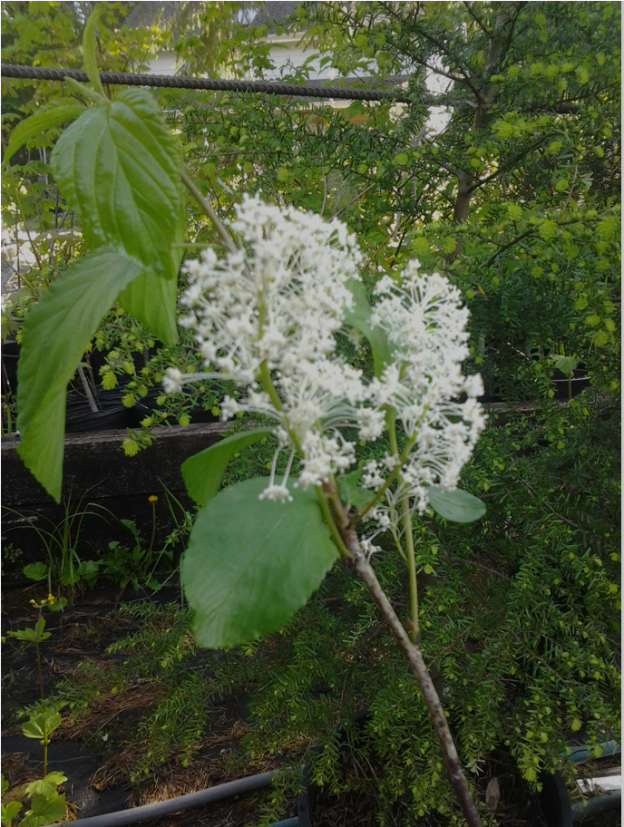
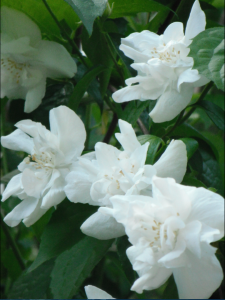
Diagnostic Characters: The leaves of Redstem Ceanothus are thinner than those of C. velutinus; but similarly are finely toothed and oval with 3 main veins branching from the base of the leaf. Flowers are fragrant, small and white in clusters at the ends of side branches. Fruits are 3-chambered explosive capsules, each with a shiny brown seed. Smooth, greenish stems turn purplish-red.
In the Landscape: The white flowers are showy in early summer and the reddish stems are attractive in the winter. Redstem Ceanothus also is able to fix nitrogen so is good for areas with poor soils.
Phenology: Bloom time: May-July; Capsules ripen: June-August.
Propagation: Seeds usually germinate after a fire. They have a hard seed coat and dormant embryos; and require heat (185-212º F, 85-100º C) or treatment with sulfuric acid for 20 to 30 minutes followed by a neutralization of lime or by water and a 48 hour running water soak; then a 90 day cold stratification period. Semi-hardwood cuttings in May have the best success, treated with 2000ppm IBA and placed in a mist bed with bottom heat.—just the right amount of moisture is critical—too much and the cuttings will rot. This plant is not often available nurseries due to its difficult propagation requirements.
Use by People: A tea has been made from the leaves; a poultice of the dried, powdered bark has been applied to burns, sores and wounds; and a green dye was made from the flowers. It was called “Soapbloom” because all parts of the plant contains saponin, and was mixed with water and beaten into a soapy foam. The foam is good for cleaning dirt but does not remove oil; so it will not dry skin. The flowers, especially, were nice for use as a body soap because of their pleasant perfume. Natives burned the wood for fuel and to smoke deer meat.
Use by Wildlife: Redstem Ceanothus is a favorite browse species of elk and deer as are other Buckbrushes. Snowshoe Hares also eat the foliage and rodents eat the seedlings. Birds, rodents, ants, and other insects consume large amounts of the seeds. The shrub provides good cover for birds and small mammals. Flowers are pollinated by bees. Ceanothus sanguineus is a larval host for the Pale Swallowtail Butterfly.
Links:
Consortium of Pacific Northwest Herbaria
WTU Herbarium Image Collection, Plants of Washington, Burke Museum
E-Flora BC, Electronic Atlas of the Flora of British Columbia
Jepson Eflora, University of California
Ladybird Johnson Wildflower Center
USDA Forest Service-Fire Effects Information System
Native Plants Network, Propagation Protocol Database
Native American Ethnobotany, University of Michigan, Dearborn
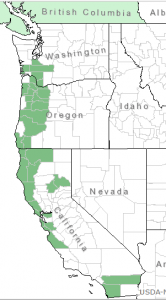
Deerbrush , Ceanothus integerrimus, is another similar species found from the Columbia River Gorge in Washington State to Baja California; also in Arizona and New Mexico. Integerrimus means completely entire, not toothed, referring to its leaves. Deerbrush grows in dry, open forests; it is drought-deciduous, meaning that most leaves are shed during dry summers and a few leaves are retained throughout winter. It has white, pink, lilac, or pale blue pyramidal clusters of flowers. Deerbrush could make an attractive addition to a dry garden, but should be avoided in moister areas. Its shoots were used by natives for basketry. Deerbrush is a valuable honey plant, and as the common name suggests, is an important browse species for deer.
Links:
Consortium of Pacific Northwest Herbaria
WTU Herbarium Image Collection, Plants of Washington, Burke Museum
Jepson Eflora, University of California
Ladybird Johnson Wildflower Center
USDA Forest Service-Fire Effects Information System
Native Plants Network, Propagation Protocol Database
Native American Ethnobotany, University of Michigan, Dearborn
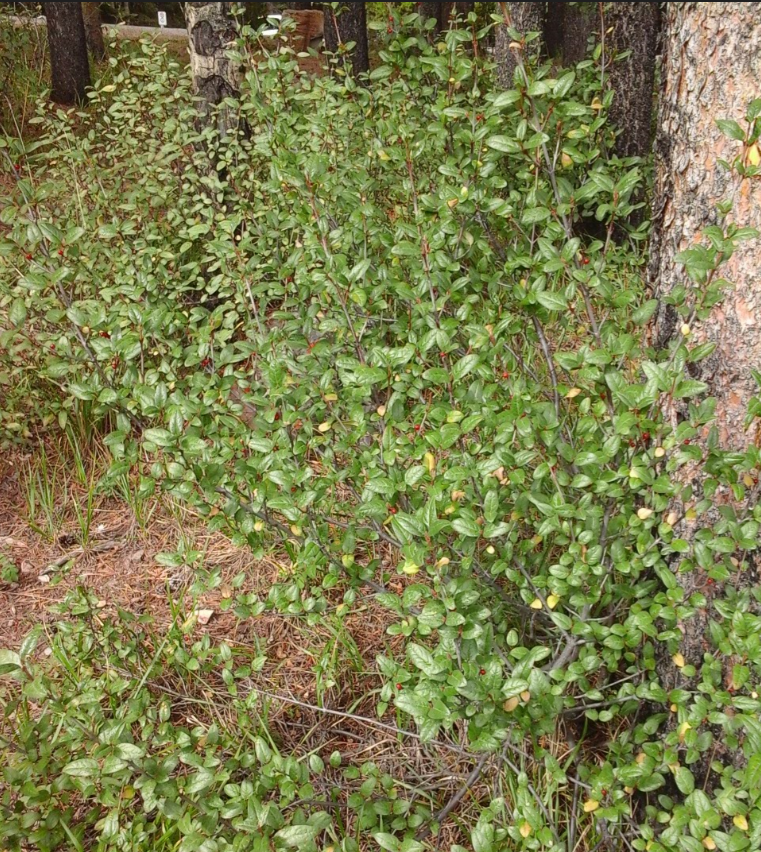
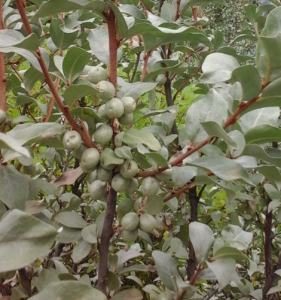

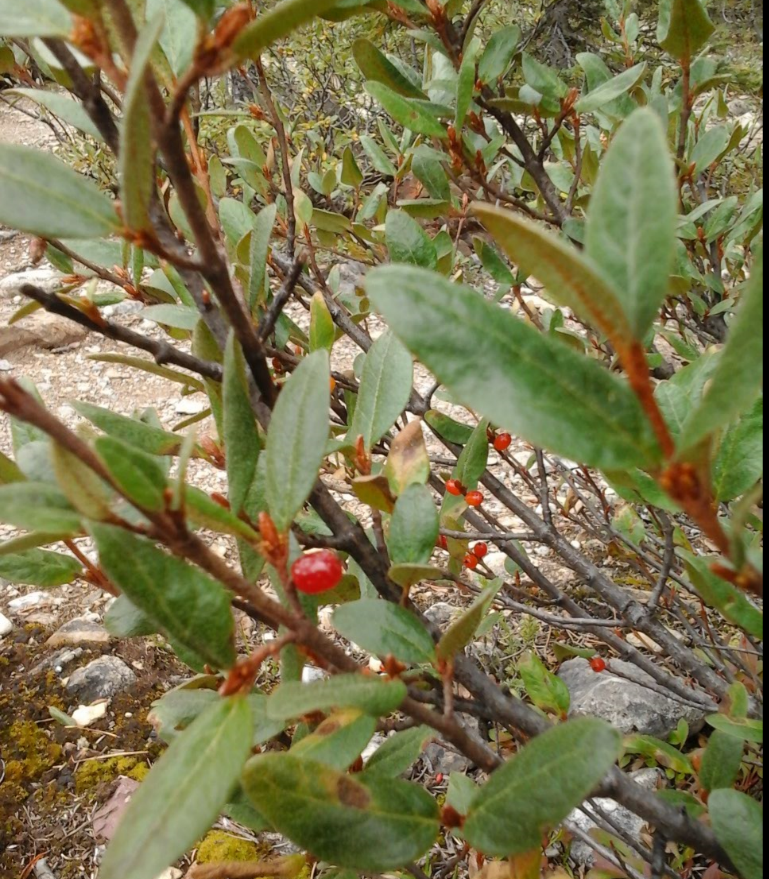
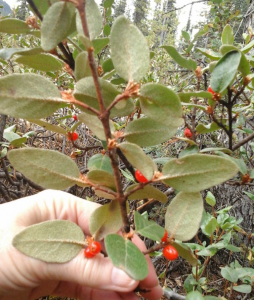 Diagnostic Characters: Leaves are opposite; mostly green on the upper surface, with fuzzy, silvery-white hairs, and rusty brown scales on the undersides. Flowers are small, yellowish-brown, clustered on small branches, often appearing before the leaves; with male and female flowers on separate plants. Fruits are oval, translucent orange-red berries; soapy to the touch when crushed. Stems are covered with brown scales, like Russet Potatoes.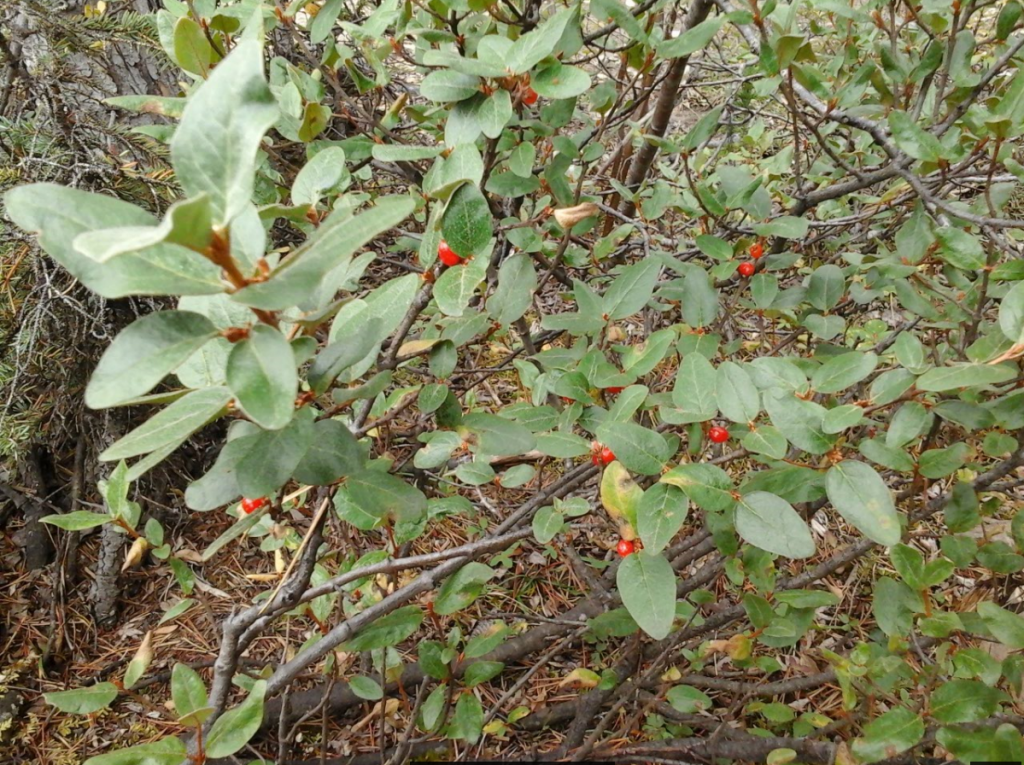
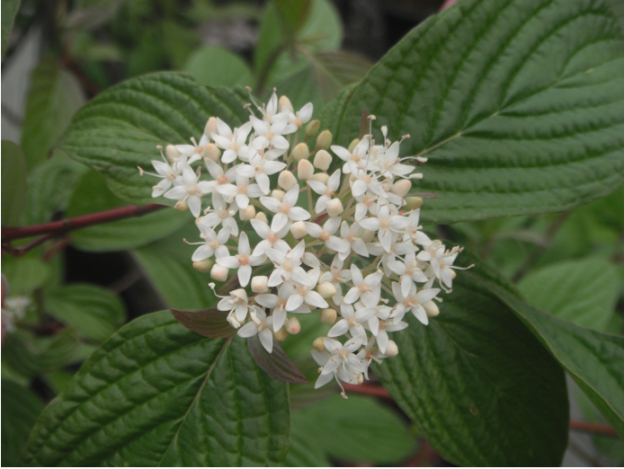
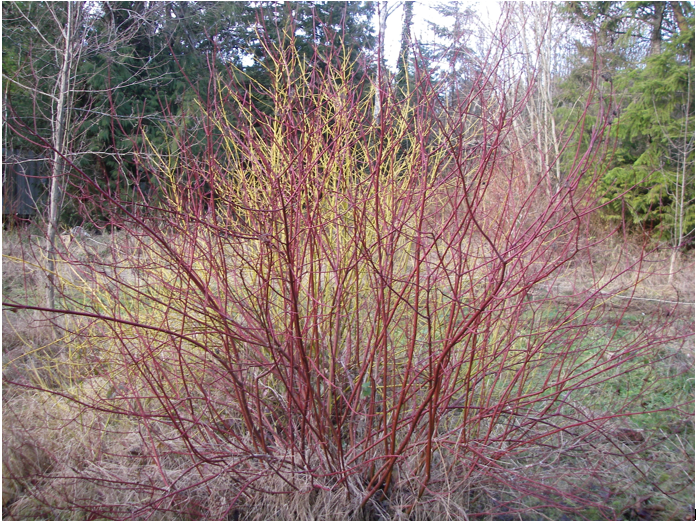


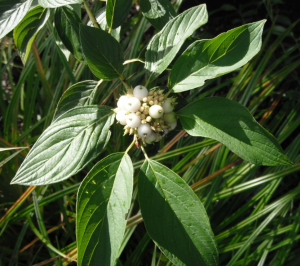
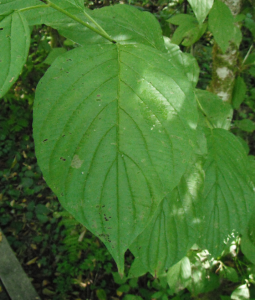 Diagnostic characters: Leaves are opposite, oval-shaped, pointed at the tip with the typical dogwood veining pattern; 5-7 secondary veins arise at the midvein, and run parallel to each other out to the margin, converging at the tip. White threads run through the veins. Flowers are small, white to greenish in dense, flat-topped clusters (bracts not large and showy as in other dogwoods). Fruits are white, sometimes blue-tinged with a somewhat flattened stone pit. Stems are often bright red, especially in winter, but also can be greenish, or yellow.
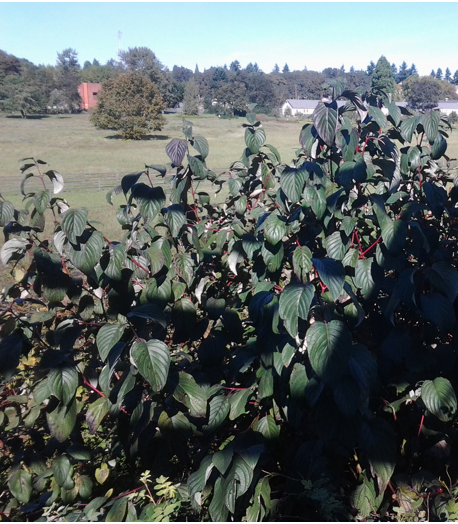 In the Landscape: Red-Twig Dogwood is most often grown for its striking red twigs for winter interest. In fall, its white berries are a striking contrast against its brilliant red fall foliage. It is especially useful for planting in Rain Gardens, around water retention swales, and for stabilizing streambanks, especially where seasonal flooding is a concern. It is good for a quick space-filler and can be used as an effective screen in the summer. This species also shows promise for being useful in reclaiming mining sites with high saline tailings.
 Use by People: Some natives smoked the dried bark during ceremonies (hence the common name kinnikinnik which usually refers to Arctostaphylos uva-ursi). They also boiled it and used it medicinally for coughs, colds, fevers, and diarrhea. The sap was used on arrowheads to poison animals. The berries were eaten by some tribes, often mixed with Serviceberries. The bark was used for dye and the stems for basketry, fish traps, and arrows. The branches are attractive in floral arrangements.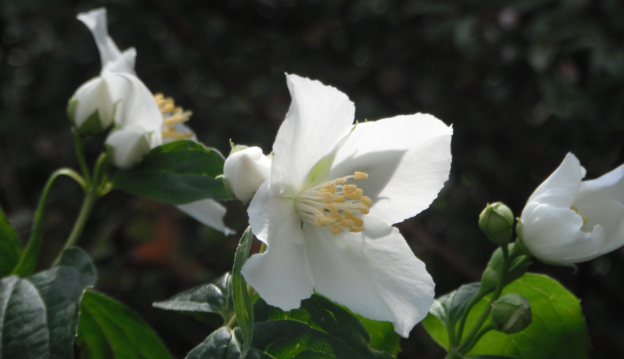
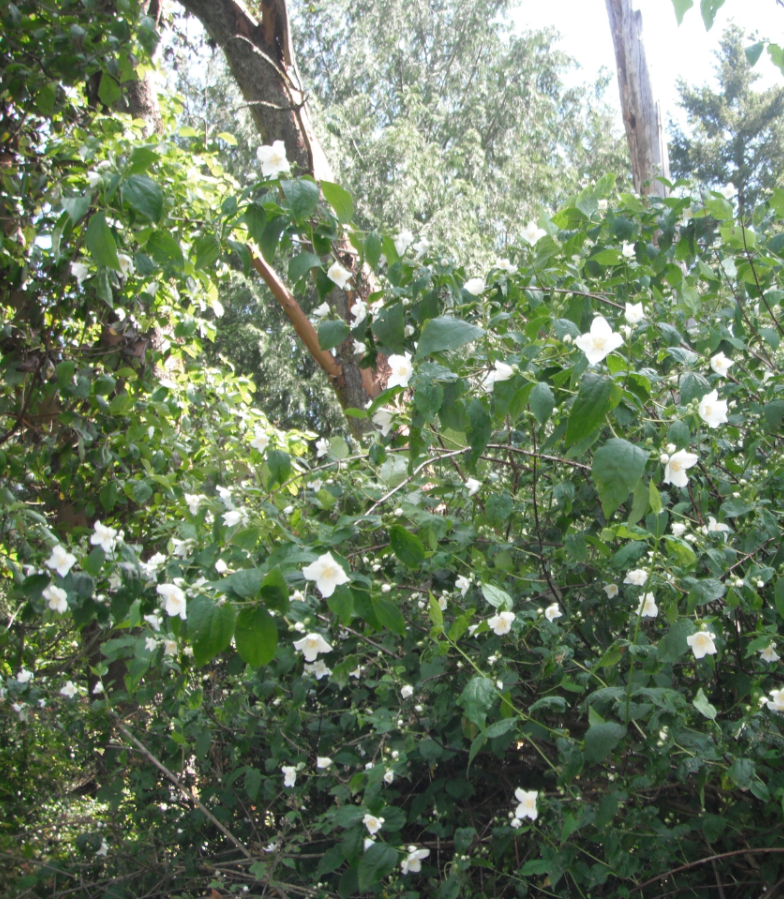 Names: Lewis’ Mock Orange is also known as Wild, Western, Pacific, Idaho or California Mock Orange. Presumably due to its growth habit, it is sometimes also called Syringa, the name for the unrelated lilac genus. Philadelphus means “brotherly love;” named after Pharoah Ptolemy II Philadelphus. The common name, Mock Orange comes from the similarity of the flowers, in fragrance and appearance, to citrus flowers. Lewis’ Mock Orange was discovered by Meriwether Lewis in 1806.
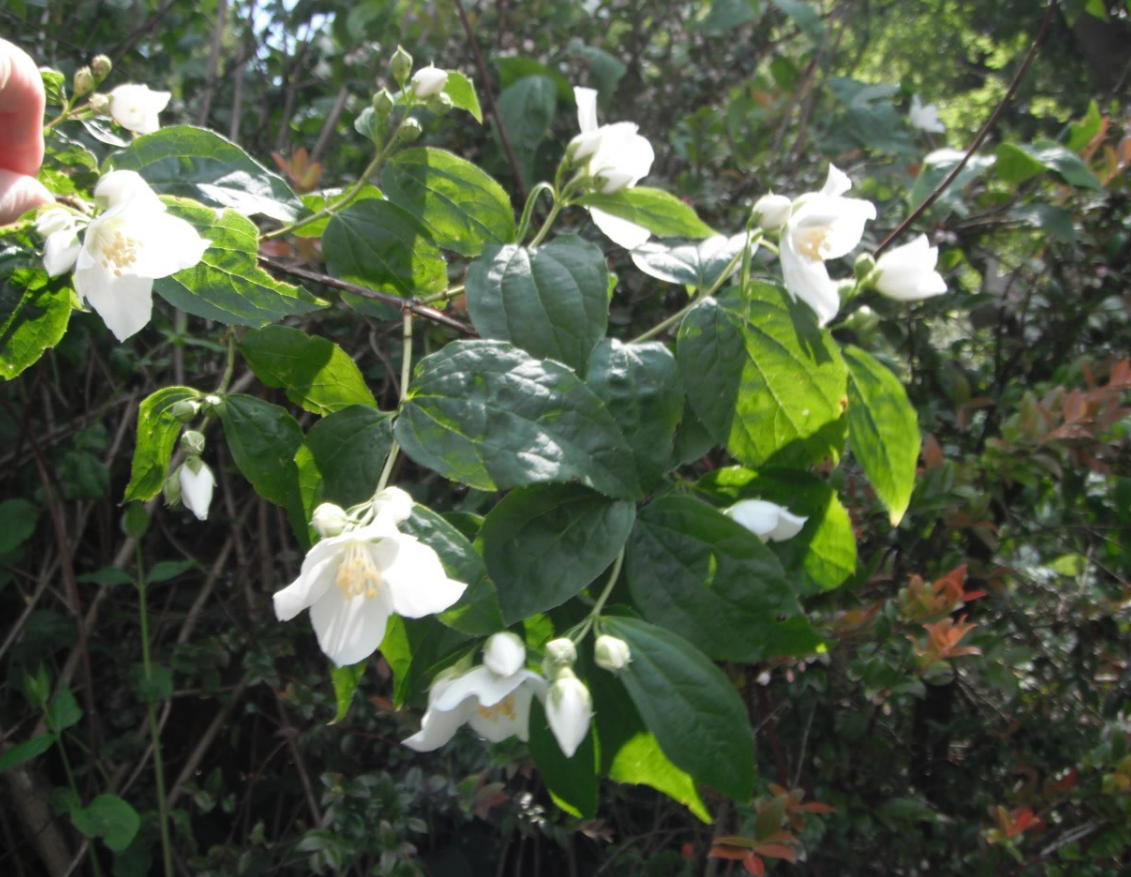
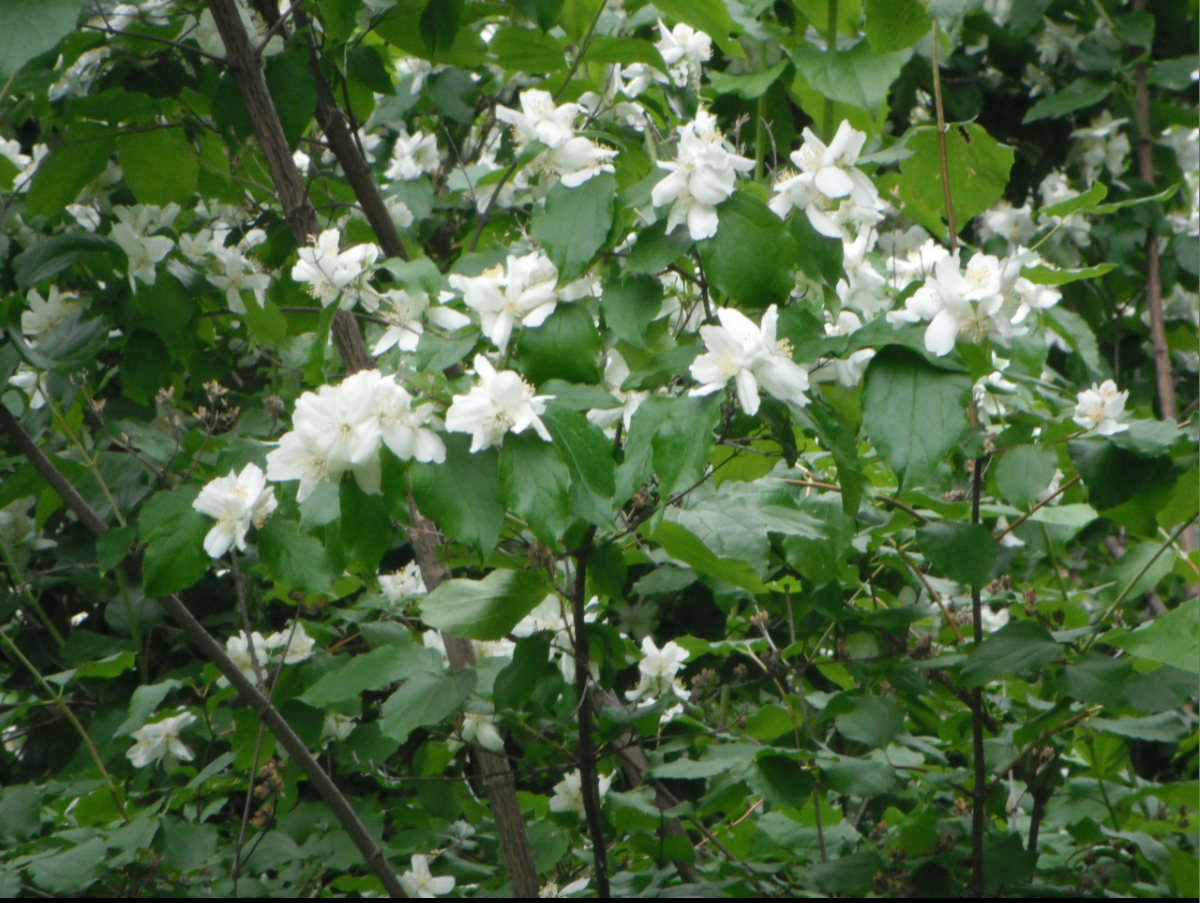
 Names: Lacustre means “found in lakes.” Black Swamp Gooseberry has many common names including: Black Swamp Currant; Swamp Black Gooseberry (or Currant); Prickly Black Gooseberry (or Currant); Black Prickly Currant; Bristly Black Gooseberry (or Currant); Black Bristly Currant; Spiny Swamp Gooseberry (or Currant); Swamp Goose Current; Marsh Currant; Lake Gooseberry; and Lowland Gooseberry.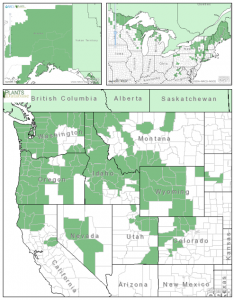
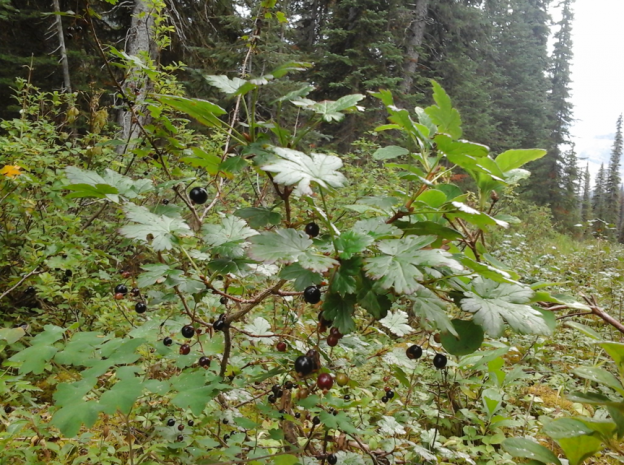
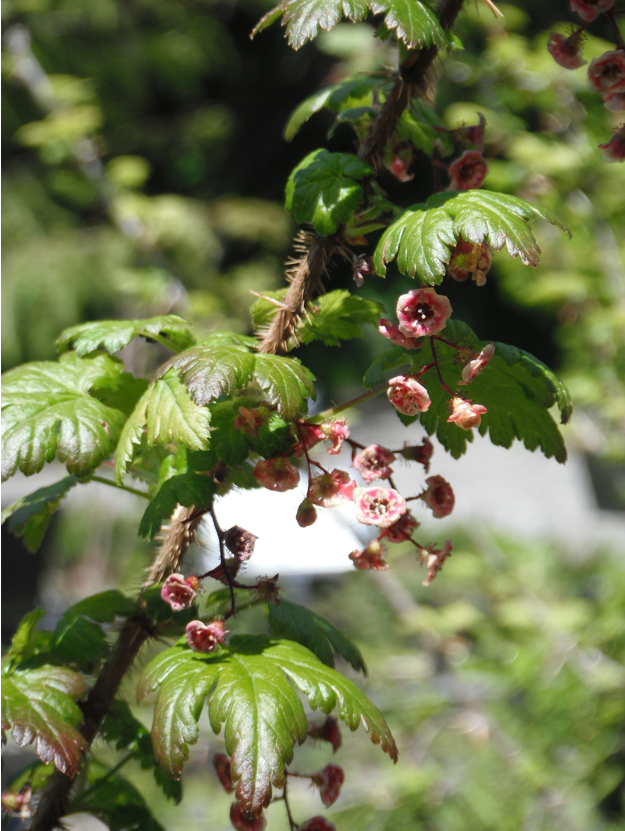
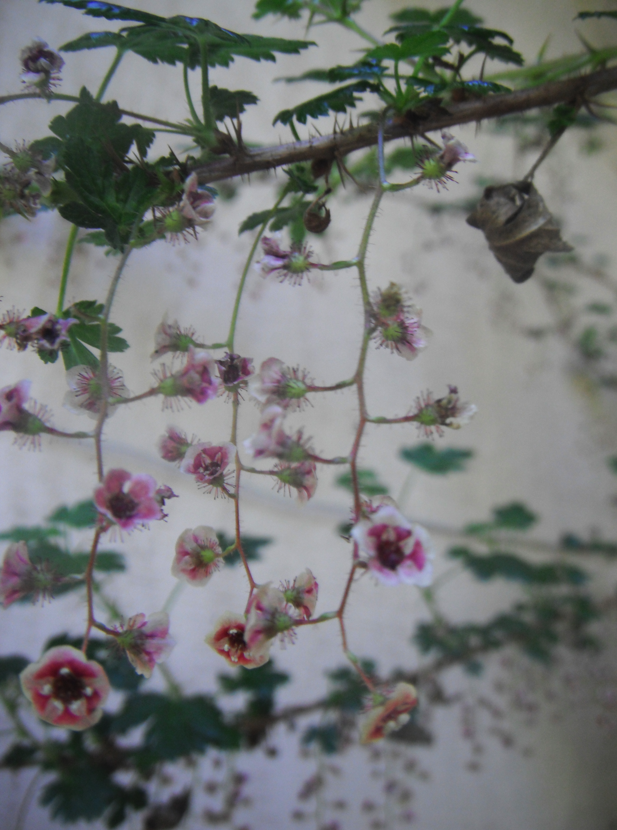 Diagnostic Characters: Stems are erect in sun, spreading or trailing in shade; covered with many golden, bristly, prickles with spines (usually smaller than on R.divaricatum) at the leaf nodes. Leaves are small with 5 deeply indented lobes. Small flowers, 5-15, are borne on pendulous, drooping clusters. Calyces range to a pale yellowish green to a mahogany-red; petals are pinkish. Fruits are dark-purple with glandular hairs.
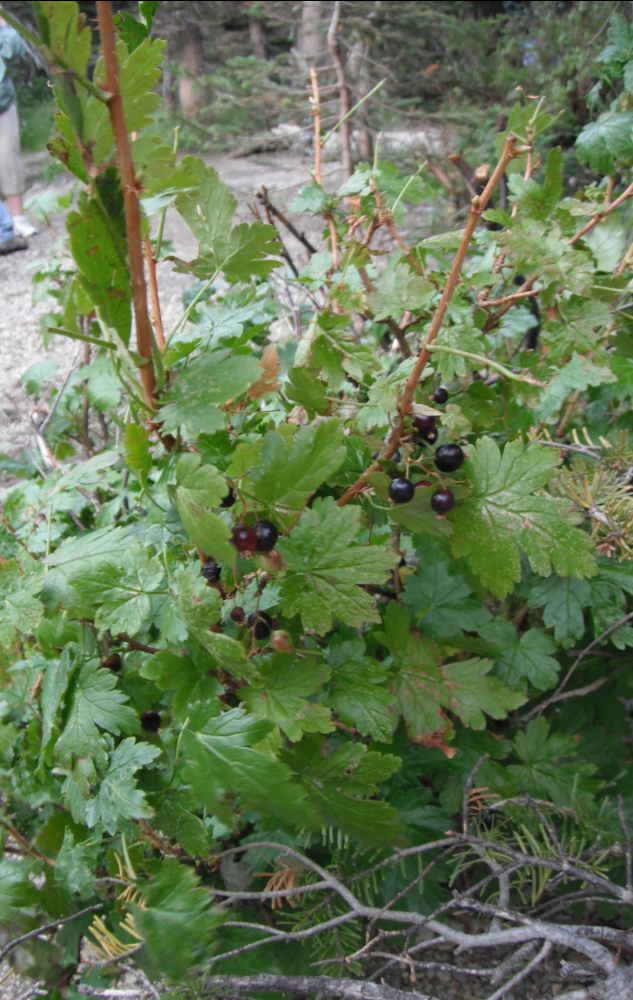 Use by People: The berries were eaten fresh by most of the native tribes of the northwest, although some considered them poisonous. The fruit is said to have an “agreeable flavor,” tart and very juicy, but when crushed it has an offensive odor. The fruit can be made into sauces, jams or preserves. This prickly shrub was thought to have protective qualities to ward off evil and was used to discourage snakes. A tea made from the bark was used drunk during childbirth or as an eyewash for sore eyes. The roots were used to make rope and reef nets.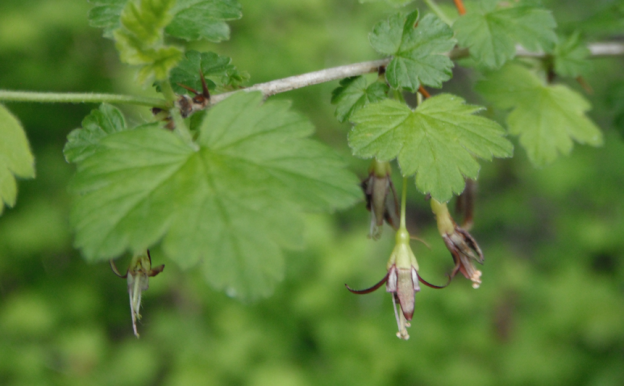
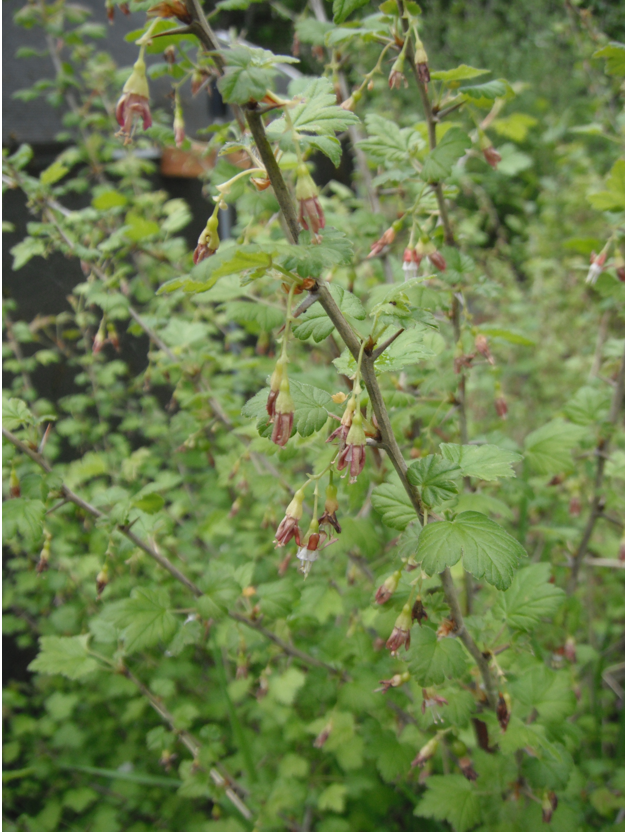 Names: This species has many common names including Wild Black Gooseberry, Spreading Gooseberry, Coast (or Coastal) Black Gooseberry (or Currant), Straggly Gooseberry (or Currant), and Straggle Bush. In the UK it is known as Worcesterberry. Divaricatum means spreading or branching with two forks.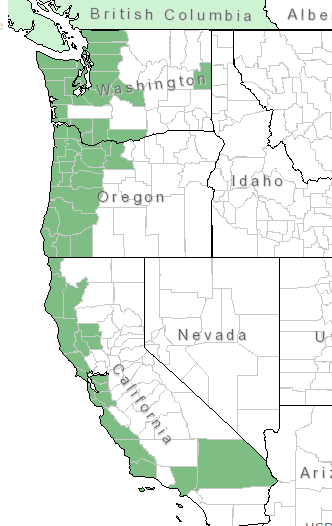
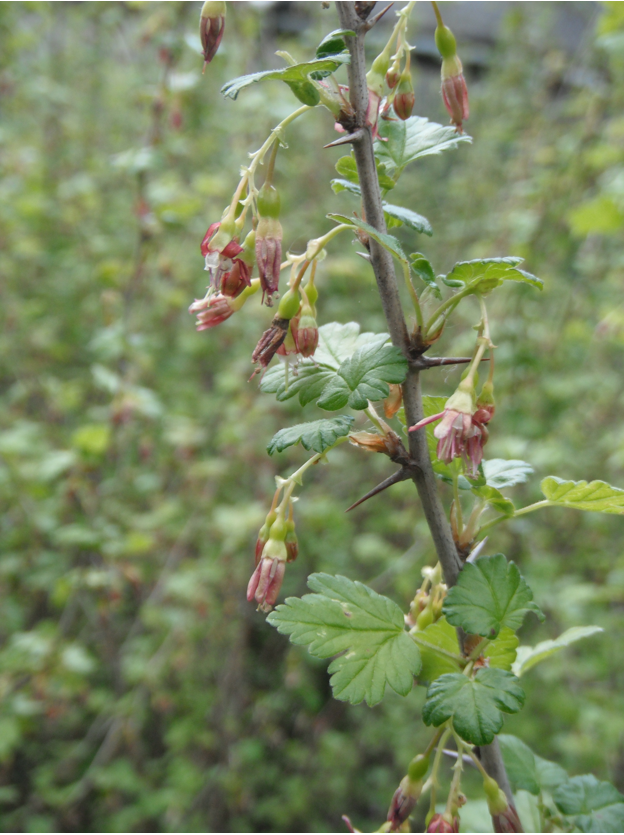 Diagnostic Characters: Coast Black Gooseberry stems grow erect, tending to arch, or they spread with 1-3 stout, chestnut-colored spines at the nodes with occasionally bristles on the internodes (more frequent on young twigs). Bark is gray to somewhat brownish. Leaves are usually 3-lobed, the lower lobes unequally divided again. The leaf petioles are often longer than the leaf blades. Flowers are borne in fuchsia-like, drooping clusters of 2-3. The 5-lobed calyx is usually red or red-green; 5 petals are white to red; 5 stamens and 2 styles extend past calyx lobes. Purplish-black berries are round and smooth.
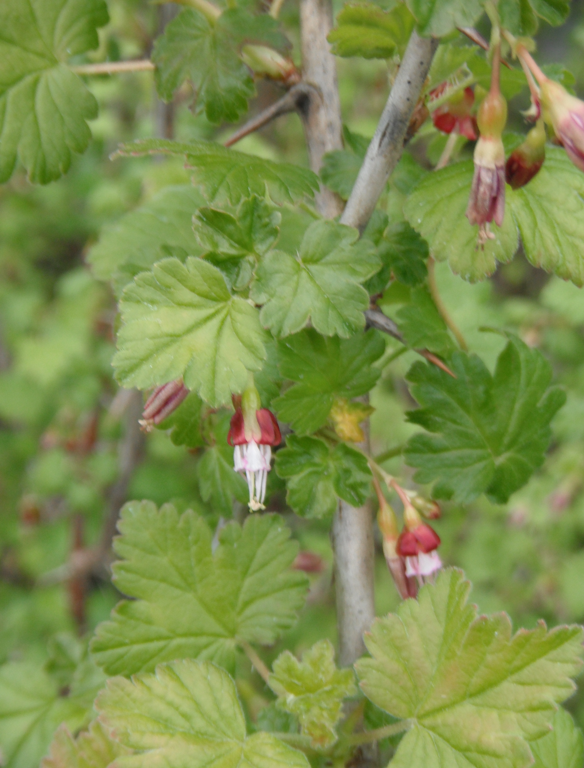 Phenology: Bloom time: April-May; Fruit ripens: July-August.