Western Mountain Ash The Rose Family—Rosaceae
Sorbus scopulina Greene
(SOR-bus scawp-yu-LEE-nuh)
 Names: Mountain Ashes also known as Rowans, Whitebeams, and Service Trees. True Ashes belong to the unrelated genus, Fraxinus. The word Rowan is thought to be from a Norse word for tree, or a Germanic word meaning “getting red,” referring to its fall foliage color and berries. Rowans were important trees in celtic mythology; the wood was used for Druid’s staffs, magic wands and dowsing rods. Scopulina means “of rocky places.” This species is also known as Rocky Mountain, Cascade, or Greene’s Mountain Ash, named after botanist, Edward Lee Greene.
 Relationships: There are about 100-200 species of Sorbus in the Northern Hemisphere and about half a dozen Sorbus species native to North America. Eurasian species have been introduced, become naturalized and interbred with native species; most notably, the European Mountain Ash, Sorbus aucuparia. Variety cascadensis, Cascade Mountain Ash, differs from the species by usually having 11 leaflets or fewer, and persistent stipules, whereas var. scopulina usually has some leaves with 13 leaflets. Var. cascadensis occurs mostly on the west slope of the Cascades, the Olympic Mountains, and the Sierras. There are intermediate forms on the east side of the Cascades and in the Wallowa Mountains. Amelasorbus jackii, a cross between Amelanchier alnifolia and S. scopulina has been observed in Oregon and Idaho.
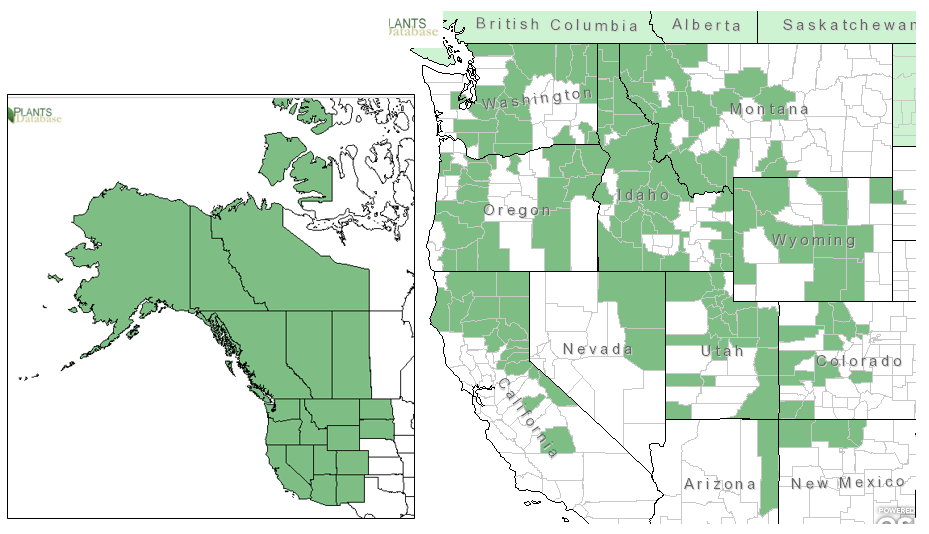
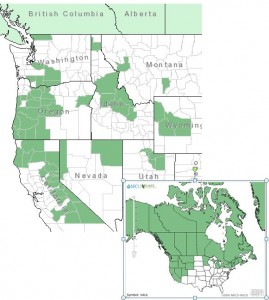
Distribution ofWestern Mountain Ash from USDA Plants Database
The species occurs from Alaska to the Northwest Territories; to Arizona and New Mexico; and the Pacific states to the Dakotas.
Growth: Western Mountain Ash grows 3-15 feet (1-5m)
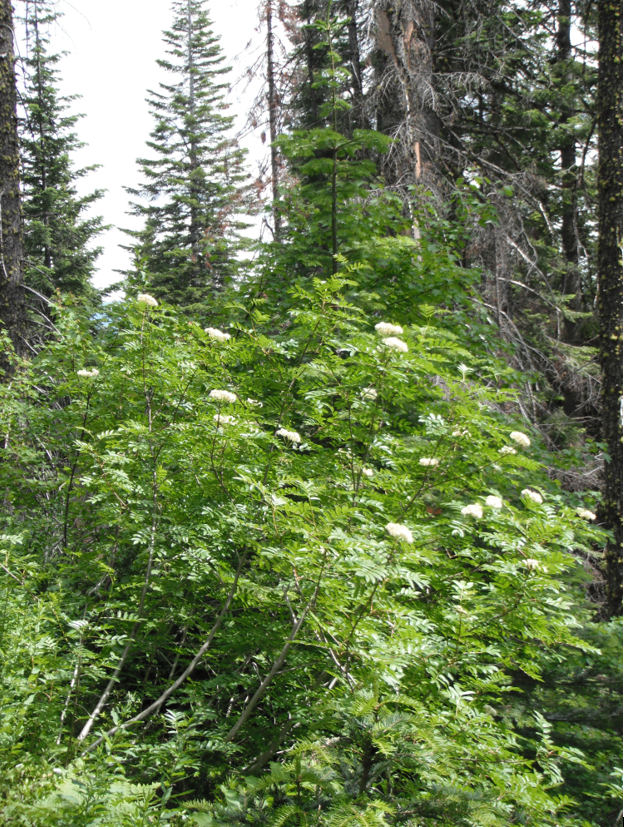
Habitat: It grows on rocky hillsides, open woods, and along streams; usually in small clumps. Wetland designation: FACU; it usually occurs in non-wetlands but occasionally is found in wetlands.
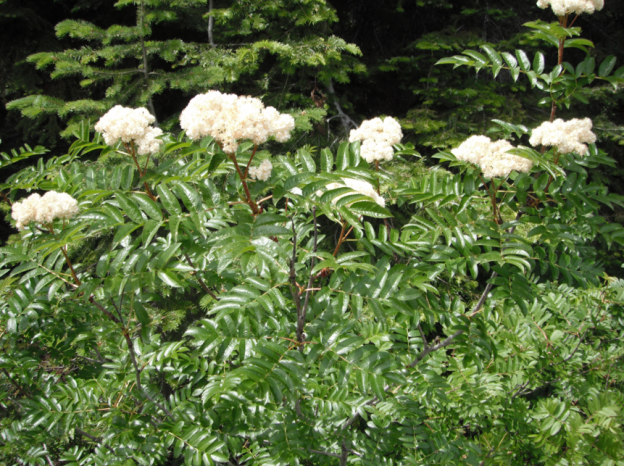
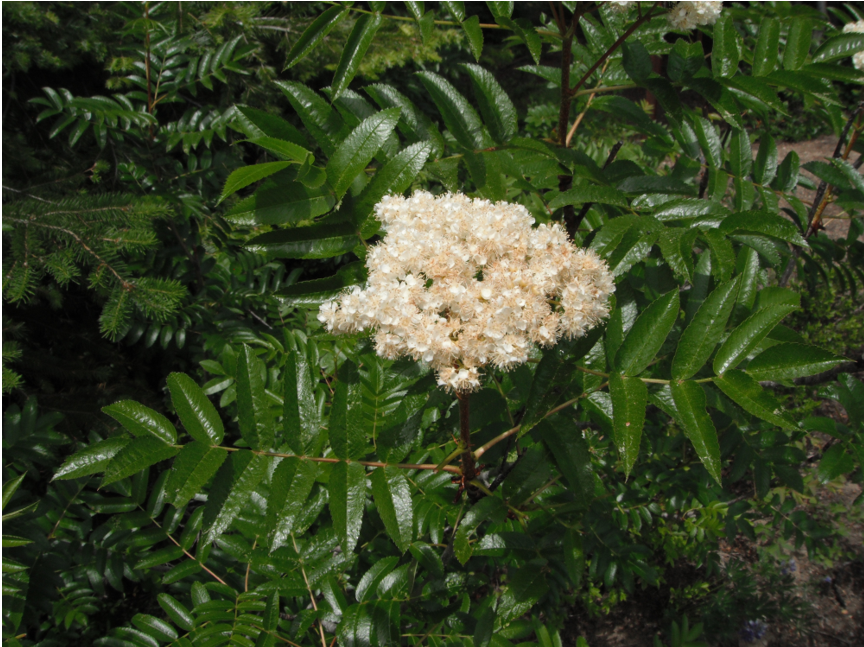
Diagnostic Characters: Pinnately compound leaves have 9 to 13 leaflets and are yellowish-green, sharp-pointed, and finely toothed along most of the margin. Winter buds are white and sticky. Flowers are small and white in round to flat-topped clusters. Fruit are small, glossy, orange to scarlet, berry-like pomes borne in showy clusters.
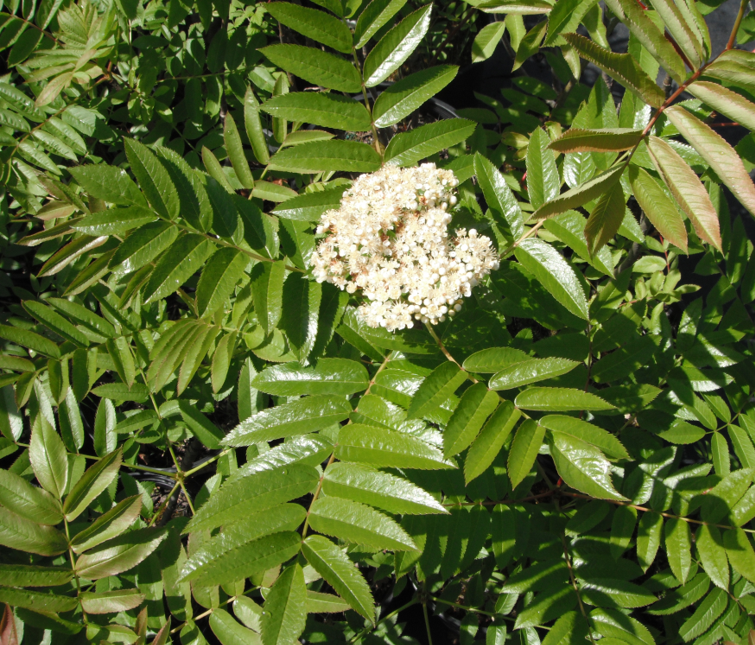
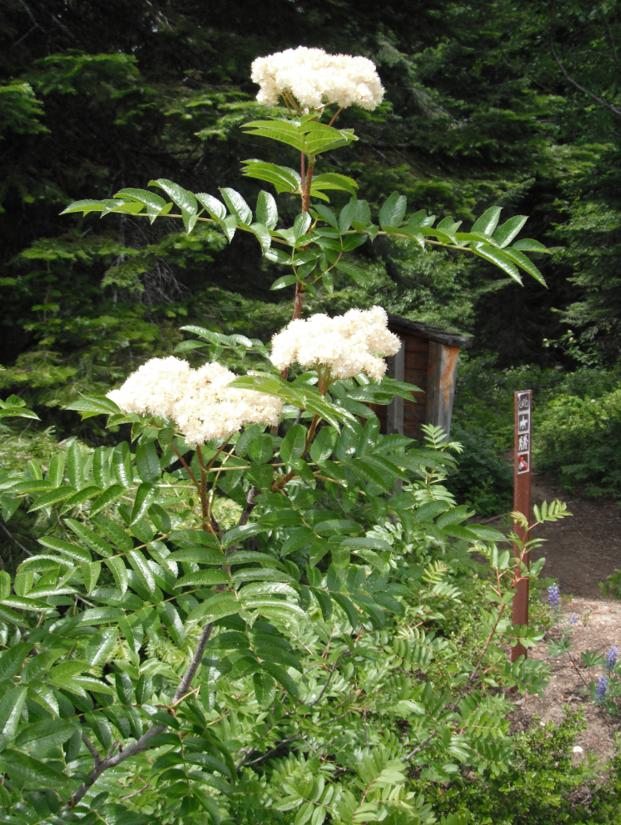 In the landscape: Our shrubby Mountain Ashes are most spectacular growing in clumps on hillsides. It is attractive when in bloom, but fall is its best season, with its yellow to peachy fall foliage and scarlet berries.
Phenology: Bloom time: May-July. Fruit ripens: July-September.
Propagation: Seeds should be stratified at 40º F (4º C) for 90-120 days. Some recommend presoaking the seeds for 24 hours. Semi-hardwood cuttings are best taken in late summer.
Use by Natives: Natives rarely ate these berries; but today they are sometimes used in pies, preserves, or wine-making. The fruit is sweeter after a frost. If eaten raw, they should be bletted, a process where they are kept in a cool, dry place and allowed to begin decaying or fermenting, similar to pears.
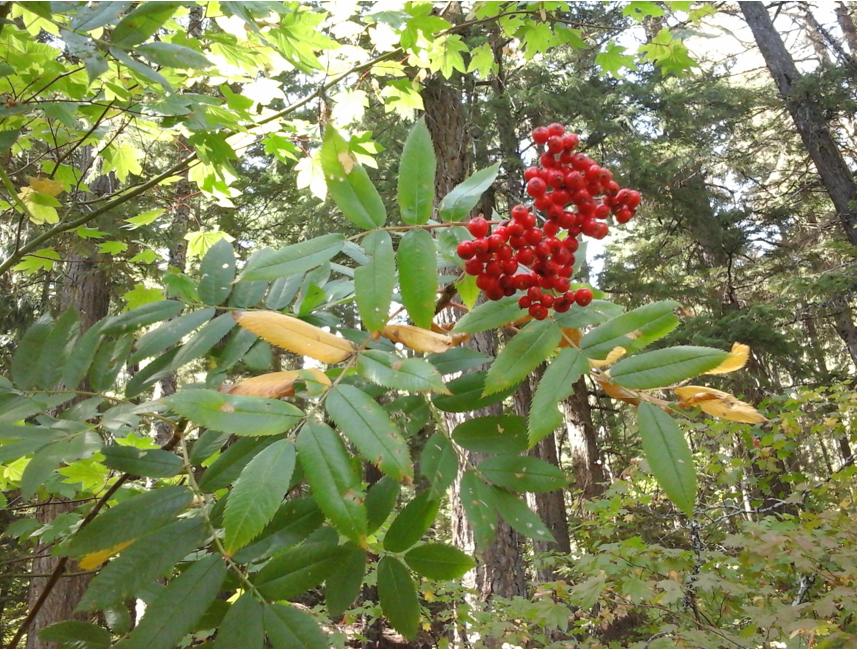
Use by Wildlife: The fruits, eaten by grouse, grosbeaks, Cedar Waxwings and Douglas Squirrels, are valuable to wildlife due to the fact that the fruit persists on the plant through the winter. Moose, deer and elk browse the twigs and foliage. Flowers are pollinated by insects.
Links:
Consortium of Pacific Northwest Herbaria
WTU Herbarium Image Collection, Plants of Washington, Burke Museum
E-Flora BC, Electronic Atlas of the Flora of British Columbia
Jepson Eflora, University of California
Ladybird Johnson Wildflower Center
Native Plants Network, Propagation Protocol Database
Native American Ethnobotany, University of Michigan, Dearborn
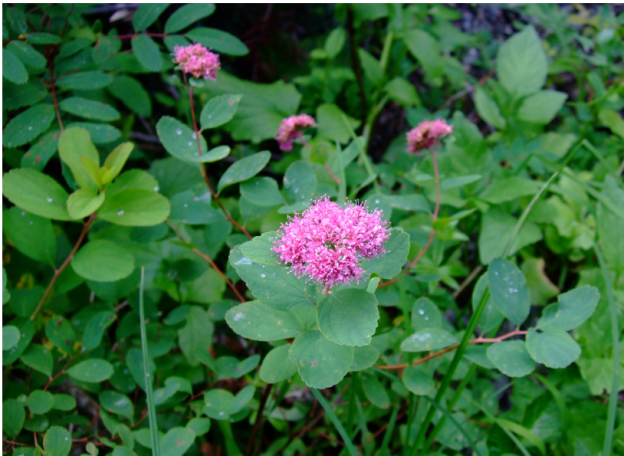
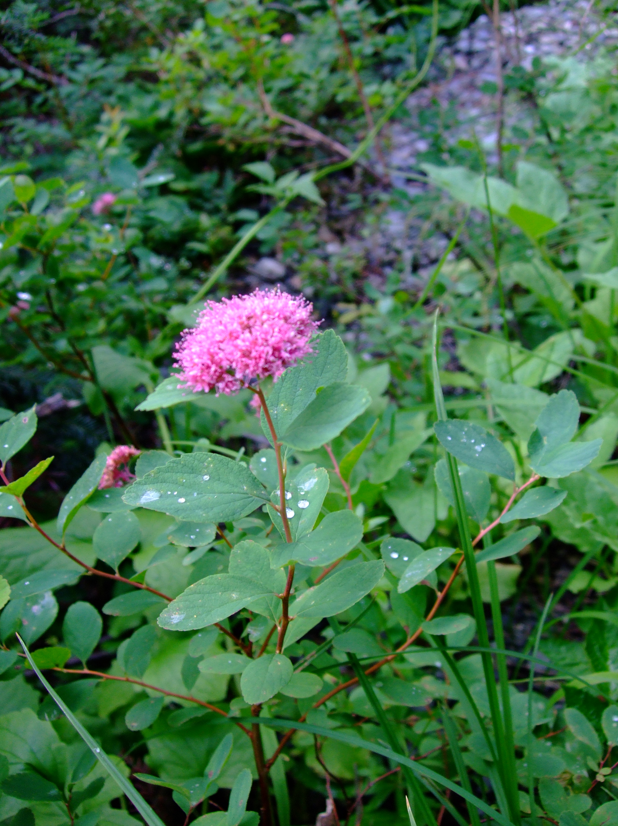 Names: The word Spiraea comes from a Greek plant that was commonly used for garlands. This species is also known as Spiraea densiflora. Splendens means shiny, densiflora means dense flowers. Subalpine Spiraea is also known as Rosy Spirea, or Rose or Mountain Meadowsweet.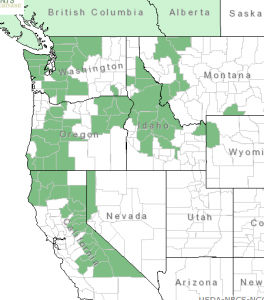
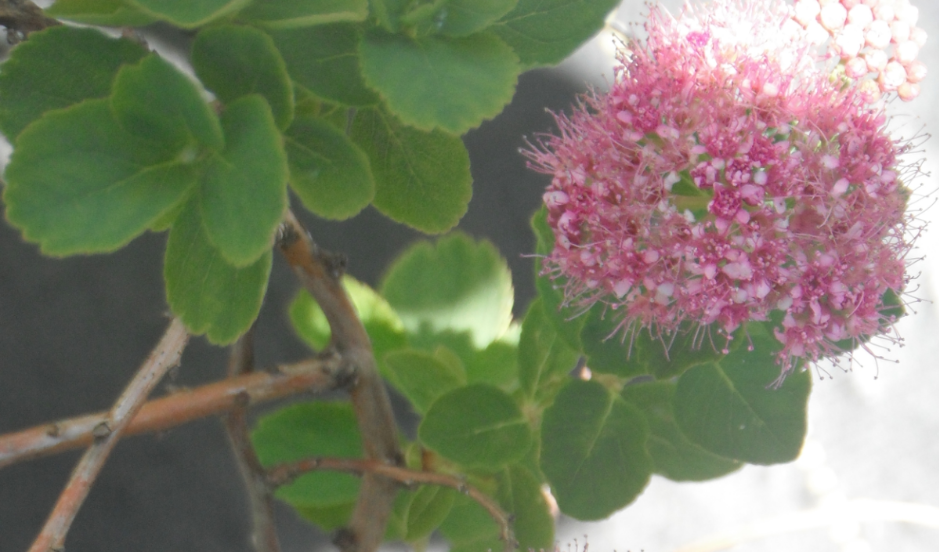
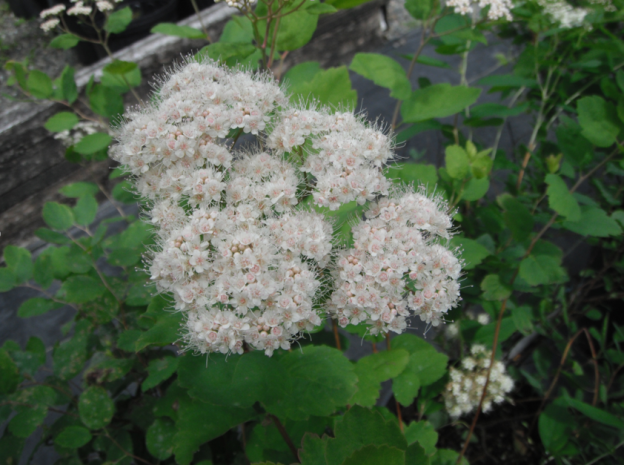
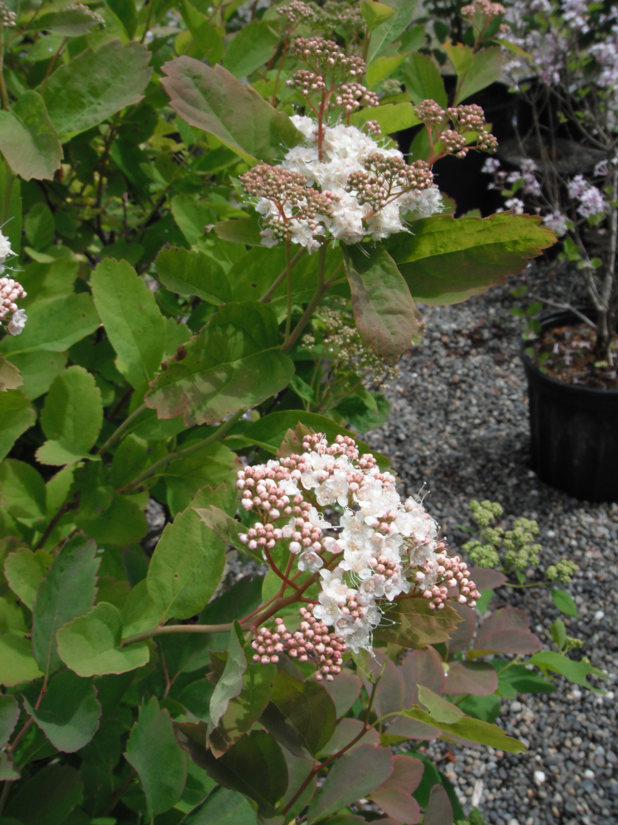 Spiraea lucida Douglas ex Greene
 Growth: Shinyleaf Spiraea grows only to about 1-3 ft. (30-90 cm). It spreads by rhizomes and often grows in large colonies.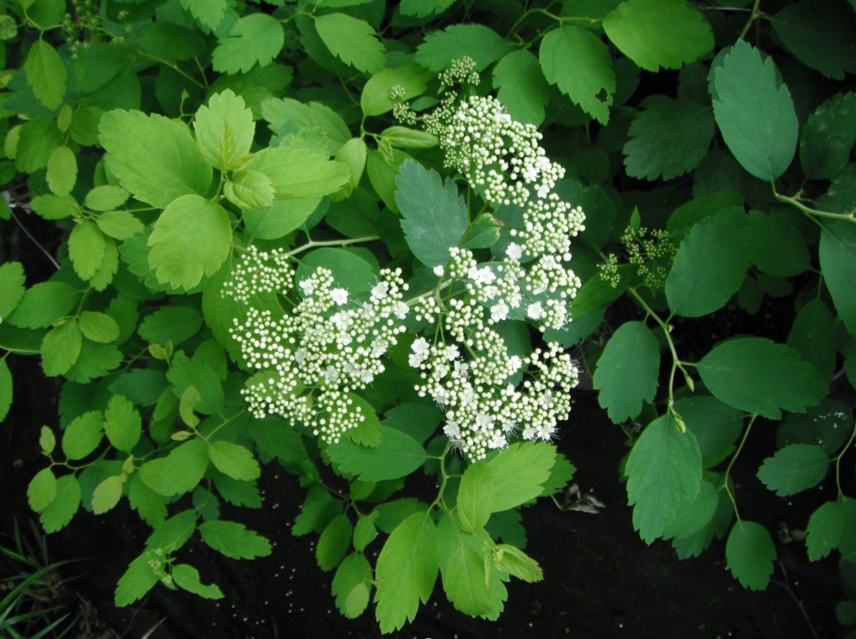
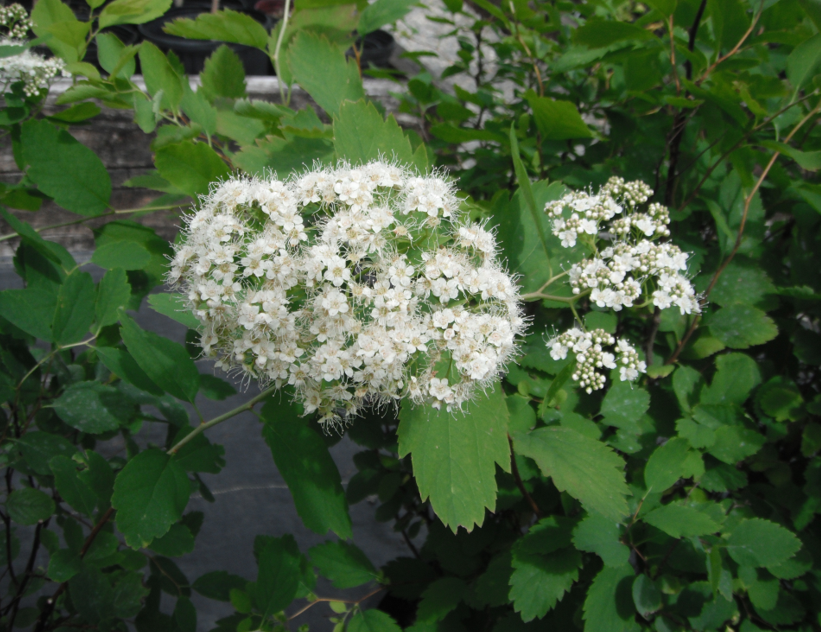
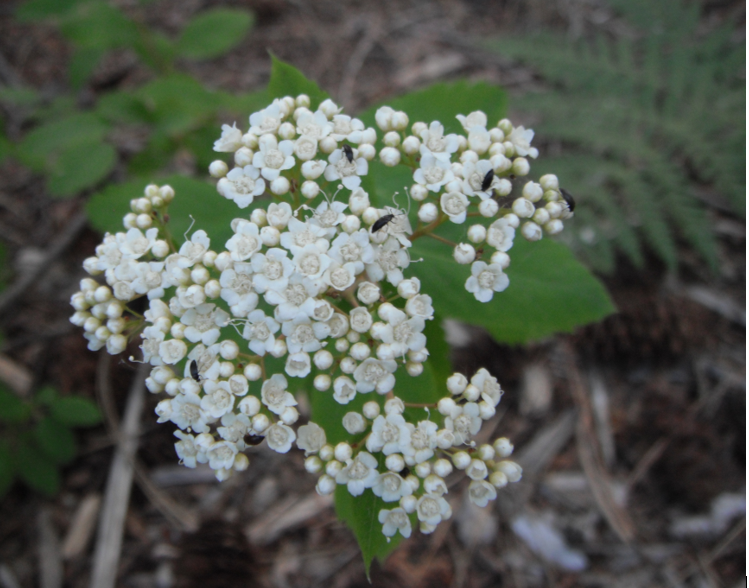
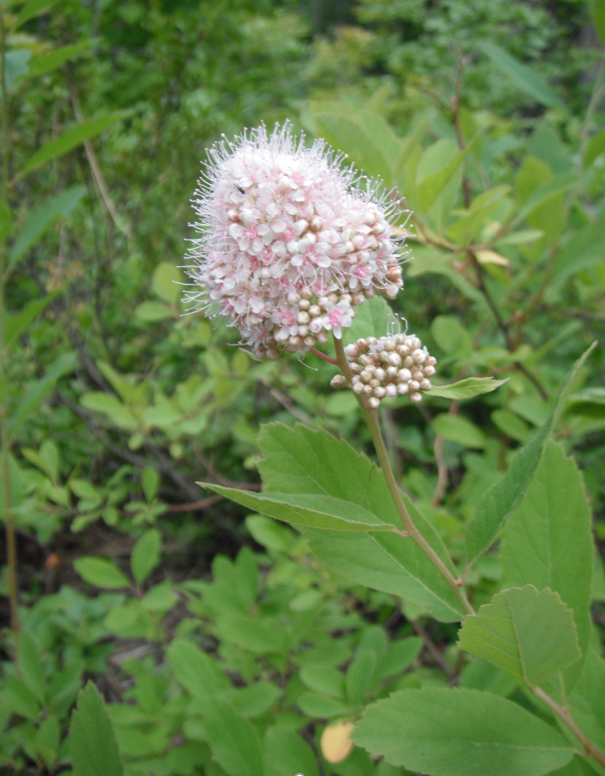 Pyramidal Spiraea, Spiraea x pyramidata, is a naturally occurring hybrid of S. betulifolia (lucida) and S. douglasii. It is intermediate to both of its parents, growing 4-5 feet (130-160cm) with flowers in pyramidal clusters, white to pale pink.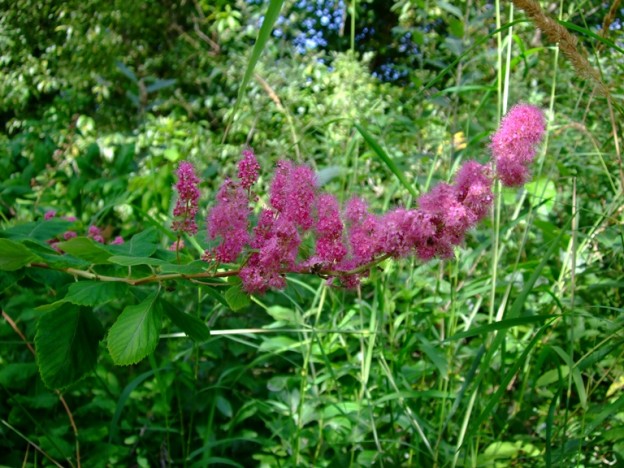
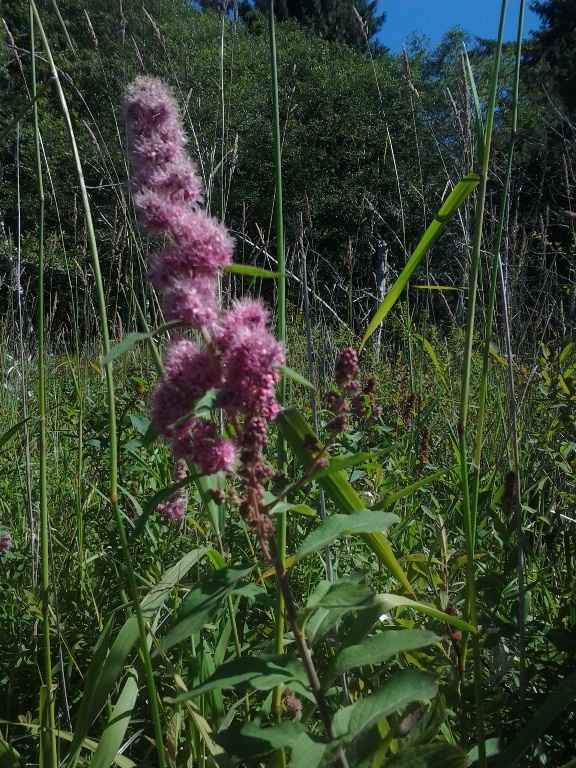 Names: The word Spiraea comes from a Greek plant that was commonly used for garlands. Douglas Spiraea is named after David Douglas. It is also commonly known as Hardhack, Steeplebush, or as Western, Pink or Rose Spiraea. There are two recognized varieties, var. douglasii, which has grayish wooly hairs on the undersides of its leaves; and var. menziesii, (sometimes known as S. menziesii) which has smooth or only slightly hairy leaves.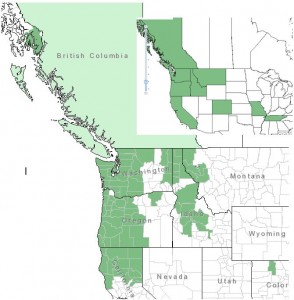
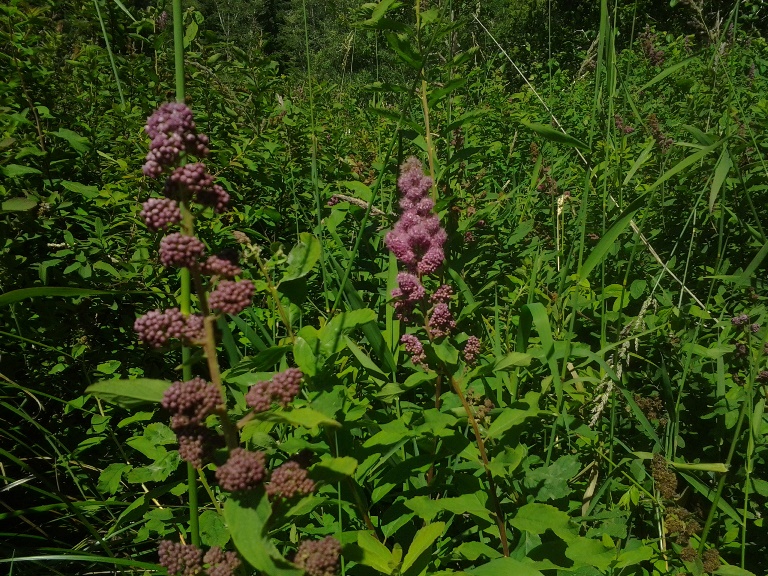
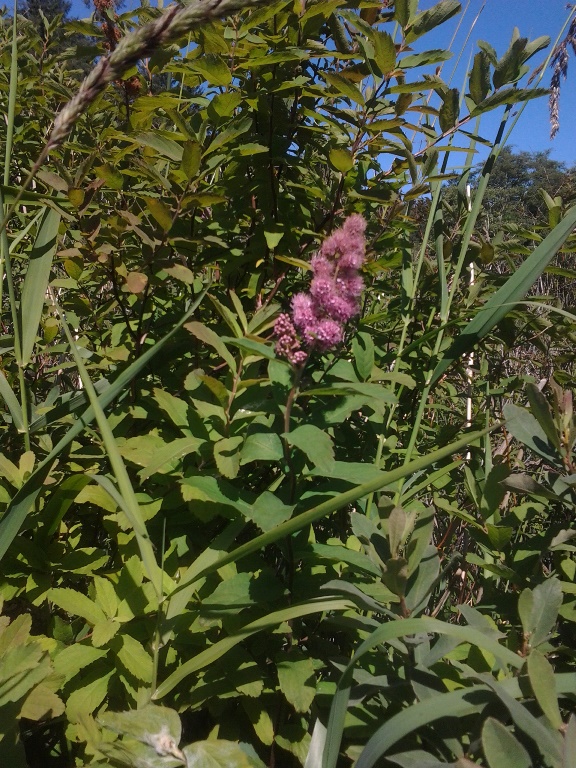 Habitat: Douglas Spiraea grows in open areas of wet meadows, bogs, streambanks, and lake margins. Labrador Tea, Ledum groenlandicum, is often a companion of Douglas Spiraea in bogs. It can withstand drier periods in areas that are only seasonally wet. Wetland designation: FACW, It usually occurs in wetlands, but is occasionally found in non-wetlands.
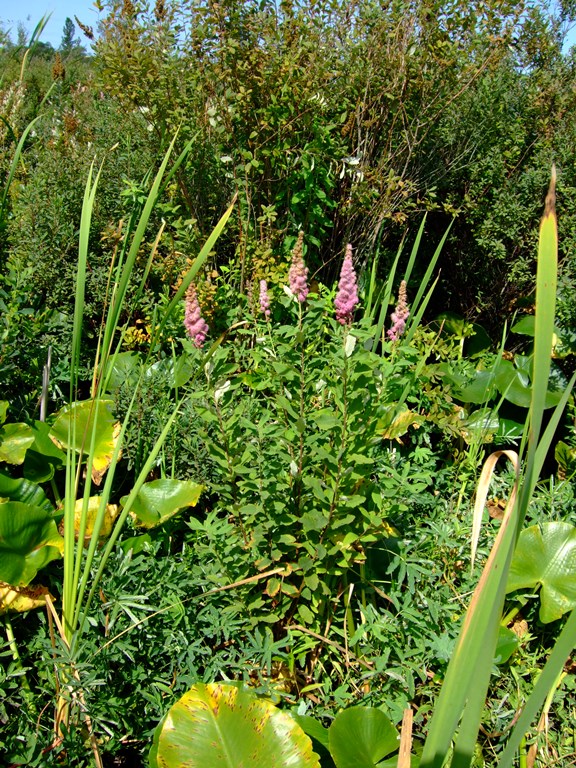 In landscapes: Douglas Spiraea is especially useful in Rain Gardens, but care should be taken not to introduce it to an area where it is likely to overtake other desirable plants. It is a good choice for revegetation projects along streamsides. Its attractive purplish-pink flower plumes create a “sea of pink” in “Hardhack bogs” when in bloom.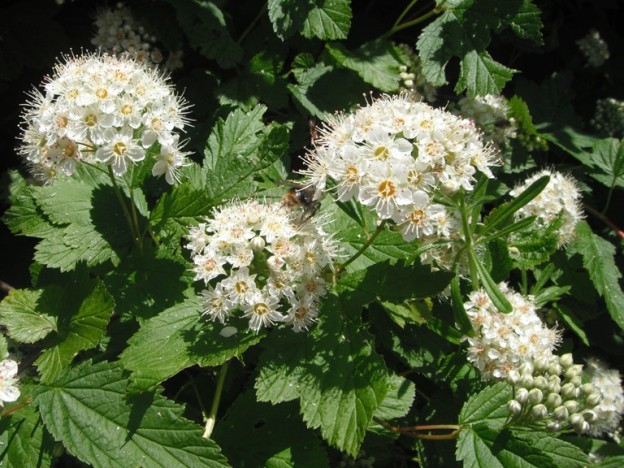
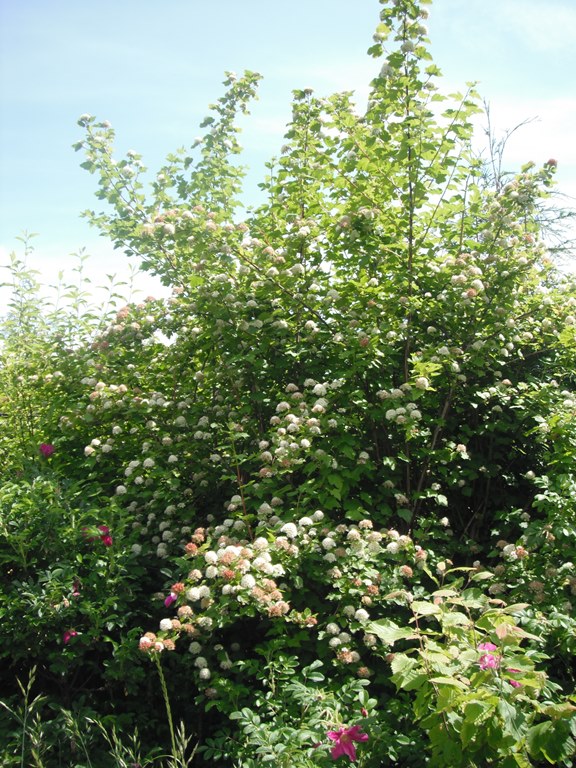
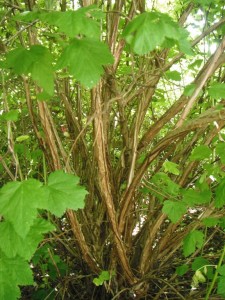
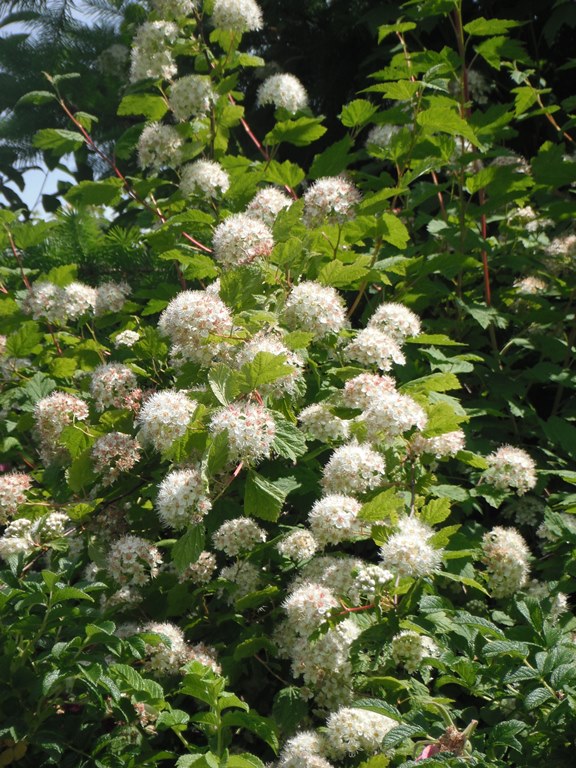
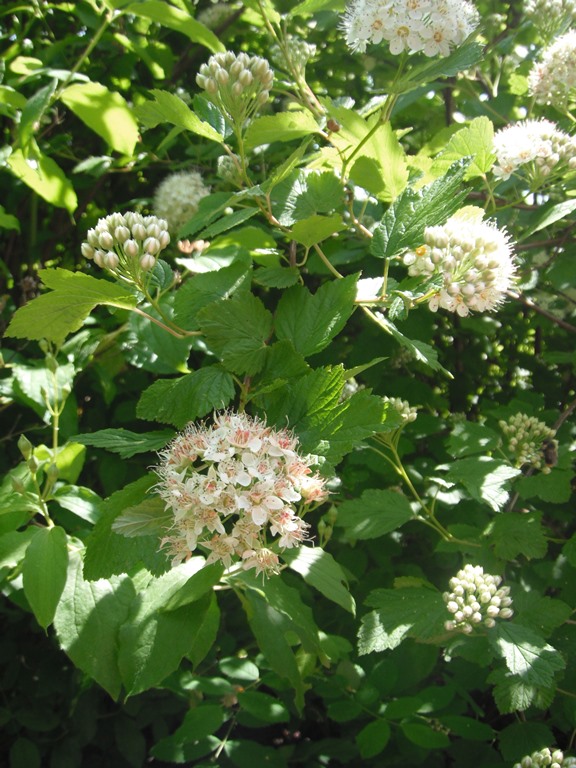 Names: Physo means bladder, carpus means fruit, referring to the inflated fruits. Capitatus means having a head, referring to its dense flower or fruit cluster. Ninebarks are so called because it was believed there are nine layers (or nine strips) of peeling bark on the stems. In the past it has been lumped in with P. opulifolia, Common Ninebark (an eastern species); along with this species, it was also known as Opulaster capitatus and Neillia opulifolia, Opulaster and opulifolia mean rich in flowers (asters) or in leaves (folia)–they may also refer to its similarity to Viburnum opulus. Because of its close association to spiraeas, it has also been known as Spiraea capitata. Western Ninebark is another common name.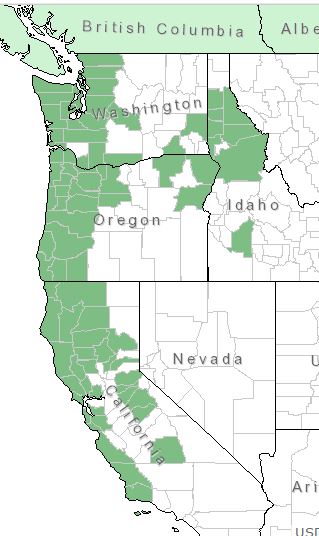
 Propagation: Pacific Ninebark is easy to start from cuttings, or live stakes (direct planting of a cutting into its desired location). Seed propagation is possible, but much slower. Fall is the best time to sow the seeds, although many sources state that it does not require a stratification period.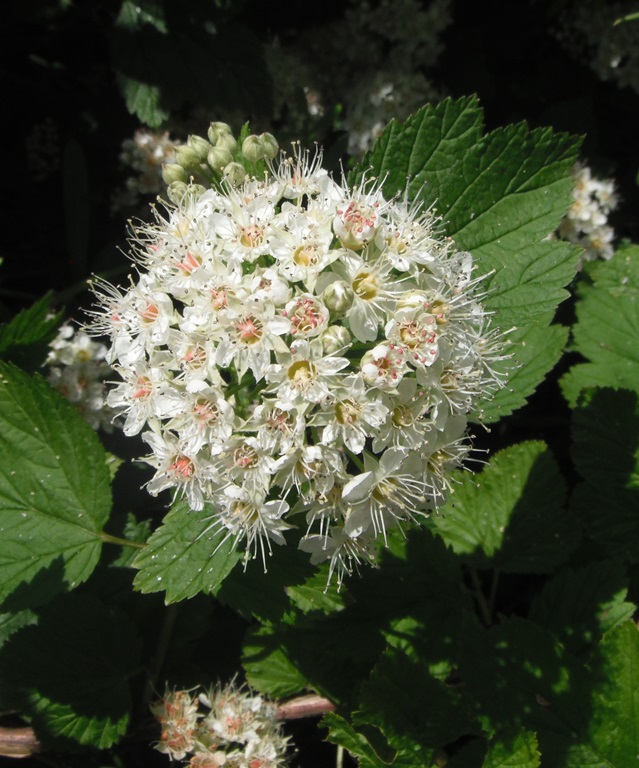
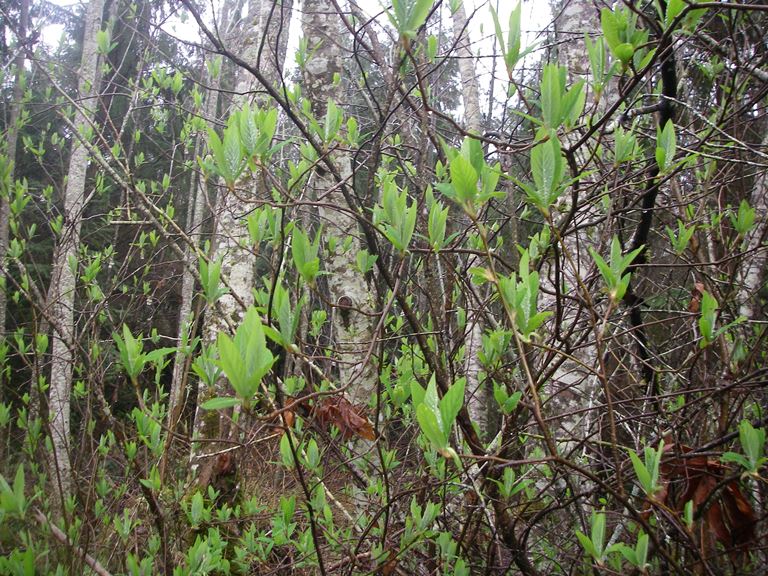
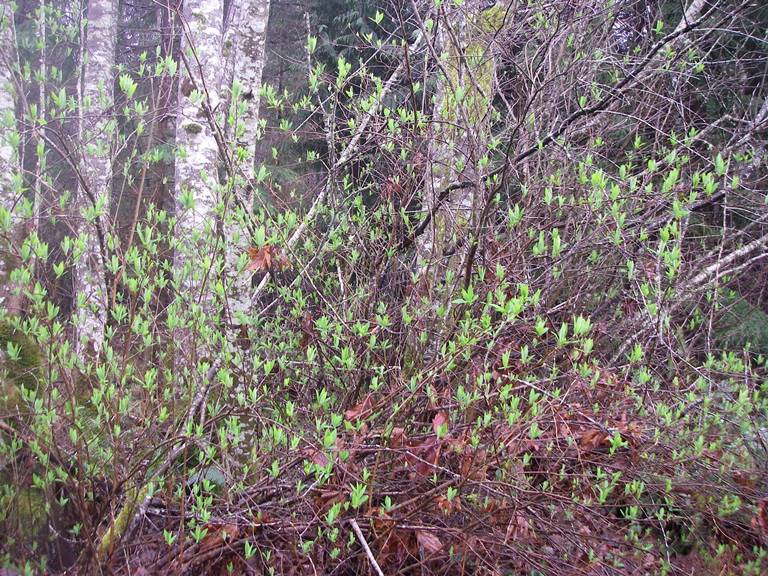
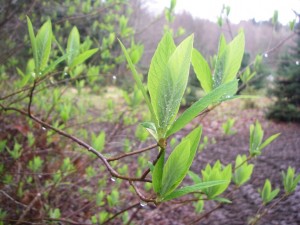 Diagnostic Characters: Its leaves are bright green in spring, lance-shaped, and entire (not toothed); and smell like cucumber when crushed. Small, five-lobed flowers are born in drooping clusters, usually appearing before the leaves. Each flower is white with a green calyx. They are said to have an unusual fragrance
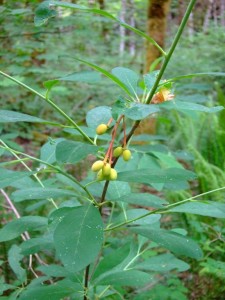
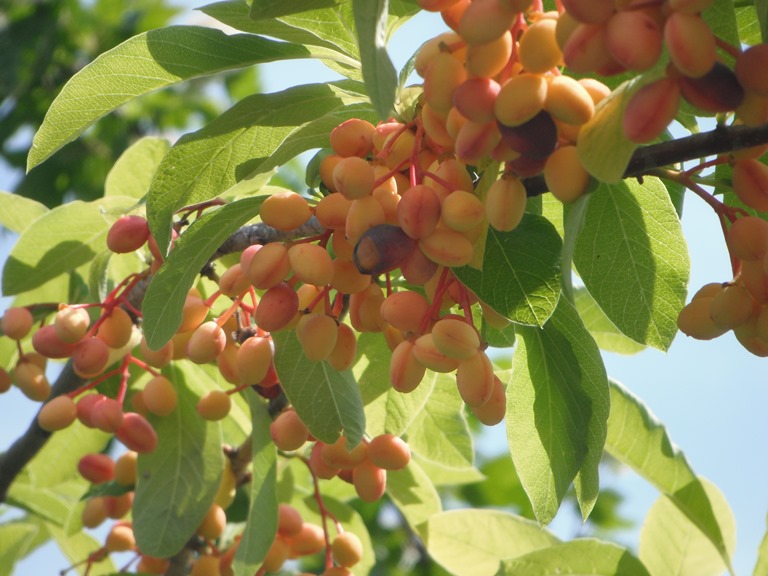
 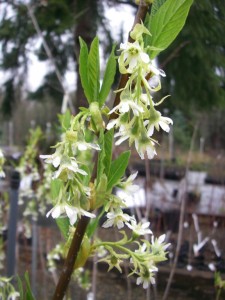 “something between watermelon rind and cat urine.” Others compare it to almonds. Some sources report that the female flowers have a pleasant fragrance, but the male flowers are unpleasant. The fruit are like small plums. Immature fruit is peach-colored, mature fruit is purple or bluish-black. Since Indian Plum is dioecious, you need to a have a female plant with nearby males for it to bear fruit. In natural populations, there are usually more males than females, due to a higher mortality of females. Males often flower at an earlier age than females; females have a slower growth rate.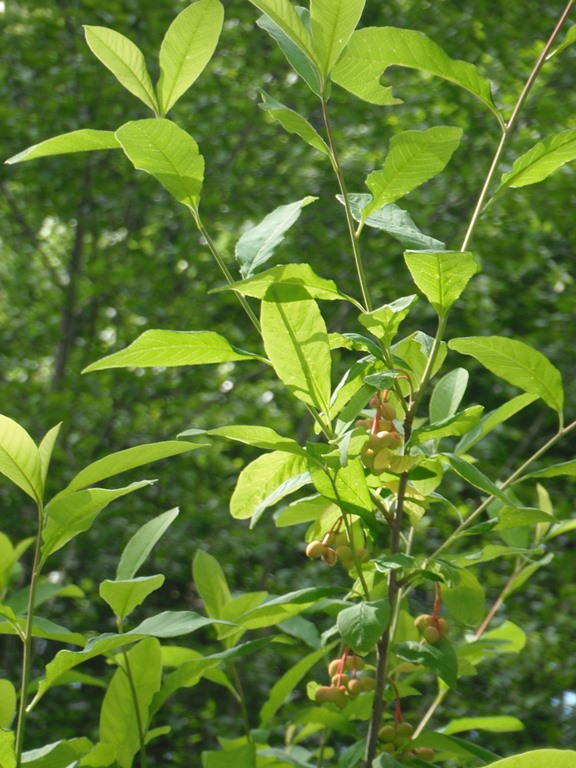
 Holodiscus discolor (Pursh.) Maxim
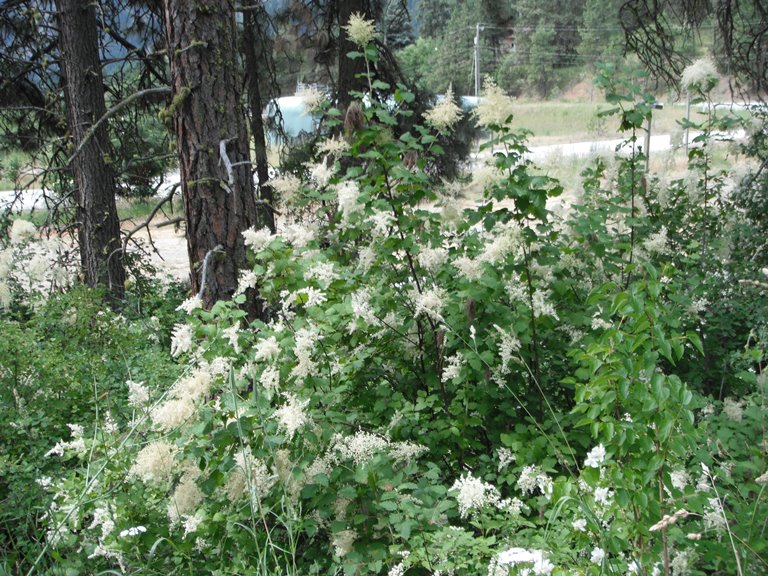
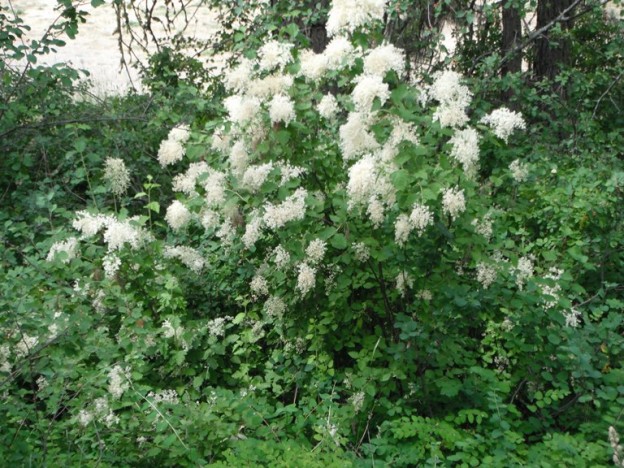
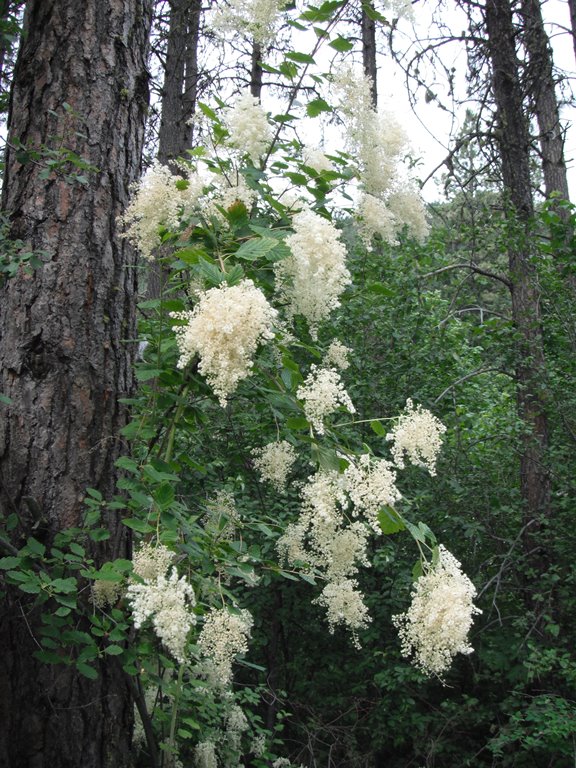
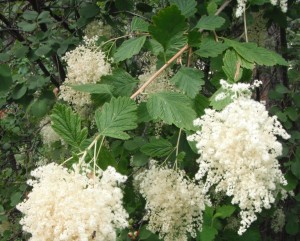 Diagnostic Characters: Oceanspray can be recognized by its alternate, oval to triangular leaves with lobed or coarsely and doubly toothed margins. The green, upper surface of the leaves can be smooth or coarsely-hairy; the paler, under surface is strongly veined and soft-hairy. Its flowers are white to cream with lilac-like drooping clusters. Seeds are actually wooly achenes (dry, one-seeded fruit) in tiny dry capsules. It usually has several main stems with brownish peeling bark; the ends of the branches arch gracefully outward.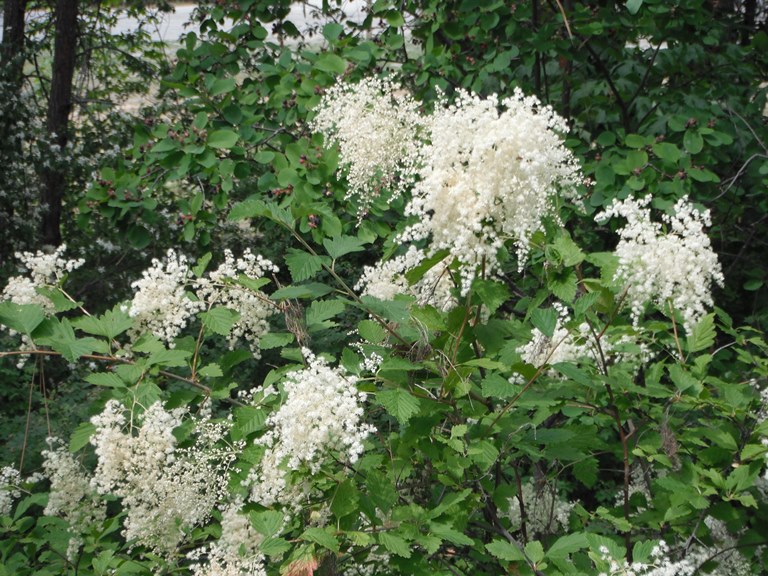
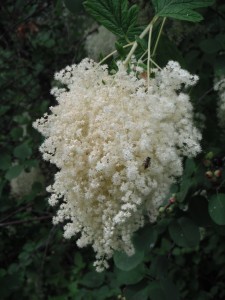 Phenology: Bloom time: June-July. Fruit ripens: Late summer.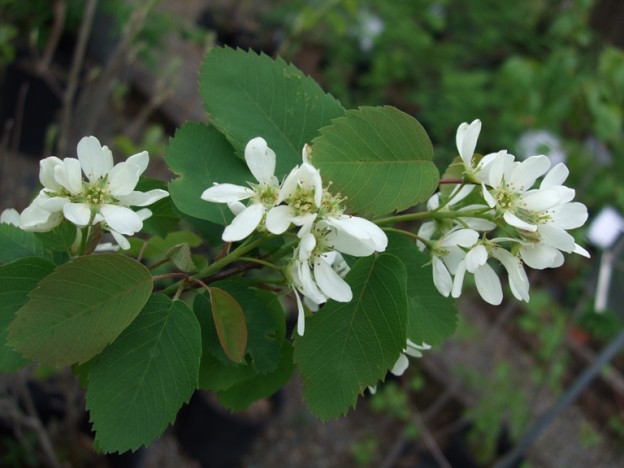
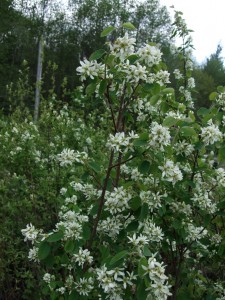
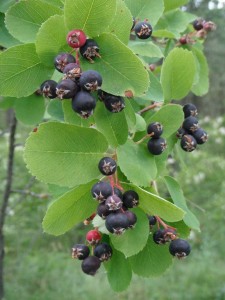
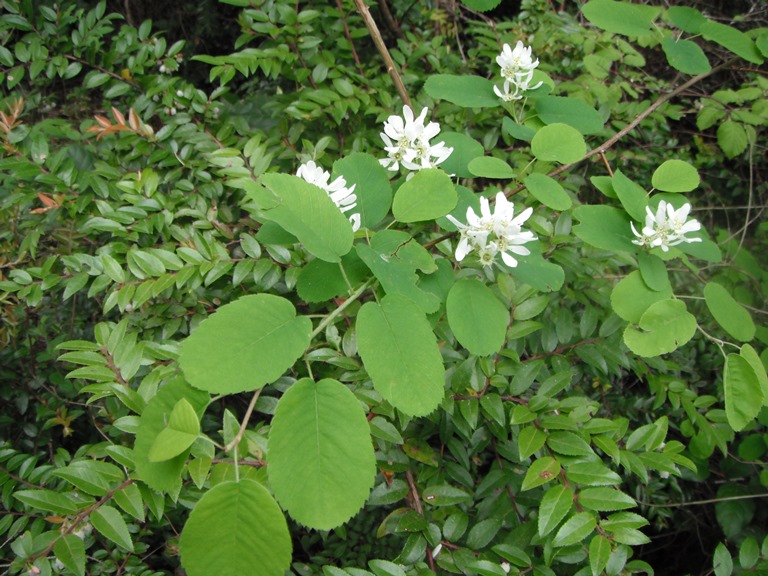
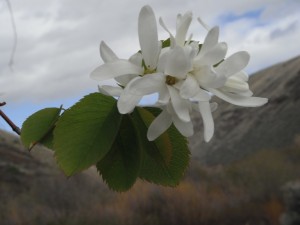
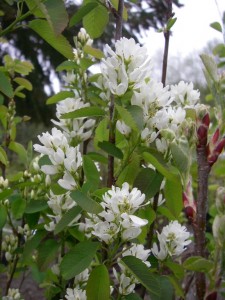 Relationships: There are about 20 species of Amelanchier, all shrubs or small trees. Most are native to North America with two in Asia and one in Europe. In some literature, Saskatoon Serviceberry is listed as Amelanchier florida. Notable varieties in the west include var. semiintegrifolia (Douglas, quoted in Hitchcock & Cronquist, writes that it is “plentiful about the Grand Rapids, and at Fort Vancouver, on the Columbia, and on the high ground of the Multnomak (sic) River.;” var. cusickii from the east side of the Cascades has larger flowers; and var. humptulipensis was discovered on the Humptulips Prairie in Grays Harbor County, Washington. Serviceberries hybridize readily making species identification sometimes difficult. Cultivated varieties are grown for larger, sweeter berries, especially in Alberta, Saskatchewan, and Manitoba.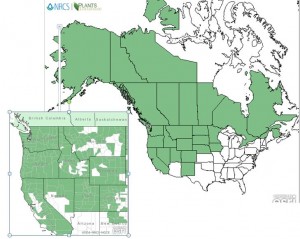
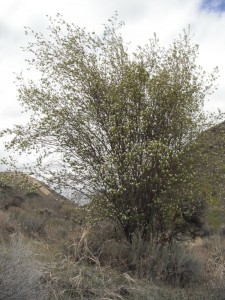 Growth: Saskatoon Serviceberry grows 3-15 ft. (1-5m) tall, sometimes taller. It is relatively short-lived; most will live about 20 years but some have survived to 85.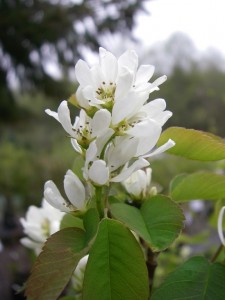
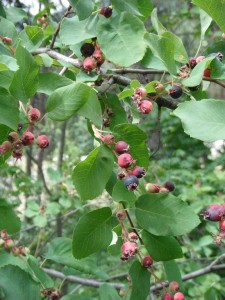 Use by People: Natives ate the fruit fresh and dried; some used it to season soup or meat. Some tribes used burning to encourage stands of Saskatoon; it will resprout from the root crown or rhizomes after the top is killed by fire and may fruit again after two years. Interior tribes used the tough wood for arrows, digging sticks, and drying racks. Coastal tribes used it for rigging their halibut lines. The Snohomish used the wood to make discs for a gambling game called slahalem. In early American folklore, the plant’s flowering time signaled pioneers that the ground had thawed enough in spring for the burial of the winter’s dead. Today people use the fruit for making pastries, jellies and syrups.

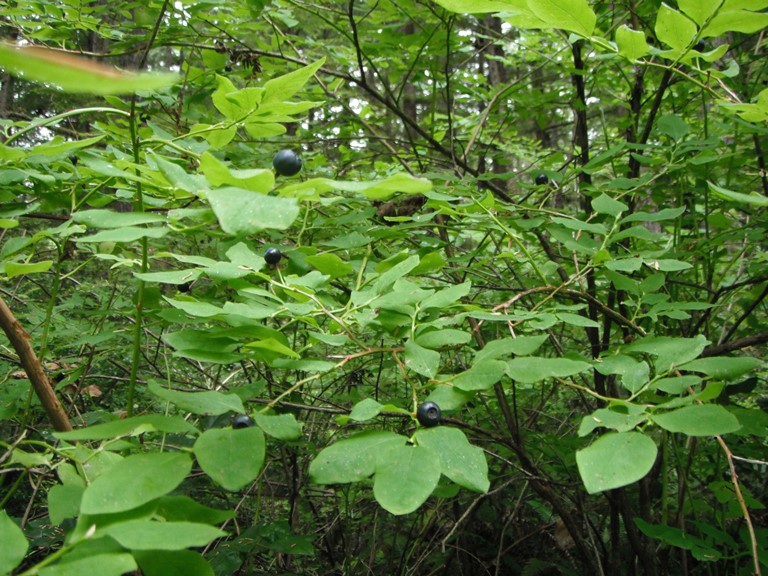
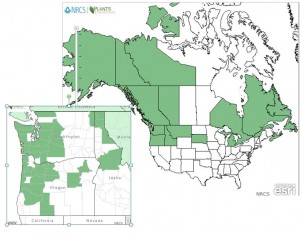
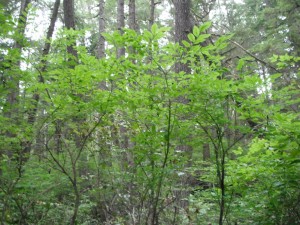 Growth: Oval-leaved Blueberry grows from 3-9ft. (1-3m), and grows a maximum of 12 inches (30cm) a year.
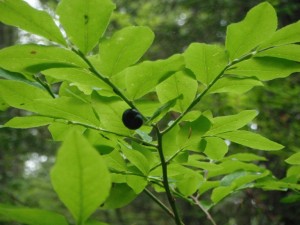 Diagnostic Characters: The young twigs of Oval-leaved Blueberry are brownish or reddish to yellowish, angled and grooved. Flowers are urn-shaped and pink; they usually appear before or with the oval-shaped leaves. Berries are blue-black with a bluish bloom—very much like commercial blueberries.